
You have not yet added any article to your bookmarks!
Join 10k+ people to get notified about new posts, news and tips.
Do not worry we don't spam!
Post by : Anis Farhan
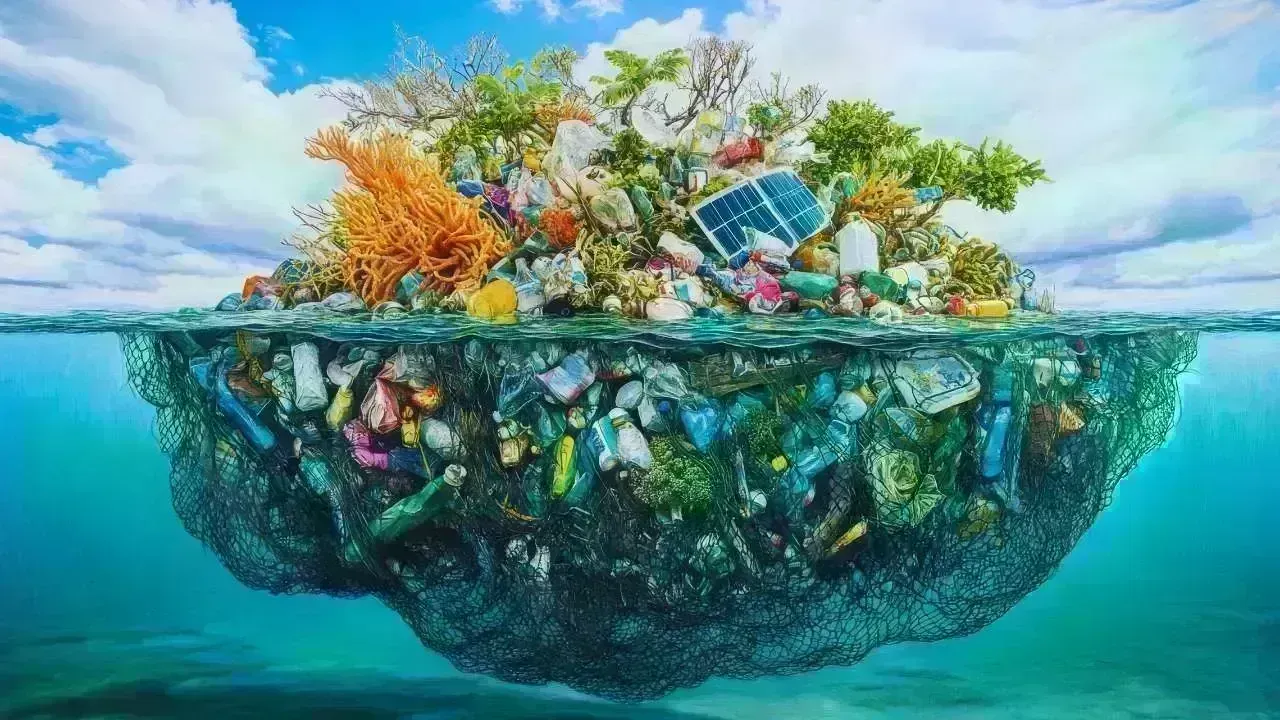
There was a time when pollution was something people kept outside their homes — toxic smoke in the air, dirty water in rivers, chemical waste in landfills. Today, pollution has crossed the most dangerous boundary of all: the boundary of the human body.
Across the world, scientific tests are now finding traces of pollution inside human bloodstreams. Microscopic air particles, industrial chemicals, heavy metals, and plastics are no longer limited to the environment. They are circulating through veins, passing through organs, and accumulating in tissues. Pollution does not stop at the lungs anymore. It travels deeper.
For billions of people, this is happening silently. No burning sensation. No warning signal. No immediate pain. And yet, every breath and every sip of water may be carrying invisible companions that were never meant to exist inside the human body.
This is not a distant environmental issue. It is a direct biological reality.
Pollution is no longer “out there.”
It is in us.
The pollution entering human blood is not one single substance. It is a cocktail of unwanted materials floating through daily life.
Ultra-fine air particles known as PM2.5 are smaller than human hair strands. When inhaled, they penetrate lung walls and slip into blood vessels.
Once inside:
They travel to the heart
Cross into the brain
Enter the liver and kidneys
Trigger inflammatory responses
These particles have been linked to:
Heart disease
Strokes
Lung cancer
Cognitive decline
Diabetes
The danger lies in size. The smaller the particle, the deeper it goes.
Lead, mercury, cadmium, and arsenic continue to travel through water, food, and air.
These metals:
Enter through contaminated water
Accumulate in fish
Exist in dust
Persist in old plumbing systems
Once in the bloodstream:
They damage nerves
Affect memory
Weaken immunity
Target kidney and liver function
Harm child development
Unlike bacteria, these metals do not die.
They stay.
Microplastics were once considered an ocean problem. Tests now show they exist in:
Blood samples
Human lungs
Placenta tissue
Breast milk
Tiny plastic particles come from:
Food packaging
Bottled water
Synthetic clothes
Household dust
Cosmetics
Plastic does not break down biologically.
It doesn't dissolve.
It doesn't leave easily.
Once in the bloodstream, plastics act like Trojan horses, carrying toxins along for the ride.
Every breath draws in:
Vehicle exhaust
Factory fumes
Construction dust
Waste burning smoke
Fire emissions
Air is the fastest transport channel into the bloodstream.
You don’t have to touch pollution.
You just have to breathe.
Water contamination is widespread:
Industrial runoff
Leaking pipelines
Sewage overflow
Agricultural chemicals
Not all pollutants can be boiled away.
Some heavy metals and chemicals simply move deeper into the body.
Vegetables absorb chemicals from soil.
Fish absorb mercury from rivers.
Milk carries residue.
Meat contains antibiotics and toxins.
The plate is now part of the pollution pathway.
Skin is not armor.
Chemicals in:
Soaps
Shampoos
Deodorants
Cosmetics
pass slowly into blood through pores.
Daily application becomes lifelong exposure.
The bloodstream is not a road.
It is a transportation network.
Anything entering it gets delivered everywhere.
Pollution particles trigger immune reactions. The body treats them as invaders. Chronic exposure keeps the immune system activated.
Long-term inflammation leads to:
Damaged blood vessels
Heart disease
Autoimmune disorders
Cancer risk
Liver and kidneys try to filter polluted blood.
Over time:
Filtering slows
Resistance builds
Tissue degenerates
Toxins accumulate
Organs age faster when overloaded.
The brain is protected by barriers.
Airborne toxins cross them.
PM2.5 has been linked to:
Memory loss
Depression
Alzheimer’s risk
Learning disorders
The brain absorbs pollution more efficiently than expected — and releases it very slowly.
The World Health Organization now classifies air pollution as one of the deadliest environmental threats worldwide. Scientific agencies across continents consistently link pollution exposure with premature death.
In Europe, scientists have traced plastic particles inside human organs.
In Asia, heavy metal poisoning remains widespread.
In Africa, unsafe water contaminates veins.
In Latin America, industrial toxins circulate unseen.
Pollution knows no geography.
Children breathe faster.
Drink more per body weight.
Absorb chemicals quickly.
Their organs are still developing.
This makes pollution uniquely damaging to:
Brain development
Immunity
Lung growth
Learning ability
A child exposed today is more likely to develop:
Asthma
Behaviour disorders
Heart issues
Hormonal irregularities
This is not future risk.
This is inherited damage.
Modern development brought:
Electricity
Transport
Industry
Convenience
It also brought:
Smog
Toxins
Chemical runoff
Landfill waste
Every advantage created leakage.
Societies measured growth in money.
Not in morbidity.
Now the cost is being measured inside blood vessels.
Cancer takes years.
Heart disease develops silently.
Kidney damage happens quietly.
Modern pollution kills slowly.
There are no dramatic warnings.
Just daily wear and tear.
And eventual breakdown.
Doctors treat:
Lung disease
Heart attacks
Arthritis
Neurological decline
But rarely diagnose pollution directly.
Because:
The cause is complex
Exposure is cumulative
Accountability is difficult
Medicine heals damage.
It doesn’t stop exposure.
Urban living intensifies exposure:
Closed spaces trap pollution
Air circulation decreases
Traffic density grows
Construction never stops
Apartments store polluted air.
Offices recycle it.
Homes filter nothing unless told to.
People are working inside exposure bubbles.
Rural does not mean safe.
Agricultural chemicals contaminate:
Wells
Streams
Produce
Open burning poisons air.
Pesticides sink into soil.
Farm pollution enters food faster than industrial pollution.
Governments focus on:
Industries
GDP
Growth
Employment
Few address:
Health erosion
Productivity loss
Healthcare costs
Population declines
As bodies weaken:
Workdays fall
Hospital beds fill
Insurance costs rise
National health declines
A polluted economy cannot stay productive.
Luxury does not block air.
Filters help.
But supply chains remain:
Food travels.
Materials mingle.
Exposure seeps.
Only awareness lowers risk.
Daily ventilation when safe
Avoid indoor smoke
Use purifiers where necessary
Clean surfaces frequently
Use verified filters
Avoid untested sources
Check water systems regularly
Wash thoroughly
Limit packaged foods
Avoid reheating in plastic
Prefer fresh sourcing
Use fewer cosmetics
Choose simple formulations
Reduce scented chemicals
Clean toys often
Limit outdoor exposure in smog
Prioritize clean diets
Pollution is not a personal failure.
It is a policy failure.
Corrections require:
Tighter factory regulations
Safer transport fuels
Waste treatment systems
Agriculture reform
Air-quality enforcement
Individual effort helps.
Government action saves.
Organs do not understand GDP.
The heart does not respect tariffs.
The lungs do not recognise economics.
Blood flows independent of policy.
When polluted blood travels, development becomes irrelevant.
Health is the only real economy.
It is internal.
Quiet.
Circulating.
Persistent.
We live in polluted bodies — not polluted cities.
Pollution was once a problem on the skyline.
Now it flows through veins.
The world is not facing environmental crisis.
It is facing biological transformation.
We are becoming ecosystems for industrial waste.
There is urgency not in policy debates — but in human physiology.
Every breath writes inside blood.
Every sip carves into cells.
Every day matters.
And if action does not arrive outside soon, the damage inside becomes permanent.
Disclaimer:
This article is for educational and informational purposes only. It does not constitute medical advice. Readers should consult qualified healthcare professionals for health-related concerns and diagnostic guidance.






Josh Kerr and Jakob Ingebrigtsen Set for 1,500m Rivalry Rematch
Josh Kerr and Jakob Ingebrigtsen will renew their 1,500m rivalry at the Ultimate Championship in Bud

PSG Coach Luis Enrique Urges Players to Step Outside Comfort Zone
PSG coach Luis Enrique says players must leave their comfort zone and keep improving as the club tar

China’s Tiangong Sets New 400m Record at Robot Olympics
China’s Tiangong robot sets a new 400m record at the Robot Olympics, beating a South African robot i

George Russell Wins Dutch GP Sprint, Boosts Mercedes Morale
George Russell wins the Dutch GP Sprint from pole as Mercedes teammate Kimi Antonelli extends his F1

Australia 50/3 After Bangladesh Bowled Out for 64 in Second Test
Australia reached 50/3 after Bangladesh were bowled out for 64 in the second Test, with Mitchell Sta

Jordan Burroughs Returns to Wrestling with 2028 Olympic Dream
Jordan Burroughs returns to wrestling with Real American Freestyle as the Olympic champion eyes a po

