
You have not yet added any article to your bookmarks!
Join 10k+ people to get notified about new posts, news and tips.
Do not worry we don't spam!
Post by : Badri Ariffin
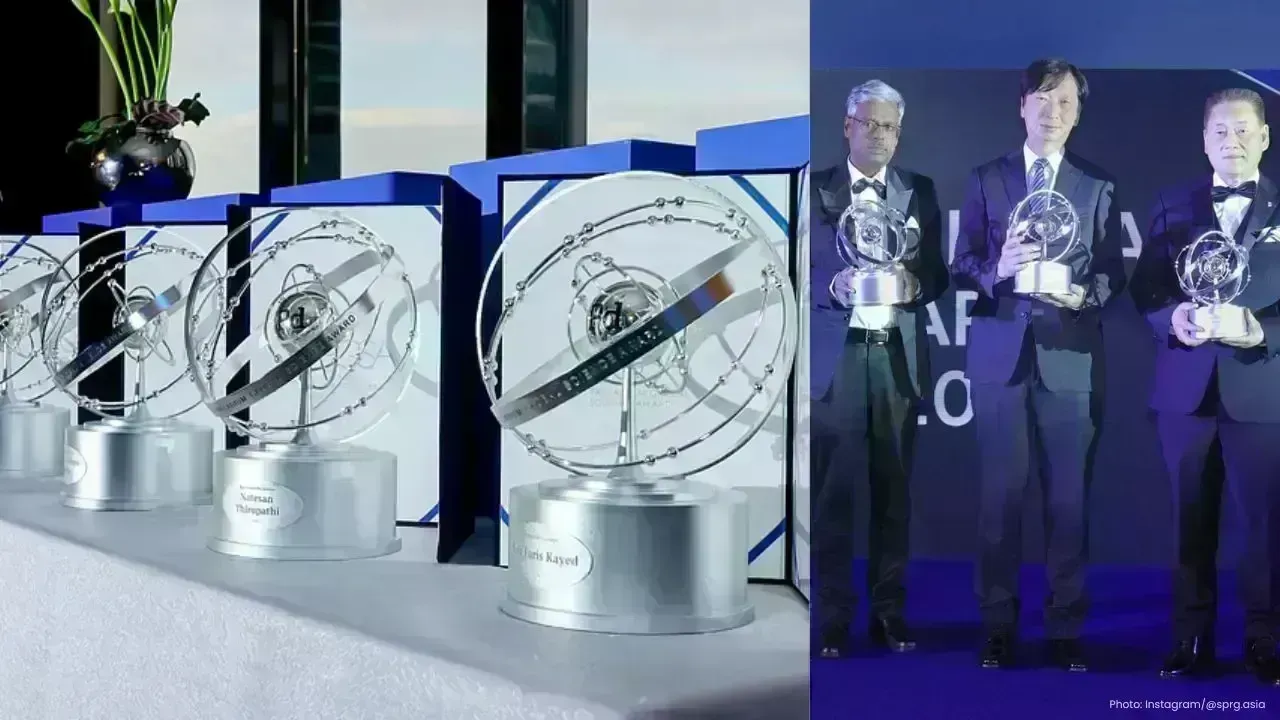
In a significant event for global innovation, Hong Kong hosted the inaugural Palladium Global Science Award, an international initiative aimed at promoting technologies fueled by palladium. This first edition brought together prominent researchers and industry leaders from around the world to honor five trailblazing scientists from Canada, Japan, India, the United States, and Saudi Arabia, sharing a total prize fund of $350,000 across three categories.
With backing from the China Precious Metals Industry Committee (CPMIC) and institutions in South Africa, Japan, and China, the award seeks to extend the application of palladium beyond its traditional industrial roles. This year’s focus was on innovative advancements in catalysis, electronics, clean energy, environmental solutions, and next-gen materials.
Approximately 100 submissions from over 30 countries highlighted the increasing global enthusiasm for redefining the future of this platinum-group metal. The projects awarded demonstrated how palladium can enhance sustainability efforts, support eco-friendly manufacturing, and pave new avenues in medical and chemical research.
The award ceremony featured breakthrough innovations poised to impact various industries.
In the Best Scientific Developments in New Palladium Applications category, the first prize was awarded to Prof. Chao-Jun Li of McGill University, Canada, for effectively activating methane and CO₂ together via a palladium-infused semiconductor under light. This method stands as a key advancement toward converting toxic waste gases into valuable chemicals such as methanol, marking a pivotal stride towards cleaner industrial processes. The technology has been licensed by a McGill spin-off for initial scaling.
Second place was claimed by Prof. Makoto Fujita of the University of Tokyo, recognized for his research on palladium-driven self-assembly, culminating in the revolutionary crystalline sponge method—a transformative approach to molecular analysis in pharmaceuticals and advanced materials.
India’s Prof. Natesan Thirupathi of Delhi University received the Best Scientific Article (First Place) for his exploration of cyclopalladation processes that promise a quicker, cleaner, and more precise drug development. Meanwhile, Prof. Michael Joseph Krische of the University of Texas at Austin was awarded second place for his sustainable palladium-based cross-coupling methods to produce critical medical compounds.
The title of Best Applied Concept (First Place) went to Associate Professor Safa Faris Kayed of Prince Sattam Bin Abdulaziz University in Saudi Arabia for PalladClear—an innovative solution focusing on the industry’s challenge of efficiently eliminating hazardous dyes and pharmaceutical residues from wastewater. The next phase will aim to transition this promising lab discovery into pilot-scale deployment.
As the event came to a close, organizers announced that the award will be held again in spring 2026, reiterating a commitment to foster a global innovation ecosystem around palladium. As new applications develop across clean energy, environmental fields, chemistry, and advanced materials, palladium is increasingly seen not merely as a commodity, but as a catalyst for the next wave of industrial evolution.










PM Modi Pays Tribute to Mahatma Gandhi, Urges People to Support Khadi
PM Modi pays tribute to Mahatma Gandhi on Gandhi Jayanti and urges citizens to support Khadi and the

Amazon Seeks to Offload $8 Billion in Nvidia Chips to Investors
Amazon plans to move $8 billion in Nvidia chips to investors, using a new financing model to strengt

Samsung Raises Galaxy S26 Prices as Memory Chip Costs Rise
Samsung raises Galaxy S26 prices in South Korea as rising memory chip costs put pressure on smartpho

Lewis Hamilton Calls Singapore Grand Prix One of F1's Toughest Races
Lewis Hamilton discusses the demanding Singapore Grand Prix and brings Plus44 and Almave to Singapor

Denmark's Pandora Opens World's Largest Jewellery Factory in Vietnam
Pandora opens its largest jewellery factory in Vietnam, expanding global production, strengthening s

Gautam Gambhir Questions Batting-Friendly Pitches After India's Record ODI Chase
Gautam Gambhir questions batting-friendly ODI pitches after India’s record chase, calling for a bett

