You have not yet added any article to your bookmarks!
Join 10k+ people to get notified about new posts, news and tips.
Do not worry we don't spam!
Post by : Anis Farhan
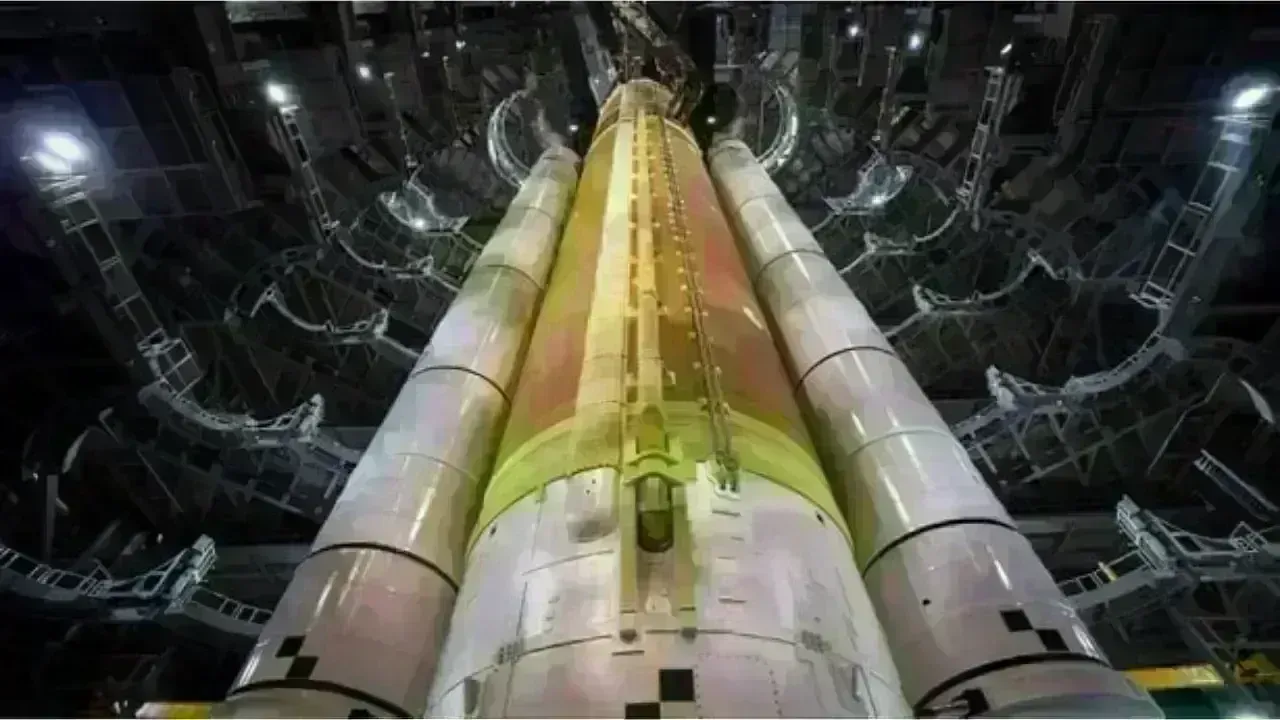
In February 2026, NASA is preparing to launch one of the most significant space missions of the 21st century — Artemis II, the first crewed lunar mission in more than five decades. This mission marks a pivotal moment in humanity’s return to deep-space exploration and lays the groundwork for future lunar landings and sustained presence beyond Earth orbit. Unlike previous missions that focused solely on robotic exploration, Artemis II will carry astronauts around the Moon and back, testing vital systems and demonstrating human capabilities in deep space.
Beyond the mission’s technical objectives, NASA has also extended a unique opportunity for global participation by inviting the public to send their names around the Moon aboard the spacecraft. This initiative bridges science and society, allowing people worldwide to feel personally connected to an extraordinary chapter in space history.
Artemis II is planned as a 10-day crewed lunar flyby that will send astronauts farther from Earth than any humans have travelled since the Apollo missions of the 20th century. The spacecraft will follow a free-return trajectory, looping around the Moon before safely returning to Earth and splashdown in the Pacific Ocean near San Diego.
Launch Vehicle: Space Launch System (SLS) Block 1 rocket
Spacecraft: Orion MPCV (Multi-Purpose Crew Vehicle)
Launch Site: Kennedy Space Center, Launch Complex 39B, Florida
Duration: ~10 days
Mission Type: Crewed lunar flyby (no landing)
The flight will test Orion’s life-support, navigation, and communications systems with humans on board, a critical step before future missions that aim to land astronauts on the lunar surface. It also marks the first time humans have left low Earth orbit since Apollo 17 in 1972.
The Artemis II crew consists of four astronauts selected for their expertise and experience:
Reid Wiseman (Commander): Veteran NASA astronaut with extensive mission experience.
Victor Glover (Pilot): The first person of colour to travel beyond low Earth orbit; previously served as pilot on a Crew Dragon mission to the ISS.
Christina Koch (Mission Specialist): Record-setting astronaut with nearly a year in space and experience on the International Space Station.
Jeremy Hansen (Mission Specialist): Canadian Space Agency astronaut, the first non-American to participate in a NASA lunar-bound mission.
Their journey will advance human spaceflight knowledge and support NASA’s longer-term goals of lunar surface exploration and eventual Mars missions.
The Artemis programme is NASA’s flagship initiative to return humans to the Moon and establish a sustainable exploration architecture. Artemis I, an uncrewed mission launched earlier in the decade, successfully tested the SLS rocket and Orion spacecraft in lunar vicinity, setting the stage for Artemis II. Future missions, particularly Artemis III, are planned to land astronauts — including the first woman and the first person of colour — on the lunar surface, focusing on the Moon’s south pole region.
By stepping beyond Earth orbit, Artemis II is not only a technical demonstration but a symbolic affirmation of international commitment to exploration, scientific discovery, and innovation. It reiterates NASA’s broader objectives: expanding scientific knowledge, bolstering economic opportunities in space, and inspiring future generations toward careers in science, technology, engineering, and mathematics.
One of the most compelling aspects of Artemis II is NASA’s public participation initiative — a program that invites people from around the world to submit their names to be carried aboard the mission. These names will be stored digitally on an SD card placed inside the Orion spacecraft, which will travel around the Moon with the crew.
This initiative follows similar “Send Your Name” campaigns from previous missions, where millions of names were flown on spacecraft such as the Mars rovers and Artemis I. The goal is not only to foster excitement about space exploration but also to engage people of all ages in NASA’s journey beyond Earth.
The process to participate is simple and free:
Visit NASA’s Official Registration Page: Navigate to the “Send Your Name with Artemis II” portal hosted by NASA.
Enter Your Details: Provide your first name, last name, and create a four- to seven-digit PIN.
Receive Your Digital Boarding Pass: After registering, you can download and save a personalised digital boarding pass as a keepsake.
Deadline: Submit before January 21, 2026 to ensure inclusion.
Participants’ names will remain stored in memory aboard Orion during Artemis II’s voyage, symbolically connecting people across the globe with this historic mission.
The ability to associate one’s name with a space mission that travels beyond Earth orbit resonates deeply with public imagination. For students, educators, and space enthusiasts, this inclusiveness transforms passive interest into active engagement with scientific exploration. The “Send Your Name” initiative bridges the gap between cutting-edge research and everyday curiosity, fostering a culture of inspiration and awareness.
While names on an SD card do not influence spacecraft systems, the symbolic value is profound. It represents global involvement in a journey that transcends national boundaries and achievements. From the early days of space exploration, when only a few astronauts ventured into space, to a future where millions can connect with missions personally, this initiative underscores how far humanity has progressed in its collective pursuit of knowledge.
Artemis II is essential for testing the performance of Orion’s life-support, navigation, and communication systems with humans aboard. The spacecraft’s ability to support crew health and ensure safe return is crucial for future lunar landing missions and longer journeys to destinations such as Mars.
The mission will also assess how humans adapt to deep space conditions over extended periods, including radiation exposure and microgravity effects on physiology. These observations will inform the design of habitats, spacesuits, and mission protocols for longer-duration expeditions.
The inclusion of a Canadian Space Agency astronaut on Artemis II reflects the collaborative nature of modern space exploration. Partnerships with international space agencies strengthen the scientific return of missions and share the benefits of discovery across borders. This spirit of cooperation anticipates broader multinational participation in future lunar surface missions and beyond.
Sending humans beyond low Earth orbit involves significant technical and logistical challenges. The Space Launch System (SLS), one of the most powerful rockets ever built, must perform reliably to propel Orion on its lunar trajectory. Engineers are conducting extensive tests, including a “wet dress rehearsal,” to validate fueling and countdown procedures before launch.
Maintaining spacecraft integrity amid the stresses of launch, radiation exposure, and thermal gradients requires rigorous design and testing. The Artemis programme’s phased approach — starting with uncrewed tests, followed by crewed flybys and eventually landings — helps mitigate these risks through incremental validation of systems and protocols.
Supporting astronaut health and performance in deep space is complex. Radiation shielding, psychological well-being, and medical readiness are critical considerations, especially as missions extend in duration and distance. Artemis II’s 10-day flight will yield valuable insights into how humans cope with prolonged exposure beyond Earth’s protective magnetosphere.
Although Artemis II will not land on the Moon, its success is a prerequisite for Artemis III, which aims to return humans to the lunar surface — particularly the south pole region — and establish a sustained human presence. Lunar exploration has implications for science, resource utilisation, and the development of technologies that could be applied to missions to Mars and other destinations.
By validating deep-space travel with a human crew, Artemis II will build confidence in spacecraft systems and ground operations that future missions will rely on.
Beyond human exploration, Artemis missions open opportunities for scientific investigations of the Moon’s environment, geology, and resources. Understanding lunar water ice, regolith composition, and other features holds promise for developing in-situ resource utilisation — a key element in reducing the cost and complexity of prolonged space presence.
The Artemis II mission represents a defining moment in human space exploration — the first time astronauts will travel around the Moon in over 50 years. Its success will mark an important leap forward in NASA’s Artemis programme and chart the course for future lunar landings and deep-space missions.
Simultaneously, NASA’s “Send Your Name” initiative invites people from around the world to symbolically join this extraordinary journey, fostering engagement and connecting global citizens to humanity’s shared aspirations in space.
As Artemis II nears launch, it embodies the convergence of scientific ambition, technological prowess, and public imagination — a mission that honors past achievements while boldly advancing toward humanity’s future among the stars.
Disclaimer:
This article is a comprehensive and informative overview of NASA’s Artemis II mission and public participation opportunities based on available sources as of January 2026. It is intended for educational and informational purposes and does not constitute official NASA guidance.








Lamborghini Catches Fire on Singapore's ECP, Causing Heavy Traffic
A Lamborghini caught fire on Singapore's ECP, causing heavy traffic and bus delays. No injuries were

Bangkok Airport Duty-Free Area Flooded by Pipe Burst
A burst water pipe flooded the duty-free shopping area at Bangkok's Suvarnabhumi Airport on July 16,
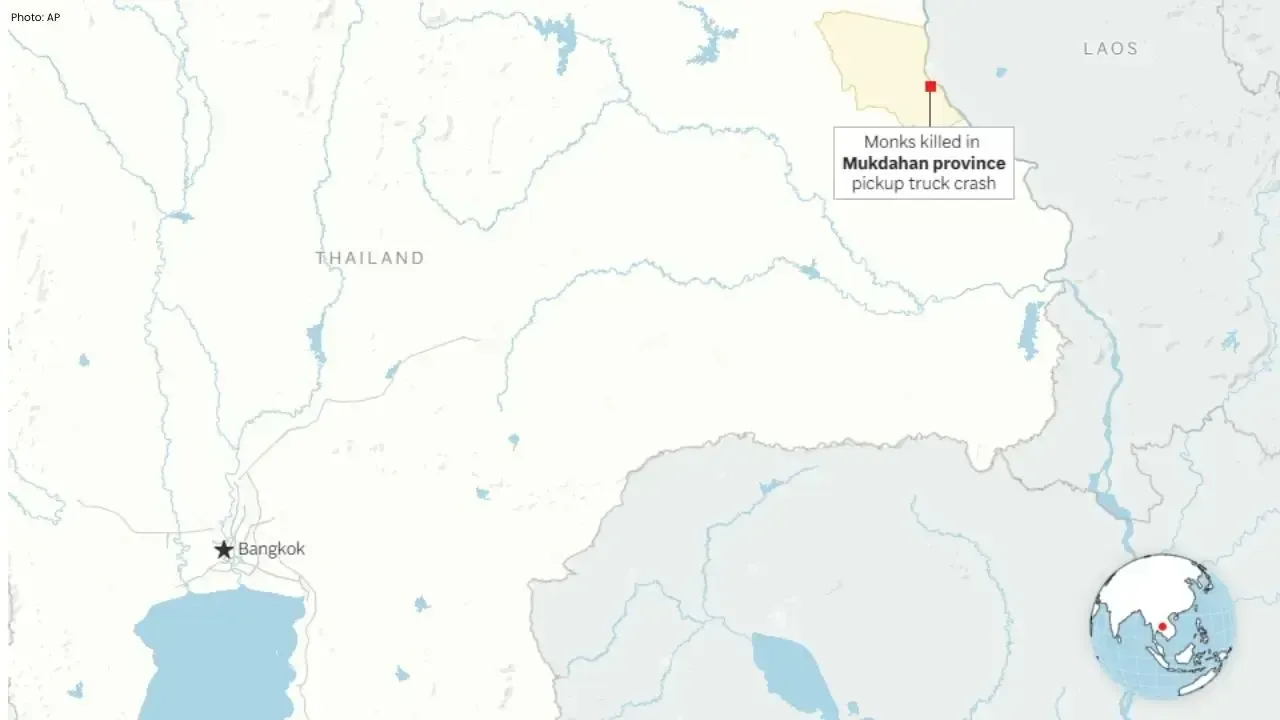
Nine Monks Killed in Thailand Pickup Truck Tragedy
An 11-year-old boy driving a pickup truck crashed into monks during a pilgrimage in northeastern Tha

Anwar Congratulates Xi on CPC's 105th Anniversary
Malaysia reaffirms strong ties with China as PM Anwar Ibrahim sends a congratulatory letter to Presi

Thai Agriculture Team Reviews 2026 Farm Development Plans
Agriculture Ministry officials inspected livestock and organic rice projects in Nakhon Sawan to moni

Thailand, Canada Boost Ties in PM-Level Phone Talks
Thailand and Canada agreed to strengthen trade, security, OECD cooperation and ASEAN-Canada FTA talk