You have not yet added any article to your bookmarks!
Join 10k+ people to get notified about new posts, news and tips.
Do not worry we don't spam!

Post by : Anis Farhan
In the borderlands of Myanmar, a new humanitarian crisis is unfolding—one that blends the brutality of human trafficking with the digital age of online crime. Vast compounds operated by crime syndicates, often with tacit protection from Myanmar’s ruling military junta, are holding thousands of people captive. These victims, many trafficked from across Asia and Africa, are forced to work in scam centres that run large-scale online fraud operations targeting victims worldwide.
Reports from rights groups reveal that young men and women are lured with promises of legitimate jobs in technology, hospitality, or call centres. Once across the border, their documents are confiscated, and they are confined in guarded compounds. Under constant surveillance, they are coerced into carrying out scams ranging from cryptocurrency fraud to love-trap schemes designed to drain unsuspecting victims of their savings.
The trafficking networks that supply these scam compounds are sophisticated and transnational. Recruiters operate in countries such as India, Nepal, Bangladesh, Kenya, and the Philippines, advertising lucrative jobs in Southeast Asia. Victims often pay recruitment fees or travel on false promises, only to find themselves smuggled into Myanmar’s lawless border zones.
Once inside, escape is nearly impossible. Survivors recount stories of violence, beatings, and electric shocks used against those who refuse to cooperate. Many are told that they must “work off” fabricated debts imposed by their captors. In reality, they become expendable assets in a global scam industry that thrives on their captivity.
Myanmar’s scam centres are not small-scale operations. Investigators estimate that billions of dollars are siphoned annually through fraud schemes run out of these compounds. Victims of the scams stretch from North America to Europe, Australia, and Asia, with thousands of unsuspecting individuals losing life savings.
The compounds themselves are often located in special economic zones or regions controlled by armed groups. Some are reportedly run in partnership with local militias who share profits with the military junta. This has created an ecosystem where crime syndicates, corrupt officials, and armed groups benefit from exploiting trafficked workers and defrauding people worldwide.
While the financial crimes grab headlines, the human suffering inside the compounds is far graver. Rights groups have documented cases of people dying due to torture, untreated medical conditions, or suicide after prolonged captivity. Survivors often emerge physically scarred, emotionally shattered, and burdened with trauma.
Families of the victims, many in poorer countries, are forced into desperate searches for their missing relatives. Some pay ransoms demanded by traffickers, hoping to secure their loved ones’ release, but often the money vanishes with no assurance of freedom.
The crisis has triggered international concern. Governments from India, Thailand, Malaysia, and African nations have received distress calls from citizens trapped in Myanmar. However, diplomatic rescue efforts remain fraught with difficulty. The military junta, already isolated on the global stage for its 2021 coup and ongoing repression, has shown little willingness to crack down on scam centres that generate revenue and political leverage.
Countries like Thailand and China have stepped up operations to rescue their nationals, but the sheer scale of the problem overwhelms regional authorities. The lack of central governance in Myanmar’s border regions, combined with complicity from armed groups, has turned rescue operations into dangerous missions.
Ironically, technology is both the weapon and the shield in this crisis. Victims are forced to use social media platforms, dating apps, and messaging services to run scams. Syndicates exploit digital tools to mask their operations, creating fake identities, phishing campaigns, and sophisticated fraud scripts.
At the same time, technology is helping expose these abuses. Leaked videos, survivor testimonies, and satellite imagery have begun to shed light on the scale of the compounds. International watchdogs are pressing tech companies to strengthen safeguards against scams and to collaborate in tracing suspicious digital activities back to these centres.
The growth of scam centres in Myanmar also carries significant security implications for Southeast Asia. The flow of money from scams funds criminal enterprises, including arms trafficking and drug smuggling. This further destabilizes border regions already plagued by insurgencies and conflict.
For countries like India, Thailand, and China, the existence of these hubs near their borders poses risks of cross-border crime and human trafficking on a wider scale. It also undermines regional cooperation efforts, as trust erodes when criminal networks exploit weak governance structures.
Human rights organizations argue that the crisis cannot be treated merely as a law enforcement issue. They call for a coordinated international response that addresses trafficking, provides humanitarian aid to rescued victims, and applies pressure on Myanmar’s junta to dismantle these operations.
Some experts compare the situation to modern slavery, demanding that governments and international organizations recognize it as such. Without sustained international pressure, they warn, the crisis will continue to grow, trapping more victims and fueling more transnational crime.
At its core, the Myanmar scam centre scandal is not only about fraud—it is about people stripped of their rights, dignity, and freedom. Behind each fraudulent message or investment scheme lies a trafficked worker operating under duress, often with no way out.
The tragedy reveals a brutal paradox of globalization: while digital technology connects the world, it also enables new forms of exploitation that prey on the most vulnerable. Until global leaders treat this as a humanitarian emergency as much as a criminal enterprise, thousands will remain trapped in the shadows of Myanmar’s compounds.
This article is intended for informational purposes only. Newsible Asia does not assume responsibility for the accuracy of claims made by independent sources. Readers are advised to follow official government updates and verified humanitarian organizations for the latest developments.




Jordan Burroughs Returns to Wrestling with 2028 Olympic Dream
Jordan Burroughs returns to wrestling with Real American Freestyle as the Olympic champion eyes a po

Lamborghini Catches Fire on Singapore's ECP, Causing Heavy Traffic
A Lamborghini caught fire on Singapore's ECP, causing heavy traffic and bus delays. No injuries were

Bangkok Airport Duty-Free Area Flooded by Pipe Burst
A burst water pipe flooded the duty-free shopping area at Bangkok's Suvarnabhumi Airport on July 16,

Nine Monks Killed in Thailand Pickup Truck Tragedy
An 11-year-old boy driving a pickup truck crashed into monks during a pilgrimage in northeastern Tha

Anwar Congratulates Xi on CPC's 105th Anniversary
Malaysia reaffirms strong ties with China as PM Anwar Ibrahim sends a congratulatory letter to Presi
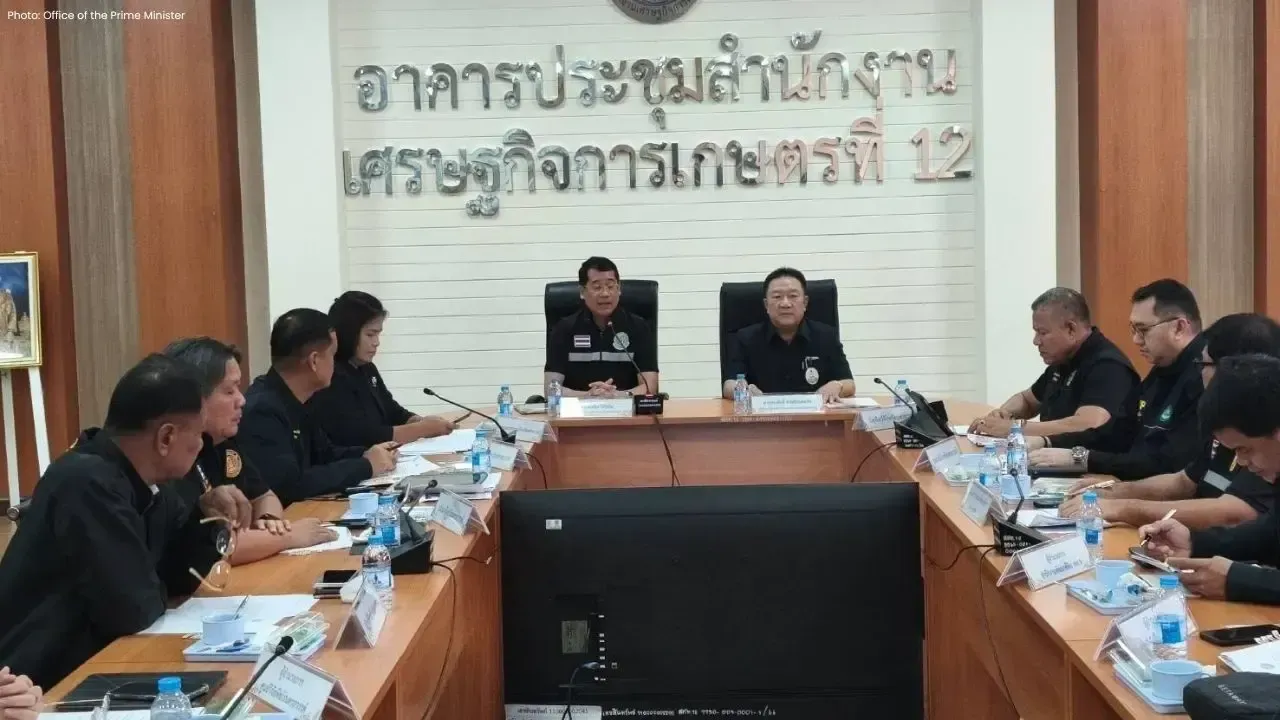
Thai Agriculture Team Reviews 2026 Farm Development Plans
Agriculture Ministry officials inspected livestock and organic rice projects in Nakhon Sawan to moni