You have not yet added any article to your bookmarks!
Join 10k+ people to get notified about new posts, news and tips.
Do not worry we don't spam!

Post by : Anis Farhan
In a move that has stunned international observers and deepened fears of political repression, Myanmar’s military-led government has enacted a new electoral law that includes severe penalties—up to and including the death sentence—for anyone found guilty of interfering with the upcoming 2025 general elections. The law, quietly passed and announced by the regime, has ignited outrage among human rights advocates and democracy watchdogs who see it as a direct strike at any form of organized opposition.
While Myanmar has seen cycles of repression and limited democratic openings since the 1988 uprising, this latest legislative shift is notable not only for its timing—months before a long-anticipated vote—but also for its unprecedented severity. The inclusion of the death penalty, especially in the context of election-related activities, represents a new phase in how the regime intends to maintain control: by legalizing political suppression.
The new law outlines a wide range of offenses deemed as “interference” with the electoral process. These include:
Obstructing or delaying election procedures
Destroying or falsifying voter records
Threatening electoral officials or candidates
“Deliberate sabotage” of the voting infrastructure
Spreading false information that could incite public panic or disrupt elections
While some provisions appear to be standard elements of electoral protection, it’s the ambiguity of key phrases like “deliberate sabotage” and “false information” that worry legal experts. Critics argue that such vagueness opens the door for selective interpretation, where dissenters, journalists, protestors, or even voters expressing dissatisfaction could be targeted under the guise of electoral interference.
Myanmar’s military regime, which seized power in a February 2021 coup, has a long history of using legal instruments to neutralize opposition. Since the coup, thousands of political prisoners have been detained, including journalists, lawmakers, students, and civil servants. Many have been sentenced under the Penal Code’s Section 505(A)—a broadly defined law criminalizing any speech against the state.
The new electoral law appears to follow the same pattern, with harsher measures. By tying electoral obstruction to the death penalty, the law doesn't just criminalize dissent—it threatens to annihilate political expression altogether.
This is particularly concerning in a country where public trust in democratic institutions is already severely damaged. In the aftermath of the coup, mass protests, civil disobedience, and armed resistance movements have erupted across the country. The military’s violent crackdowns have resulted in over 4,000 civilian deaths, and more than 25,000 arrests, according to independent estimates.
The introduction of this law now raises the fear that even peaceful participation in or commentary about the electoral process could be labeled subversion.
The junta has long claimed it would hold a nationwide election as a way to restore "order" and "normalcy" to Myanmar. But under these new rules, the vote appears designed less as a return to democracy and more as a mechanism to legitimize authoritarianism.
Key political parties, including the ousted National League for Democracy (NLD), led by Aung San Suu Kyi, remain banned or severely restricted. Many opposition figures are either imprisoned or in exile. Meanwhile, the Election Commission is staffed entirely by military-appointed officials, raising serious doubts about transparency and fairness.
In this environment, the threat of death or long-term imprisonment for perceived “obstruction” creates a climate of fear, suppressing voter turnout, candidate participation, and public discourse. Rather than encourage civic engagement, the law appears tailored to suppress it.
International reactions have been swift and concerned. Various UN bodies and human rights groups have condemned the law as a draconian overreach that threatens the prospects for any legitimate election in the country.
Southeast Asian nations, many of which have traditionally taken a non-interventionist stance toward Myanmar’s internal affairs, are beginning to show signs of unease. The Association of Southeast Asian Nations (ASEAN), under pressure to maintain regional credibility, has expressed “deep concern” and called for dialogue, though no direct action has been announced.
Global democracies, including the United States, the European Union, and Australia, have criticized the move and warned that the upcoming elections—if held under these laws—would lack international recognition. Sanctions and travel restrictions on key junta leaders are likely to be reinforced or extended.
Inside the country, the new law has triggered a wave of anxiety and paranoia. Many civil society organizations, already operating underground, fear further crackdowns. Social media commentary has slowed, and even private discussions about politics are increasingly cautious.
Yet amid the fear, signs of defiance remain. Various ethnic armed organizations, which control large parts of Myanmar’s borderlands, have denounced the law and warned they will not allow elections to take place in their territories. Resistance groups affiliated with the shadow National Unity Government (NUG) have vowed to disrupt what they describe as a sham electoral process.
This raises the very real possibility that the 2025 election, far from bringing stability, could ignite fresh cycles of conflict and deepen the country’s civil war dynamics.
Myanmar’s move to attach the death penalty to electoral disruption sets a dangerous precedent—not only for its own people but for fragile democracies elsewhere. It introduces the idea that elections themselves can be weaponized, not just by rigging results or banning candidates, but by turning the very process of voting into a coercive act.
This kind of legal engineering has implications beyond the ballot box. It distorts the foundational idea of democracy—that citizens can question, challenge, or reject their government—without fear of deadly retribution.
By criminalizing dissent in such extreme terms, the junta is not protecting the integrity of elections; it’s abolishing the possibility of a real one.
As Myanmar approaches its 2025 elections, the legal framework now in place signals that the outcome has already been decided. Not through votes cast, but through laws passed. The use of the death penalty and sweeping restrictions on political activity marks a new low in the country’s democratic aspirations.
This is not just about Myanmar—it’s a lesson in how quickly democratic institutions can be hollowed out, even as the outer shell remains intact. The regime will likely go ahead with the election, complete with campaign posters, ballot boxes, and televised results. But behind the spectacle will lie a chilling truth: voters are not free, candidates are not safe, and the law no longer protects democracy—it destroys it.
This article is for informational and editorial purposes only. It does not promote political views or affiliations. The views expressed are based on publicly available information, independent analysis, and human rights monitoring. Readers are encouraged to consult verified sources and international observers for ongoing developments.






Lamborghini Catches Fire on Singapore's ECP, Causing Heavy Traffic
A Lamborghini caught fire on Singapore's ECP, causing heavy traffic and bus delays. No injuries were

Bangkok Airport Duty-Free Area Flooded by Pipe Burst
A burst water pipe flooded the duty-free shopping area at Bangkok's Suvarnabhumi Airport on July 16,
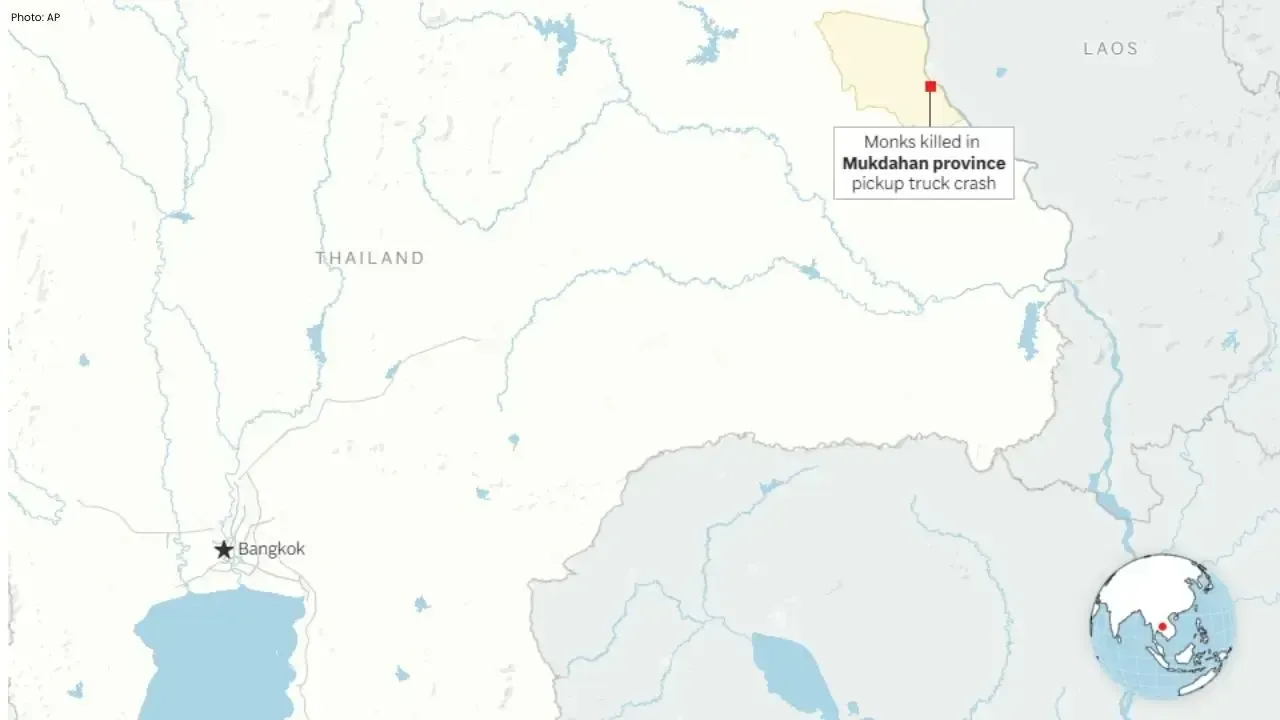
Nine Monks Killed in Thailand Pickup Truck Tragedy
An 11-year-old boy driving a pickup truck crashed into monks during a pilgrimage in northeastern Tha
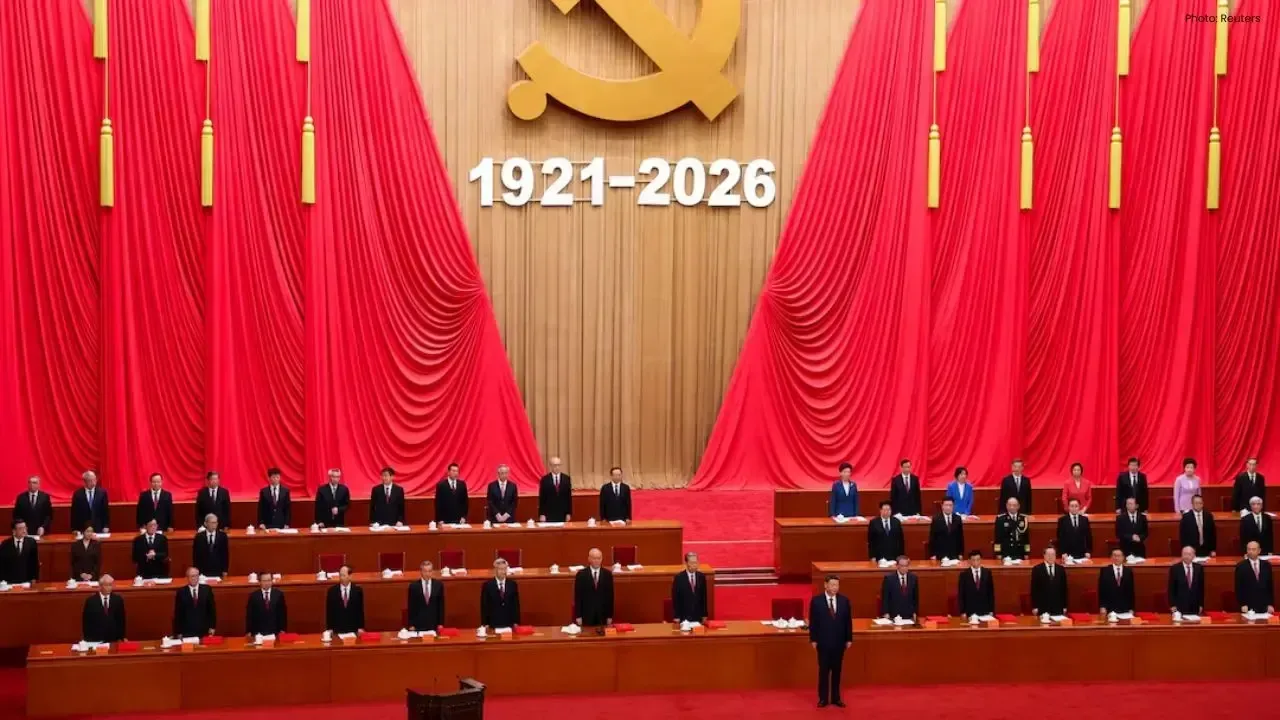
Anwar Congratulates Xi on CPC's 105th Anniversary
Malaysia reaffirms strong ties with China as PM Anwar Ibrahim sends a congratulatory letter to Presi
Thai Agriculture Team Reviews 2026 Farm Development Plans
Agriculture Ministry officials inspected livestock and organic rice projects in Nakhon Sawan to moni
Thailand, Canada Boost Ties in PM-Level Phone Talks
Thailand and Canada agreed to strengthen trade, security, OECD cooperation and ASEAN-Canada FTA talk