
You have not yet added any article to your bookmarks!
Join 10k+ people to get notified about new posts, news and tips.
Do not worry we don't spam!
Post by : Saif Rahman
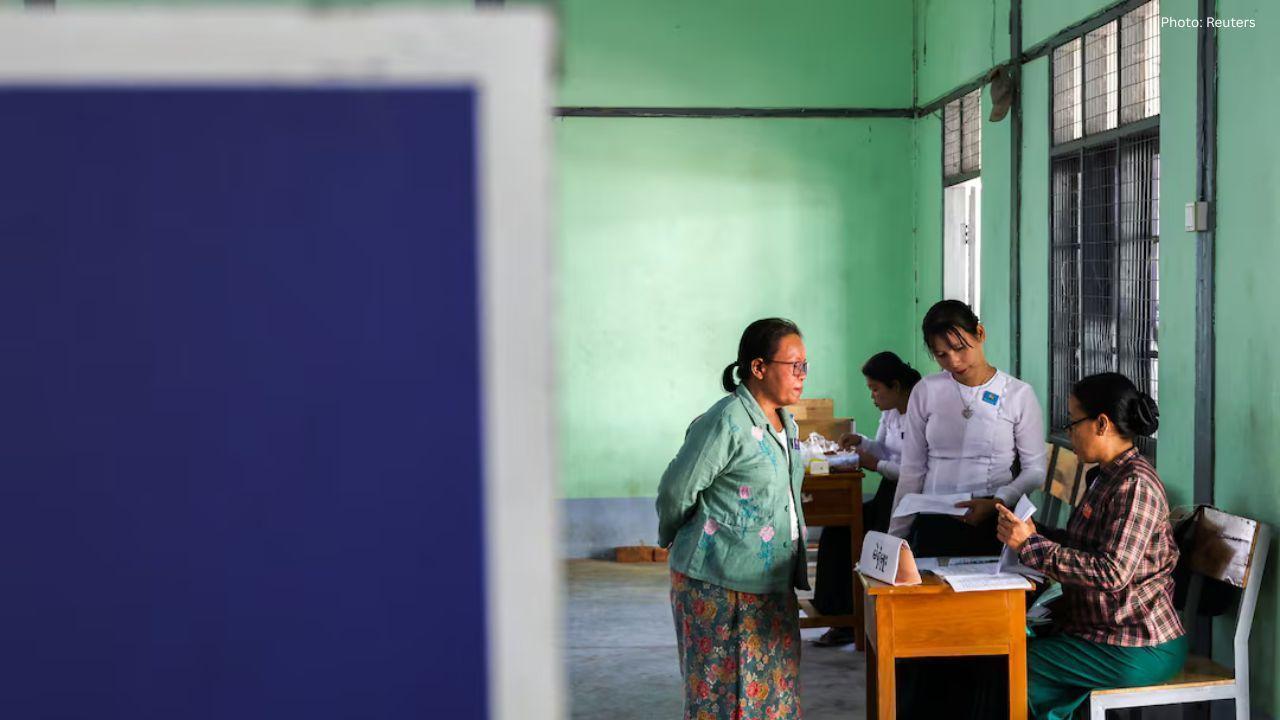
On Sunday, Myanmar held elections against the backdrop of a devastating civil war and an escalating humanitarian crisis. With millions affected by violence, hunger, and displacement following the military coup in 2021 that ousted the government led by Aung San Suu Kyi, the stakes have never been higher.
The ongoing civil strife has wreaked havoc throughout Myanmar. Clashes between the military and various resistance factions have led to widespread destruction of homes, disrupted daily activities, and caused families to seek refuge elsewhere. The United Nations estimates that over 3.6 million individuals have been forcibly displaced, while more than 6,800 civilians have tragically lost their lives since the conflict erupted.
The humanitarian situation is dire, ranking among the most severe in Asia. Years of conflict, compounded by recurrent natural disasters like a significant earthquake earlier this year, have plunged millions into poverty. Currently, approximately 20 million people—nearly half of Myanmar’s population—are in dire need of humanitarian aid. Rising prices and a depreciating currency have rendered basic necessities unaffordable for numerous families.
Hunger is rapidly escalating. The World Food Programme estimates that over 16 million individuals are confronting severe food shortages. Projections for next year indicate that more than 12 million people could endure acute hunger, with around 1 million requiring urgent life-saving assistance. Vulnerable populations, particularly children, are bearing the brunt of the crisis; more than 540,000 children are anticipated to suffer from severe malnutrition this year. Currently, one in three children under five years old shows signs of stunted growth, jeopardizing their health for life.
Efforts to provide aid are hampered by a considerable lack of funding. So far, merely 12% of the humanitarian funding required in Myanmar has been raised. Additionally, reductions in international aid, including contributions from the United States, have exacerbated the situation. Journalists and aid workers face increasing restrictions, complicating both reporting on and addressing the crisis.
The economic landscape has also considerably deteriorated. Once viewed as an emerging economy in Southeast Asia, Myanmar is now grappling with soaring inflation, inadequate electricity, and sluggish growth. Frequent power outages have compelled homes and enterprises to increasingly rely on solar energy. Nonetheless, the World Bank anticipates about 3% growth in the economy next year, largely attributed to reconstruction efforts following the earthquake and limited support for severely affected regions.
Moreover, Myanmar’s military leaders have strengthened ties with Russia. A recent investment agreement could pave the way for Russian energy firms to expand their operations in the country, potentially providing some economic activity but raising concerns about long-term reliance on this partnership.
As the ballots are cast, Myanmar finds itself at a precarious juncture. The elections unfold amid the shadows of civil strife, hunger, and economic distress. Whether these elections can pave the way for stability or relief remains uncertain for the millions enduring hardship across the country.









PSG Coach Luis Enrique Urges Players to Step Outside Comfort Zone
PSG coach Luis Enrique says players must leave their comfort zone and keep improving as the club tar

China’s Tiangong Sets New 400m Record at Robot Olympics
China’s Tiangong robot sets a new 400m record at the Robot Olympics, beating a South African robot i

George Russell Wins Dutch GP Sprint, Boosts Mercedes Morale
George Russell wins the Dutch GP Sprint from pole as Mercedes teammate Kimi Antonelli extends his F1

Australia 50/3 After Bangladesh Bowled Out for 64 in Second Test
Australia reached 50/3 after Bangladesh were bowled out for 64 in the second Test, with Mitchell Sta

Jordan Burroughs Returns to Wrestling with 2028 Olympic Dream
Jordan Burroughs returns to wrestling with Real American Freestyle as the Olympic champion eyes a po

Lamborghini Catches Fire on Singapore's ECP, Causing Heavy Traffic
A Lamborghini caught fire on Singapore's ECP, causing heavy traffic and bus delays. No injuries were

