You have not yet added any article to your bookmarks!
Join 10k+ people to get notified about new posts, news and tips.
Do not worry we don't spam!
Post by : Saif Rahman
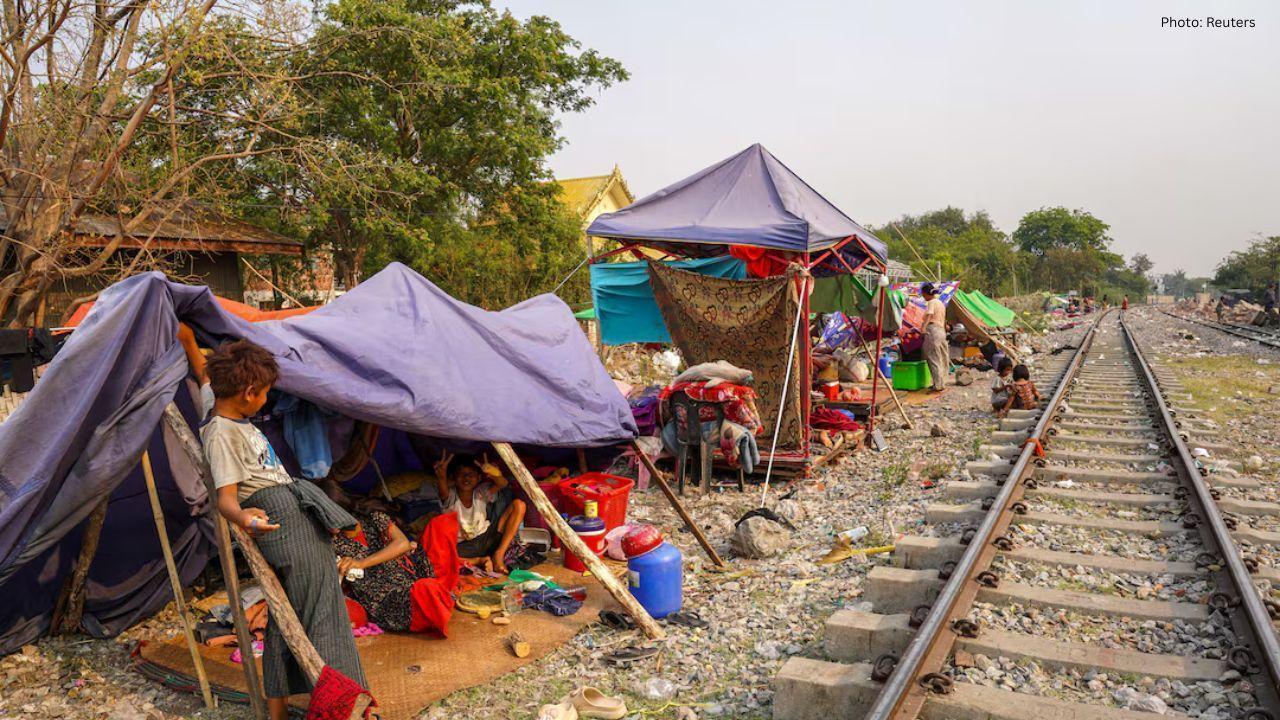
Myanmar is poised for elections while grappling with a devastating civil war and one of the worst humanitarian emergencies in Asia. Once considered among Southeast Asia’s least prosperous nations, Myanmar has endured prolonged conflict, environmental disasters, and economic strife.
The turmoil escalated following the 2021 military coup that ousted the elected government of Nobel laureate Aung San Suu Kyi. This has led to violent clashes between the military and opposition factions, resulting in tremendous devastation. The United Nations reports over 6,800 civilian deaths and more than 3.6 million displaced individuals.
The humanitarian outlook is grim. Recurrent natural catastrophes, such as a significant earthquake earlier this year, have only intensified the crisis. Soaring inflation and a depreciating currency have plunged nearly half of Myanmar's citizens into poverty. Currently, about 20 million people require humanitarian assistance, yet merely 12% of necessary funding has been secured. Reductions in international aid, particularly from the U.S., have made survival increasingly difficult for those most at risk.
Food security poses a serious threat. Over 16 million people are experiencing acute hunger, highlighting Myanmar's status as a critical global hunger epicenter. The UN’s World Food Programme warns that over one million individuals will require urgent food support next year. Children are disproportionately affected, with over 540,000 anticipated to face severe malnutrition—a 26% increase from the previous year. Chronic hunger has resulted in nearly one in three children under five suffering from stunted growth.
In spite of these daunting challenges, some signs of economic recovery emerge. The World Bank forecasts a 3% growth in Myanmar’s GDP for the upcoming fiscal year, primarily fueled by rebuilding initiatives post-earthquake and targeted support for the most impacted areas. However, inflation rates hover above 20%, and persistent electricity shortages compel both households and businesses to depend increasingly on solar energy.
International engagement remains limited yet present. Russia has established investment agreements with Myanmar, creating pathways for Russian energy firms. Nonetheless, ongoing political unrest, constraints on press freedoms, and inadequate infrastructure hinder advancement.
The upcoming elections occur under exceptionally challenging circumstances. Millions reside in conflict zones, grappling with hunger and instability, complicating participation in the electoral process. Observers are closely monitoring the situation to see if these elections might stabilize the nation or exacerbate existing divides.
As Myanmar approaches the ballot box, the immediate priorities center on survival, satisfying basic necessities, and pursuing peace. These elections serve not only as a political assessment but also highlight the critical humanitarian issues facing countless citizens.








PSG Coach Luis Enrique Urges Players to Step Outside Comfort Zone
PSG coach Luis Enrique says players must leave their comfort zone and keep improving as the club tar

China’s Tiangong Sets New 400m Record at Robot Olympics
China’s Tiangong robot sets a new 400m record at the Robot Olympics, beating a South African robot i

George Russell Wins Dutch GP Sprint, Boosts Mercedes Morale
George Russell wins the Dutch GP Sprint from pole as Mercedes teammate Kimi Antonelli extends his F1

Australia 50/3 After Bangladesh Bowled Out for 64 in Second Test
Australia reached 50/3 after Bangladesh were bowled out for 64 in the second Test, with Mitchell Sta

Jordan Burroughs Returns to Wrestling with 2028 Olympic Dream
Jordan Burroughs returns to wrestling with Real American Freestyle as the Olympic champion eyes a po

Lamborghini Catches Fire on Singapore's ECP, Causing Heavy Traffic
A Lamborghini caught fire on Singapore's ECP, causing heavy traffic and bus delays. No injuries were