You have not yet added any article to your bookmarks!
Join 10k+ people to get notified about new posts, news and tips.
Do not worry we don't spam!
Post by : Saif Rahman
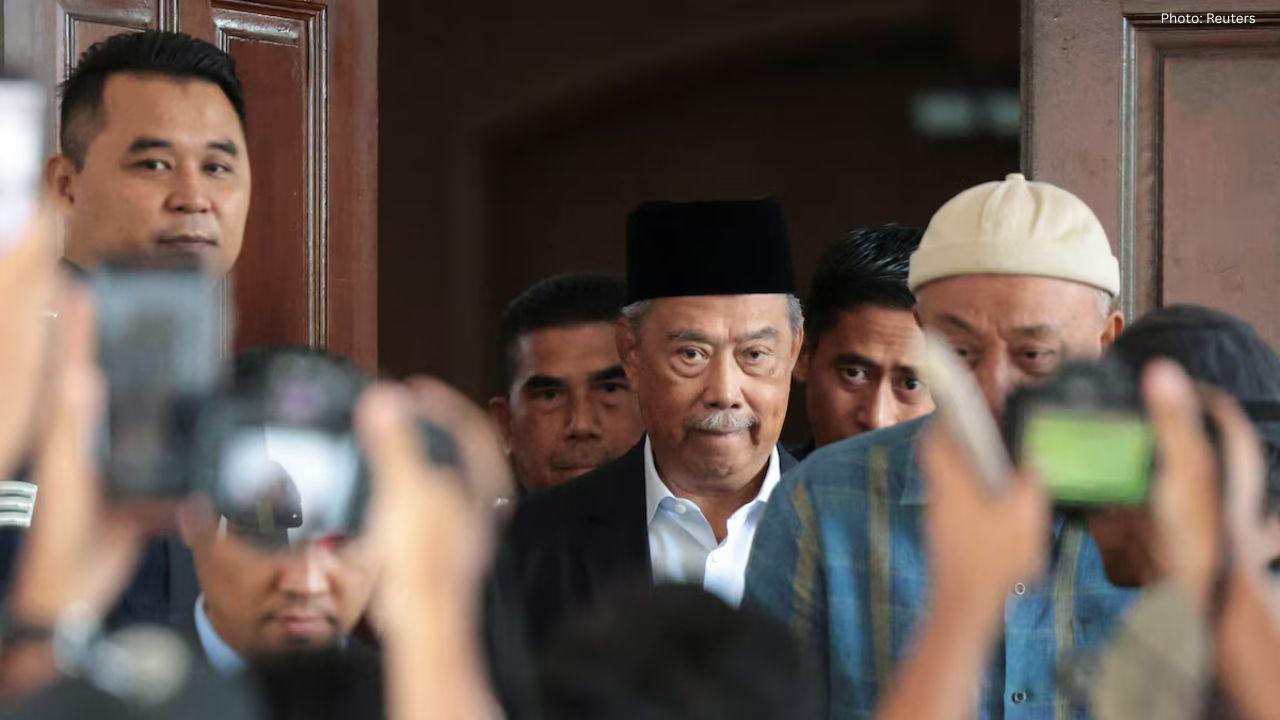
The former Malaysian Prime Minister, Muhyiddin Yassin, has revealed his intention to resign as the head of the opposition coalition Perikatan Nasional, effective from January 1. This decision marks a significant transition for the coalition, which he has overseen since its emergence following the political upheaval in Malaysia in 2020.
Muhyiddin ascended during a chaotic time, taking office as the country’s eighth prime minister after the elected government collapsed, serving for 17 months before resigning due to critiques concerning his pandemic management. Despite a relatively brief tenure, he remains a key figure in opposition dynamics, continuing his leadership role within Perikatan Nasional.
In his statement, Muhyiddin expressed gratitude to coalition partners and member parties for their solidarity over the past five years and conveyed hopes for continued collaboration moving forward. This announcement comes amid increasing visibility of internal discord within the coalition.
Perikatan Nasional consists mainly of Malay Muslim-based entities, including Muhyiddin’s Bersatu and the Islamist party PAS. Recently, PAS has accused Bersatu of attempting to initiate a leadership shift in the northern state of Perlis, governed by the coalition, highlighting escalating tensions among partners.
With Muhyiddin's exit, uncertainty looms regarding the future leadership of the opposition. He has been recognized as a leader with broader appeal beyond party loyalists. In the absence of a clear successor, the coalition may encounter difficulties in maintaining unity and a definitive direction shortly.
Malaysia is recognized for its multi-racial and multi-faith composition, with over 60% of its populace being ethnic Malay Muslims, alongside significant Chinese and Indian communities. In the 2022 elections, Perikatan Nasional notably gained traction among Malay Muslim voters, especially youths and conservative groups, presenting a substantial challenge to Prime Minister Anwar Ibrahim’s multi-ethnic alliance.
Political analysts consider the timing of Muhyiddin’s resignation pivotal. The opposition is tasked with balancing internal disputes while seeking to connect with its expanding voter base. Changes in leadership can either hinder a coalition or present a chance for revitalization.
As Muhyiddin steps down, Perikatan Nasional embarks on a new chapter. The approach taken during this transition will influence its positioning in Malaysian politics and its effectiveness as an opposing force to the current administration.








PSG Coach Luis Enrique Urges Players to Step Outside Comfort Zone
PSG coach Luis Enrique says players must leave their comfort zone and keep improving as the club tar

China’s Tiangong Sets New 400m Record at Robot Olympics
China’s Tiangong robot sets a new 400m record at the Robot Olympics, beating a South African robot i

George Russell Wins Dutch GP Sprint, Boosts Mercedes Morale
George Russell wins the Dutch GP Sprint from pole as Mercedes teammate Kimi Antonelli extends his F1

Australia 50/3 After Bangladesh Bowled Out for 64 in Second Test
Australia reached 50/3 after Bangladesh were bowled out for 64 in the second Test, with Mitchell Sta

Jordan Burroughs Returns to Wrestling with 2028 Olympic Dream
Jordan Burroughs returns to wrestling with Real American Freestyle as the Olympic champion eyes a po

Lamborghini Catches Fire on Singapore's ECP, Causing Heavy Traffic
A Lamborghini caught fire on Singapore's ECP, causing heavy traffic and bus delays. No injuries were