You have not yet added any article to your bookmarks!
Join 10k+ people to get notified about new posts, news and tips.
Do not worry we don't spam!
Post by : Anis Farhan
For nearly four decades, MTV UK has been a household name for music lovers — a channel that didn’t just play videos, but defined an entire generation’s relationship with sound, style, and youth identity. The recent announcement that MTV UK will stop airing continuous music videos marks the end of an era that began in the golden days of television pop culture.
The decision feels bittersweet. For those who grew up watching their favorite artists premiere iconic videos on MTV — from the days of Duran Duran and Madonna to Coldplay and Adele — the channel’s evolution from music hub to entertainment network mirrors how the world’s relationship with music has transformed.
The move isn’t entirely surprising. The rise of YouTube, Spotify, and social media platforms has long eroded the need for traditional TV-based music programming. Yet, the symbolic closure of MTV’s rolling video format in the UK feels like watching the final credits roll on a show that once defined what it meant to be young and in tune with the times.
When MTV launched in the UK in the late 1980s, it became more than a channel — it was a cultural revolution. The famous slogan “I Want My MTV” wasn’t just advertising; it was a demand for youth culture to have a space of its own.
MTV was where pop met television, and where stars were born not just through their voices, but through their visuals. Music videos became cinematic events. Artists used them to express creativity, tell stories, and shape their public personas.
From Michael Jackson’s Thriller to Nirvana’s Smells Like Teen Spirit, MTV wasn’t merely broadcasting music — it was broadcasting culture. In the UK, it was instrumental in pushing British acts like Oasis, Blur, and Robbie Williams into the global spotlight. It was where fans discovered new sounds, learned about upcoming bands, and felt connected to a worldwide youth movement.
But the channel’s golden age was also defined by its personality-driven shows. MTV Cribs, Total Request Live, and Pimp My Ride turned the channel into a lifestyle brand. By the early 2000s, it was clear that MTV had evolved beyond just music — it was now defining fashion, slang, and even attitudes toward fame and identity.
The decline in traditional music television didn’t happen overnight. The transformation has been a long time coming. As digital platforms became the dominant space for discovering and streaming music, linear TV channels faced declining audiences.
For MTV UK, the shift became increasingly evident in viewership statistics. Younger audiences were spending more time on YouTube and TikTok, where they could access music instantly — without waiting for a program schedule or a TV presenter’s cue.
By the 2010s, MTV had repositioned itself as an entertainment network, with reality shows and youth-oriented series becoming its major draws. Geordie Shore, The Hills, and Ex on the Beach gained massive followings, overshadowing traditional music content.
So when the network recently confirmed it would stop airing continuous music videos, it was more of an acknowledgment than a surprise. The music video format had long been on borrowed time, overshadowed by digital innovation and viewer preference for on-demand content.
The biggest factor behind MTV’s shift is undoubtedly the streaming revolution. The early 2000s saw music piracy disrupt traditional record sales, but what truly reshaped the industry was the arrival of platforms like Spotify and YouTube.
These platforms not only offered free access to music videos but also personalized recommendations, comments, and user interaction — something MTV could never replicate in a linear broadcast model.
By 2015, MTV’s relevance as a source for new music had diminished. Artists now preferred to drop new songs directly on YouTube or collaborate with influencers on TikTok to spark viral trends. In the age of digital democratization, the exclusivity that once made MTV powerful was gone.
The streaming era made every viewer their own curator. Music television became redundant when anyone could build their own playlists, follow their favorite artists, and engage directly through live sessions or fan meetups online.
MTV’s influence on British pop culture can’t be overstated. For millions of people, it was a rite of passage — a window into the glamour of global music, fashion, and celebrity life.
The loss of continuous music videos from the channel represents more than just a programming change; it symbolizes how cultural discovery has shifted from collective to individual experiences. Once upon a time, fans would gather around the TV to watch a new Britney Spears or Coldplay video premiere. Now, those moments unfold privately, on handheld screens, through personal algorithms.
Yet, nostalgia remains powerful. Many in their 30s and 40s still recall spending Saturday afternoons glued to MTV countdowns or texting votes for their favorite music videos. For that generation, MTV was not just a channel — it was a lifestyle.
Reactions from the artist community have been mixed. Some veteran musicians have expressed sadness, calling it the “end of an icon.” For them, MTV represented their creative launchpad — a place where visuals and storytelling helped shape their identities.
However, newer artists — those who grew up in the digital age — see it differently. For them, YouTube, Instagram Reels, and TikTok are the real stages. They understand that audiences today crave immediacy, relatability, and engagement, which TV simply cannot provide.
Music producers and executives have also noted that MTV’s move reflects a practical reality: TV no longer drives music discovery. The industry now thrives on data analytics, social media trends, and viral moments.
MTV UK isn’t going off-air. Instead, it’s doubling down on entertainment and lifestyle programming that appeals to younger audiences. Expect more reality shows, pop-culture content, and collaborations with influencers and creators.
In many ways, MTV is trying to reinvent itself for a new generation — one that consumes content in short bursts, values authenticity, and lives online. The brand still carries strong recognition, which gives it an edge in producing youth-centric reality entertainment and digital projects.
There’s also a growing possibility that MTV will strengthen its digital footprint. As linear broadcasting declines, the brand may shift more heavily into social media and streaming-based content, keeping the MTV spirit alive in new forms.
While the end of rolling music videos may feel like the final chapter, some media analysts believe MTV’s evolution is just another phase in its long history. After all, MTV has reinvented itself several times — from pure music channel to lifestyle brand, to reality TV giant.
The network’s identity has always been tied to youth culture, and as long as it continues to mirror the changing interests of young audiences, it will remain relevant. The form may change, but the essence of MTV — rebellion, creativity, and connection — will persist in new spaces.
Still, for many, this shift feels like saying goodbye to a trusted friend. Those iconic MTV intros, the countdown shows, and the late-night music blocks that introduced us to hidden gems will now exist only in memory — and perhaps, archived clips online.
MTV’s departure from music broadcasting in the UK is not the death of music television, but rather the evolution of how we experience sound and image. Its legacy continues in every music video uploaded online, every viral dance trend, and every fan-made reaction clip.
MTV may have left the stage, but the culture it created remains deeply ingrained in how we connect with music today. Its spirit of innovation — combining sound, visuals, and youth energy — paved the way for modern platforms that now dominate global entertainment.
For the generation that once stayed up late to catch a world premiere or the Top 20 countdown, MTV’s decision brings a wave of nostalgia — and perhaps a quiet gratitude. After all, few brands have managed to influence global culture as deeply, or for as long, as MTV did.
As MTV turns a new page, the future of music discovery lies firmly in the hands of technology. Artificial intelligence now curates playlists. Virtual concerts attract millions of live viewers. And short-form video content dictates what becomes the next hit.
The communal experience of watching music on TV may be gone, but in its place, a more interactive and global culture has emerged — one that MTV itself helped inspire.
In that sense, while the curtain falls on one of television’s greatest stages, the show — and the music — will always go on.
This article is based on current entertainment and media developments. It aims to provide a factual and cultural perspective on MTV UK’s transition away from music video programming. All opinions and interpretations are journalistic in nature.








Lamborghini Catches Fire on Singapore's ECP, Causing Heavy Traffic
A Lamborghini caught fire on Singapore's ECP, causing heavy traffic and bus delays. No injuries were

Bangkok Airport Duty-Free Area Flooded by Pipe Burst
A burst water pipe flooded the duty-free shopping area at Bangkok's Suvarnabhumi Airport on July 16,

Nine Monks Killed in Thailand Pickup Truck Tragedy
An 11-year-old boy driving a pickup truck crashed into monks during a pilgrimage in northeastern Tha
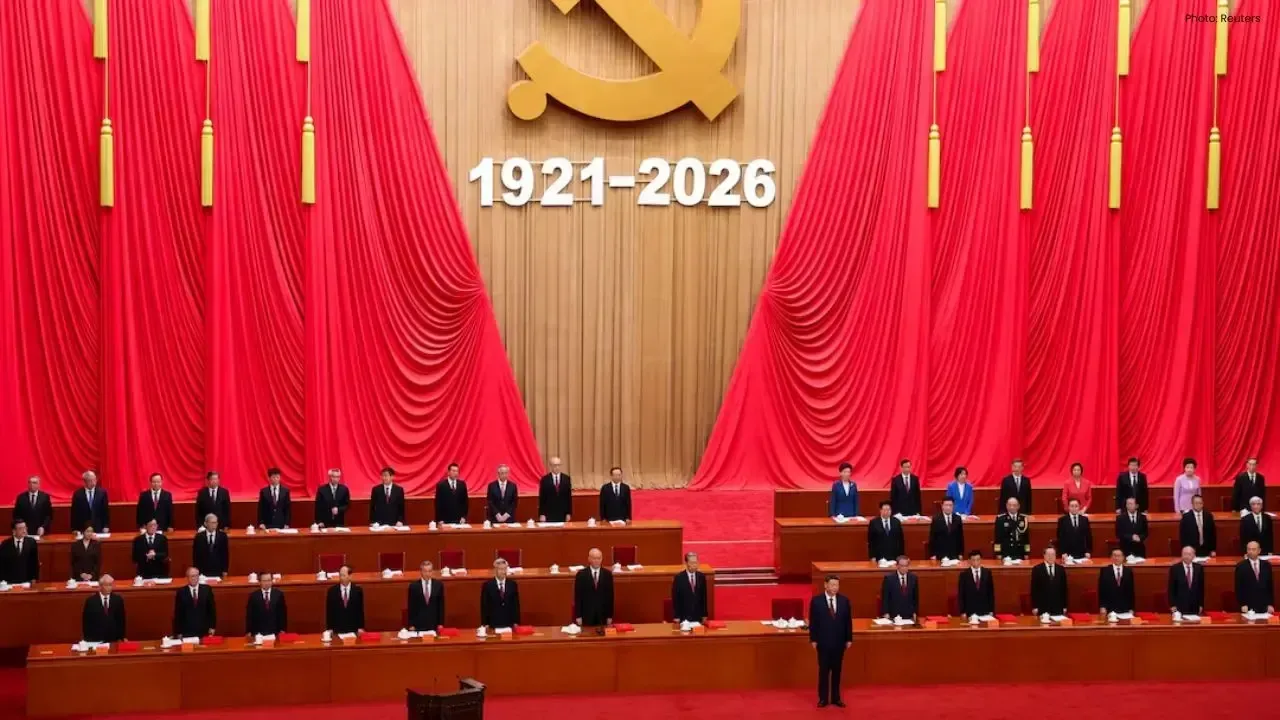
Anwar Congratulates Xi on CPC's 105th Anniversary
Malaysia reaffirms strong ties with China as PM Anwar Ibrahim sends a congratulatory letter to Presi

Thai Agriculture Team Reviews 2026 Farm Development Plans
Agriculture Ministry officials inspected livestock and organic rice projects in Nakhon Sawan to moni

Thailand, Canada Boost Ties in PM-Level Phone Talks
Thailand and Canada agreed to strengthen trade, security, OECD cooperation and ASEAN-Canada FTA talk