You have not yet added any article to your bookmarks!
Join 10k+ people to get notified about new posts, news and tips.
Do not worry we don't spam!
Post by : Anis Farhan
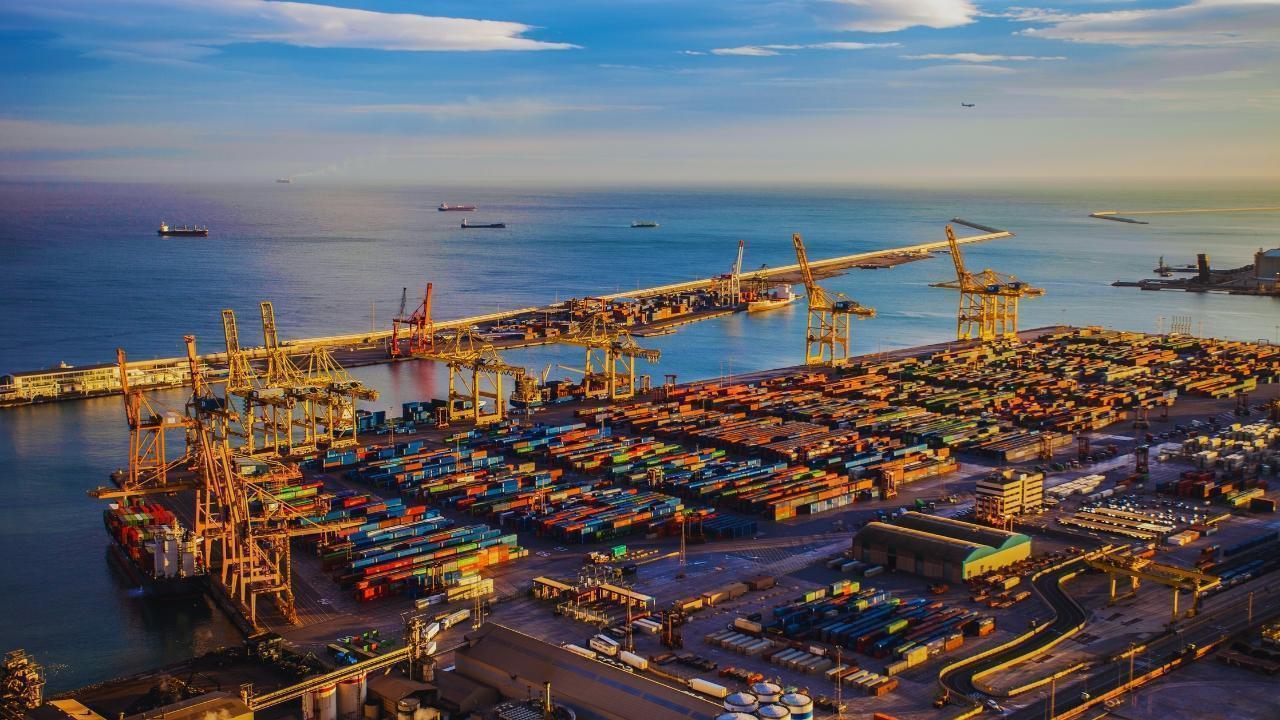
In the last decade, Southeast Asia has undergone a transformative evolution in trade dynamics, and at the heart of this silent revolution are its coastal gateways—the mega ports. From Singapore’s Tuas Port to Malaysia’s Port Klang, and Indonesia’s Patimban Port to Vietnam’s Cai Mep–Thi Vai, the region is pouring billions into maritime infrastructure. The rationale is straightforward: boost competitiveness, support booming exports, and reinforce ASEAN’s status as a global supply chain powerhouse. But beyond cranes and containers, these projects signal something much deeper—a vision of future-proofed economies grounded in regional collaboration, strategic positioning, and economic resilience.
At the tip of the ASEAN trade corridor lies Singapore’s colossal Tuas Mega Port, a $20 billion project that is poised to become the world’s largest automated port by 2040. Consolidating five existing terminals into a single hub, Tuas aims to handle 65 million TEUs (twenty-foot equivalent units) annually.
What makes Tuas unique isn’t just its scale, but its forward-thinking integration. The port is powered by AI systems for vessel berthing, autonomous trucks, and robotics in cargo handling—all streamlined under a digital command center. For ASEAN, Tuas serves as a model of how smart infrastructure can elevate a port’s status from transit hub to trade ecosystem. Its success will have ripple effects across regional ports competing or aligning with Singapore's technological momentum.
With over 17,000 islands, Indonesia's geographic identity is inseparable from the ocean. For decades, however, port inefficiencies and logistics fragmentation limited the country’s maritime potential. That’s now changing with the development of Patimban Port in West Java.
Built with Japanese collaboration, Patimban is set to become an automotive export hub. Its proximity to industrial zones makes it a vital alternative to Jakarta’s overburdened Tanjung Priok Port. Indonesia’s government sees Patimban not just as a logistics solution, but as a symbol of President Jokowi’s “Global Maritime Fulcrum” doctrine—a vision to turn the archipelago into a pivotal node in international shipping.
Patimban’s success will also improve regional trade fluidity, particularly with Japan, the Philippines, and Thailand, by shortening delivery times and reducing maritime congestion.
Vietnam has rapidly emerged as one of ASEAN’s most promising economies, driven by its manufacturing prowess and trade agreements like the CPTPP and EVFTA. But to sustain its export momentum, Vietnam is betting big on port development.
The Cai Mep–Thi Vai port complex near Ho Chi Minh City is leading this charge. Strategically located and capable of handling large mother vessels directly (without transshipment), this port is crucial for time-sensitive cargo headed to Europe and the U.S.
Vietnam’s deep-water ambitions are about more than capacity—they’re about competitiveness. As global manufacturers relocate from China, a well-connected maritime infrastructure will give Vietnam an edge in attracting long-term foreign investment, especially in electronics, garments, and furniture.
Thailand’s Eastern Economic Corridor (EEC) has become the country’s flagship development zone, and ports are central to its vision. The expansion of Laem Chabang Port—Thailand’s largest—is part of a $45 billion initiative to turn the EEC into a global smart hub.
This port will feature advanced automation, enhanced road-rail connectivity, and deeper berths for megaships. But its true value lies in its integration with nearby airports and rail links, offering a seamless multimodal logistics network.
Laem Chabang’s growth supports Thailand’s ambitions to shift from traditional manufacturing to high-tech industries like robotics, biofuel, and EVs. In this context, the port becomes more than a gateway—it’s a catalyst for a new industrial era.
Malaysia sits on the Strait of Malacca, one of the world’s busiest maritime chokepoints. It leverages this position with two key ports: Port Klang and the Port of Tanjung Pelepas (PTP). Combined, they serve as the country’s twin engines of trade.
Port Klang, being close to the Klang Valley’s industrial zone, supports containerized goods and domestic logistics. Meanwhile, PTP—supported by shipping giant Maersk—is known for its deep-water capabilities and transshipment strength.
Both ports are undergoing major upgrades: digitization, capacity expansion, and green initiatives such as shore power and carbon reduction programs. Their development secures Malaysia’s role as a vital node in the east-west trade corridor while competing directly with Singapore for shipping traffic.
Mega port development in Southeast Asia isn’t occurring in isolation. It aligns with a larger regional movement: the ASEAN Economic Community (AEC), which aims to create a single market and production base.
Seamless logistics across borders is vital for this integration, and ports are central to making that happen. Efficient ports reduce trade friction, lower costs, and improve access to regional and global markets. They also strengthen ASEAN’s trade relationships with China, India, the EU, and the U.S., reinforcing its reputation as a production hub.
Furthermore, the Regional Comprehensive Economic Partnership (RCEP)—the world’s largest free trade agreement—will amplify trade volumes. Without matching port infrastructure, the benefits of such agreements would remain theoretical.
While port expansion can seem like a race, ASEAN's approach leans toward complementarity. Many ports serve distinct geographic and industrial segments, reducing direct overlap. Singapore might dominate transshipment, while Vietnam targets direct exports. Indonesia can focus on domestic dispersal and vehicle exports, while Thailand aims for high-tech integration.
Nevertheless, strategic competition exists—particularly between Malaysia and Singapore, and between Vietnam and Thailand. Each country is betting on ports not just for economic gain but for geopolitical clout. Who controls the movement of goods controls leverage in the new global order.
That said, the ASEAN Port Network, a platform for information-sharing and alignment, seeks to reduce duplication and enhance joint planning. Future collaboration might include standardized customs protocols, joint port investments, and shared digital infrastructure.
Trade expansion must not come at the cost of the environment, and many ASEAN ports are proactively addressing this challenge. Tuas Port will use solar energy and stormwater collection. PTP is investing in energy-efficient cranes. Vietnam’s future ports plan to incorporate green logistics practices, including eco-packaging and emissions tracking.
The shift toward green ports is also a response to shipping regulations, like the IMO 2020 sulfur cap and upcoming decarbonization mandates. Ports that meet environmental benchmarks will attract greener vessels and cargo owners under pressure to meet ESG targets.
Green credentials are fast becoming competitive advantages—especially with European and Japanese partners.
Port development does more than move goods. It creates jobs, fuels ancillary industries like trucking, warehousing, and shipbuilding, and boosts urban growth.
In Indonesia, Patimban is expected to stimulate growth in Subang and surrounding districts. In Vietnam, port towns are seeing rising demand for housing, hotels, and retail. Thailand’s Laem Chabang zone is attracting tech parks and R&D centers.
These ripple effects make ports not just national assets but local lifelines. A port can become the beating heart of an entire regional economy.
Despite optimism, not all is smooth sailing. ASEAN faces challenges such as:
Delays and Overruns: Projects like Indonesia’s New Priok or Vietnam’s port upgrades often face budget overruns and bureaucratic hurdles.
Land Acquisition Conflicts: In places like Malaysia and the Philippines, port expansion can spark local protests or environmental lawsuits.
Logistics Gaps: Many ports lack integrated road or rail connectivity, limiting their full potential.
To overcome these, ASEAN nations must streamline regulations, ensure public-private collaboration, and integrate infrastructure masterplans with trade policy.
As trade corridors shift post-pandemic and new economic alliances emerge, ASEAN’s ports will be central to how the region positions itself. The next decade is critical. Will the region become merely a transit zone—or evolve into a command center of global commerce?
With the right investment, policies, and cooperation, ASEAN has the opportunity to do more than just ship goods—it can shape trade itself.
The content of this article is intended for informational and editorial purposes only. While every effort has been made to ensure the accuracy of the information presented, Newsible Asia does not guarantee the completeness or timeliness of data regarding companies, infrastructure projects, or government initiatives. Readers are advised to consult official sources or local regulations before making any business or investment decisions. The views expressed are those of the writer and do not necessarily reflect the official stance of Newsible Asia or its partners.









Lamborghini Catches Fire on Singapore's ECP, Causing Heavy Traffic
A Lamborghini caught fire on Singapore's ECP, causing heavy traffic and bus delays. No injuries were

Bangkok Airport Duty-Free Area Flooded by Pipe Burst
A burst water pipe flooded the duty-free shopping area at Bangkok's Suvarnabhumi Airport on July 16,

Nine Monks Killed in Thailand Pickup Truck Tragedy
An 11-year-old boy driving a pickup truck crashed into monks during a pilgrimage in northeastern Tha

Anwar Congratulates Xi on CPC's 105th Anniversary
Malaysia reaffirms strong ties with China as PM Anwar Ibrahim sends a congratulatory letter to Presi

Thai Agriculture Team Reviews 2026 Farm Development Plans
Agriculture Ministry officials inspected livestock and organic rice projects in Nakhon Sawan to moni

Thailand, Canada Boost Ties in PM-Level Phone Talks
Thailand and Canada agreed to strengthen trade, security, OECD cooperation and ASEAN-Canada FTA talk