You have not yet added any article to your bookmarks!
Join 10k+ people to get notified about new posts, news and tips.
Do not worry we don't spam!
Post by : Anis Farhan
In September 2025, millions of internet users across Asia, the Middle East, and Africa experienced unexpected slowdowns. Businesses reported delayed transactions, students faced online disruptions, and communication platforms struggled to keep up with demand. The culprit was not a cyberattack or a technical glitch on land—it was damage to undersea internet cables in the Red Sea, one of the world’s busiest digital arteries. The event has reignited global discussions on how exposed modern internet infrastructure truly is and whether nations are prepared for the consequences of such disruptions.
Despite the prominence of satellites and wireless technologies, the backbone of the global internet lies under the ocean. More than 95% of international data traffic travels through undersea fiber-optic cables, thin as a garden hose but capable of carrying immense amounts of information. These cables link continents, support banking systems, connect governments, and power the global digital economy. Without them, modern life would grind to a halt.
The Red Sea, in particular, is a critical corridor. Acting as a gateway between Europe, Asia, and Africa, the region hosts dozens of high-capacity cables connecting some of the fastest-growing internet markets in the world. Its geographical importance makes it both indispensable and highly vulnerable.
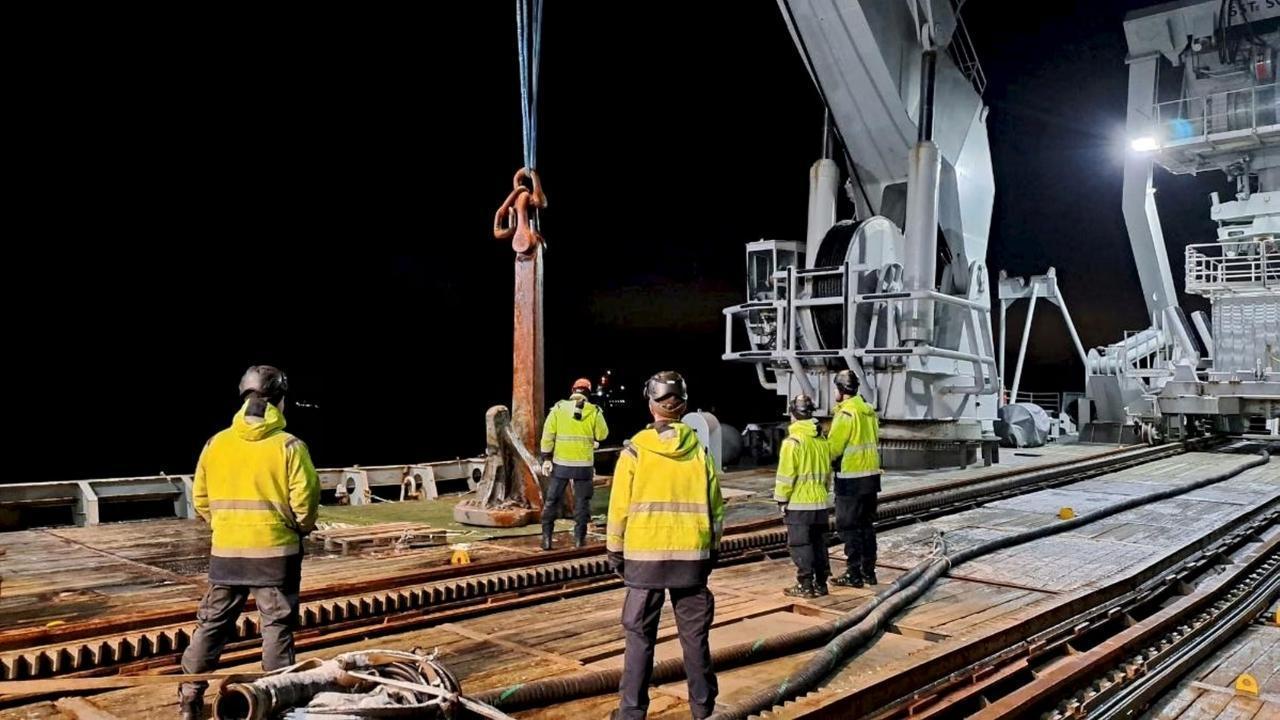
The September incident involved multiple undersea cables being severed, disrupting data flows between Asia, the Middle East, and Europe. Experts believe the damage may have been caused by anchoring ships, accidental dredging, or even intentional sabotage, though investigations are ongoing. The result was immediate: traffic had to be rerouted to longer paths, increasing latency and slowing down services in several countries, including India, the UAE, and Kenya.
For users, this meant more than just slower video streams. Financial transactions slowed, critical communications faced delays, and cloud services became harder to access. The sudden breakdown illustrated how dependent societies have become on an invisible infrastructure hidden deep beneath the sea.
The economic costs of cable cuts are staggering. E-commerce platforms reported dips in activity, stock exchanges faced trading delays, and global companies dependent on cloud systems struggled to maintain operations. For developing economies, which rely heavily on affordable internet access, the disruption had social as well as financial consequences. Schools shifted back to offline learning, hospitals faced difficulties accessing cloud-based medical records, and government agencies reported coordination challenges.
Analysts warn that such disruptions, if prolonged, could shave billions off national economies. The incident demonstrates that global connectivity is no longer a luxury but a lifeline for commerce, governance, and daily life.
One of the biggest concerns raised by the Red Sea cable cuts is intentional sabotage. Undersea cables are largely unguarded, spanning thousands of kilometers across international waters. In times of geopolitical tension, they could become strategic targets. Military analysts have long warned that hostile actors might cut or tap into cables to cripple economies or gather intelligence.
The vulnerability of undersea infrastructure is not just a regional issue—it is global. A single severed line can affect dozens of countries, slowing trade, financial markets, and even government communications. With rising geopolitical rivalries, experts are urging governments to take cable security as seriously as border defense.
Technology companies, particularly cloud providers and telecom giants, are investing in cable redundancy to reduce risks. This means laying multiple cables along different routes so that if one fails, others can take over. Companies like Google, Microsoft, and Amazon have already funded their own private cables to safeguard their global networks.
However, redundancy has limits. Routes through the Red Sea, for example, are geographically constrained, and alternative paths are longer and less efficient. While satellite internet, such as SpaceX’s Starlink, offers some relief, it cannot yet match the capacity of fiber-optic cables. For the foreseeable future, undersea cables will remain the backbone of global connectivity.
The Red Sea crisis also exposed how unevenly risks are distributed. Wealthier countries often have multiple cables, backup systems, and private networks. Smaller economies, however, may rely on just one or two major connections. When those fail, the effects are far more severe.
In Africa, some countries faced near-total connectivity loss for hours, while others saw internet costs spike as bandwidth had to be rerouted through more expensive satellite systems. This disparity highlights the digital divide not just in terms of access, but also resilience. Building more equitable infrastructure is now a global challenge.
In the aftermath of the Red Sea incident, governments and corporations are reevaluating strategies for securing global networks. Proposals include:
International treaties to protect undersea cables.
Stronger surveillance systems to monitor cable routes.
Investment in diversified pathways across land and sea.
Greater adoption of satellite systems as backup.
These solutions, however, require cooperation. Since cables often cross multiple national borders, protecting them demands a coordinated global effort. The challenge is balancing national interests with collective security, a task easier said than done in today’s fragmented geopolitical climate.
The Red Sea cable cuts serve as a stark reminder: the internet, often perceived as boundless and invisible, rests on a physical infrastructure that is fragile and finite. Every email, video call, and financial transaction depends on fibers running across the ocean floor. When those break, the world feels the shock instantly.
The incident should not only push governments and corporations to act but also raise public awareness about the importance of digital resilience. As societies become increasingly dependent on online systems, ensuring the stability of global connectivity must be treated as a priority equal to energy security or food supply chains.
This article has been prepared under Newsible Asia’s editorial standards. It is intended for informational purposes only and reflects events and analyses based on reports available as of September 2025.






Jordan Burroughs Returns to Wrestling with 2028 Olympic Dream
Jordan Burroughs returns to wrestling with Real American Freestyle as the Olympic champion eyes a po

Lamborghini Catches Fire on Singapore's ECP, Causing Heavy Traffic
A Lamborghini caught fire on Singapore's ECP, causing heavy traffic and bus delays. No injuries were

Bangkok Airport Duty-Free Area Flooded by Pipe Burst
A burst water pipe flooded the duty-free shopping area at Bangkok's Suvarnabhumi Airport on July 16,
Nine Monks Killed in Thailand Pickup Truck Tragedy
An 11-year-old boy driving a pickup truck crashed into monks during a pilgrimage in northeastern Tha

Anwar Congratulates Xi on CPC's 105th Anniversary
Malaysia reaffirms strong ties with China as PM Anwar Ibrahim sends a congratulatory letter to Presi

Thai Agriculture Team Reviews 2026 Farm Development Plans
Agriculture Ministry officials inspected livestock and organic rice projects in Nakhon Sawan to moni