You have not yet added any article to your bookmarks!
Join 10k+ people to get notified about new posts, news and tips.
Do not worry we don't spam!

Post by : Anis Farhan
Languages carry more than words—they hold the history, traditions, and knowledge of a people. Yet, across Asia, dozens of indigenous languages are edging toward extinction. Rapid urbanization, globalization, and the dominance of widely spoken tongues like English, Mandarin, and Hindi have created a situation where younger generations are drifting away from their native dialects. As these languages fade, so too do the unique perspectives they offer on history, ecology, and cultural identity.
Efforts to reverse this decline are gaining momentum. From tribal schools in India’s northeast to digital platforms in Southeast Asia, revival initiatives are finding new ways to keep indigenous voices alive. But the struggle is far from simple; it requires coordinated action among governments, communities, and cultural advocates to safeguard a heritage that could otherwise vanish forever.
According to UNESCO, nearly half of the world’s 7,000 languages could disappear by the end of this century, and Asia is among the hardest-hit regions. Countries such as India, Indonesia, and the Philippines boast extraordinary linguistic diversity, but also lead in the number of endangered languages. For example, India alone has more than 400 vulnerable languages, many of which are spoken only by small rural communities.
The loss of these languages does not just reduce cultural diversity; it erases unique worldviews. Indigenous languages often include knowledge of local biodiversity, traditional medicine, and oral histories that are not captured in mainstream languages. Once these tongues vanish, their wisdom may be gone forever.
In northeastern India, home to hundreds of tribal languages, community-run schools are teaching children in their mother tongues alongside regional and national languages. The state of Nagaland, for instance, has introduced tribal dialects into school curriculums. Efforts are also being made to record folk songs, oral stories, and proverbs before they fade from memory.
Digital initiatives are also gaining traction. Non-profits have launched online dictionaries and language-learning apps to encourage young people to reconnect with their heritage. These tools not only serve native speakers but also spark interest among academics and cultural enthusiasts across the globe.
Indonesia, with more than 700 languages, faces similar challenges. Bahasa Indonesia, the official national language, is unifying but has unintentionally overshadowed regional tongues. To counter this, cultural groups are working to digitize texts and promote storytelling festivals where indigenous languages take center stage.
For example, the Toraja people of Sulawesi are documenting their rituals and myths in their native language, recognizing that younger generations are increasingly drawn to Indonesian or English. Such efforts demonstrate that language revival is not merely about preservation—it is about pride and identity.
Technology is proving to be one of the most powerful allies in the revival of indigenous languages. Social media platforms, podcasts, and YouTube channels are helping indigenous voices reach broader audiences. Young people, often accused of abandoning native tongues, are ironically becoming their champions through digital creativity.
In the Philippines, local creators are producing video content in endangered languages like Kapampangan and Waray-Waray. Similarly, in Malaysia, apps are teaching indigenous dialects such as Iban and Kadazandusun. These digital tools bridge generations, making languages relevant in modern contexts.
Education policies play a crucial role in determining whether a language survives or dies. Countries like New Zealand have shown that immersion schools can successfully revive indigenous languages like Māori. In Asia, similar experiments are emerging.
In Taiwan, the government has launched initiatives to revive indigenous Austronesian languages by funding bilingual education and encouraging the use of mother tongues in classrooms. India’s new National Education Policy also emphasizes multilingual education, creating space for tribal and regional languages in early schooling.
However, challenges remain. Limited resources, a lack of trained teachers, and resistance from families who prioritize dominant languages for career opportunities often undermine these policies. Balancing economic realities with cultural preservation remains a delicate task.
Language is not just a means of communication—it is a badge of identity. For indigenous communities, reviving their mother tongue is also about reclaiming pride and resisting assimilation. In Thailand, the Karen community has introduced cultural festivals where songs, plays, and poetry are performed in their native tongue, reinforcing a sense of belonging.
In Myanmar, where ethnic conflicts have often marginalized minority voices, language revival has become an act of resistance. Communities view the preservation of their language as part of their right to exist and flourish within a larger national identity.
International organizations are also stepping in. UNESCO’s “International Decade of Indigenous Languages” (2022–2032) has mobilized efforts worldwide, including in Asia. Governments are encouraged to create policies, fund research, and support community-led initiatives.
Non-governmental organizations (NGOs) and academic institutions are providing resources for documentation, training language activists, and supporting community-based projects. These global partnerships ensure that local struggles are amplified on an international stage, fostering solidarity among communities facing similar challenges.
Despite the growing momentum, significant hurdles remain. Urban migration often leads younger generations to abandon rural dialects. Parents, seeking better job opportunities for their children, sometimes discourage the use of indigenous languages in favor of English, Mandarin, or Hindi.
Additionally, some communities face political barriers. Minority languages are not always recognized by national governments, leaving them without legal protection or funding. Even when policies exist, the lack of consistent implementation often hampers progress.
Preserving indigenous languages requires a multi-pronged approach:
Policy Support: Governments must integrate language preservation into national education and cultural strategies.
Community Involvement: Efforts led by local people are more sustainable than top-down approaches.
Digital Innovation: Technology should be harnessed to document, teach, and popularize endangered languages.
Cultural Promotion: Festivals, art, and storytelling can make languages vibrant and relevant again.
The key lies in making indigenous languages not just relics of the past but living, evolving tools of communication. When young people see their native tongues valued in schools, media, and digital spaces, they are more likely to embrace and carry them forward.
The revival of indigenous languages in Asia is more than a cultural mission—it is a struggle for identity, dignity, and heritage. Each language represents a unique way of seeing the world, and losing it means losing an irreplaceable part of humanity’s collective wisdom.
While challenges abound, the growing wave of grassroots movements, technological tools, and policy support offers hope. The efforts across Asia highlight that indigenous languages, though fragile, are not doomed to extinction. With sustained commitment, they can thrive again, ensuring that future generations inherit not only the words but also the spirit of their ancestors.
This article is written for informational purposes only and does not represent the views of Newsible Asia. The content reflects general research and observations on indigenous language revival efforts across Asia.









Australia 50/3 After Bangladesh Bowled Out for 64 in Second Test
Australia reached 50/3 after Bangladesh were bowled out for 64 in the second Test, with Mitchell Sta

Jordan Burroughs Returns to Wrestling with 2028 Olympic Dream
Jordan Burroughs returns to wrestling with Real American Freestyle as the Olympic champion eyes a po

Lamborghini Catches Fire on Singapore's ECP, Causing Heavy Traffic
A Lamborghini caught fire on Singapore's ECP, causing heavy traffic and bus delays. No injuries were

Bangkok Airport Duty-Free Area Flooded by Pipe Burst
A burst water pipe flooded the duty-free shopping area at Bangkok's Suvarnabhumi Airport on July 16,
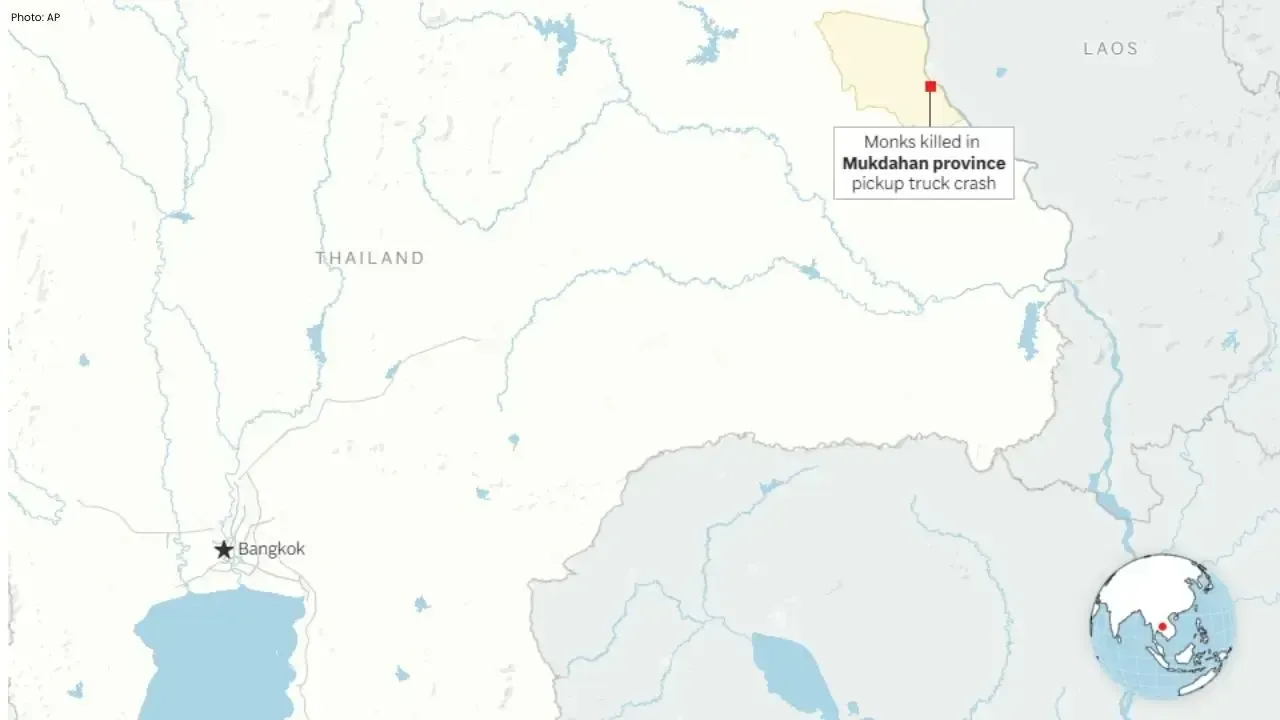
Nine Monks Killed in Thailand Pickup Truck Tragedy
An 11-year-old boy driving a pickup truck crashed into monks during a pilgrimage in northeastern Tha

Anwar Congratulates Xi on CPC's 105th Anniversary
Malaysia reaffirms strong ties with China as PM Anwar Ibrahim sends a congratulatory letter to Presi