
You have not yet added any article to your bookmarks!
Join 10k+ people to get notified about new posts, news and tips.
Do not worry we don't spam!
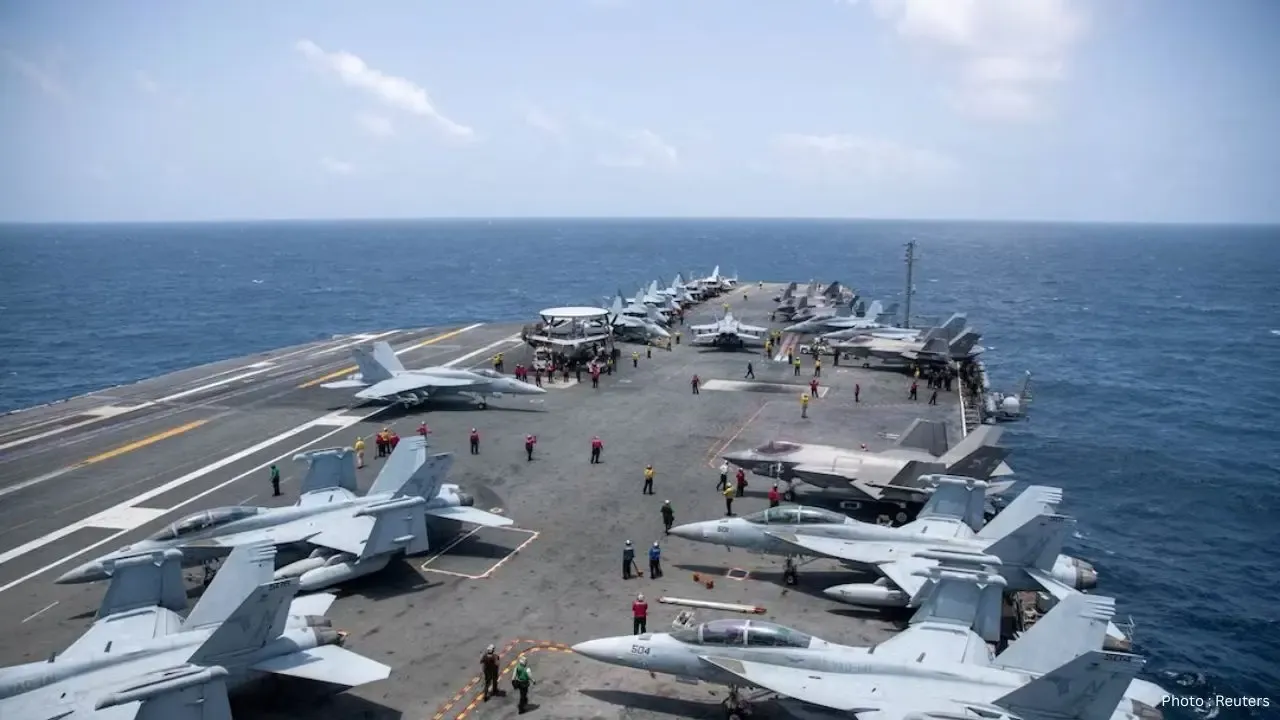
Post by : Saif Rahman
The ongoing exchange of severe warnings between the United States and Iran intensifies as Washington prepares to announce new economic sanctions targeting Tehran and potentially its trading partners.
These sanctions, expected to be revealed on Monday, could impact some of Iran's most vital trade allies. U.S. Treasury Secretary Scott Bessent indicated that the sanctions could be among the most stringent ever inflicted on the nation.
China, a significant buyer of Iranian oil, is likely to bear the brunt of these new restrictions. Beijing has called for diplomacy, advocating for a resolution instead of further escalation.
Iran has categorically denounced the impending sanctions. Esmaeil Baghaei, a spokesperson for the Foreign Ministry, stated that targeting other nations is an attempt by Washington to impose its authority beyond its borders. Tehran has also issued warnings about responding to any military or economic provocations.
U.S. President Donald Trump has asserted that Iran is seeking a deal but has yet to agree on terms deemed acceptable by Washington. Despite the tough rhetoric from both parties, direct conflict has diminished, and formal peace talks remain stalled.
The conflict's most significant impact has been on shipping through the vital Strait of Hormuz, a key route for global energy supplies.
Recent ship-tracking reports reveal that very few commercial vessels have traversed this critical waterway, with no large crude oil tankers or LNG carriers included. Numerous vessels and seafarers have reportedly been stranded in the vicinity.
U.S. officials assert that military operations have helped sustain a limited oil flow through the Strait, but daily shipments still fall far short of pre-conflict levels.
Iran maintains missile and drone capabilities that pose threats to shipping and regional targets, warning that unauthorized oil tankers in the area may be attacked.
This disruption has raised global energy supply concerns and is pushing oil prices higher.
The military operations have inflicted significant damage on Iran's economy and military capacity. Iranian officials are acknowledging that the ongoing conflicts are exacerbating issues related to production, finance, and economic performance.
Iran's military leadership has vowed severe repercussions to any new threats. Meanwhile, President Masoud Pezeshkian advocates for diplomatic solutions, asserting that ending the conflict is preferable to further destruction.
Parliament Speaker Mohammad Baqer Qalibaf has also recognized the tough economic situation facing the nation, cautioning that military might alone won't suffice if the populace confronts shortages and declining economic activity.
The latest developments have entrenched the U.S. and Iran in a standoff characterized by military pressure, economic sanctions, and threats to regional trade routes. With the U.S. poised to implement further sanctions, pressures on Tehran and its international economic partners are likely to escalate.








Spain's Diego Poncelet Sets Skateboarding World Speed Record
Spain's Diego Poncelet reaches 151.83 km/h in a record-breaking downhill skateboard run in Canada, s

Hyundai Recalls 94,622 US Vehicles Over Potential Fire Risk
Hyundai recalls 94,622 US vehicles over overheating seat motors. Check affected Genesis models, fire

Nvidia Pledges $250 Million for UK AI Safety Research
Nvidia will provide $250 million in computing resources over five years to support AI safety researc

Jacob Bethell Returns as England Name Squads for Australia Tour
England name ODI and T20 squads for the Australia tour, with Jacob Bethell returning from injury and

Beauden Barrett Opens Up About Mental Struggles During All Blacks Exile
Beauden Barrett discusses his confidence struggles after missing six tests, his return against Austr

IMF Says AI Investment Supports Global Growth Despite Energy Shock
IMF says AI investment is supporting global growth near 3%, with Asian economies benefiting from ris