You have not yet added any article to your bookmarks!
Join 10k+ people to get notified about new posts, news and tips.
Do not worry we don't spam!

Post by : Anis Farhan
The global economy is navigating turbulent waters. Persistent inflationary pressures, fragile supply chains, and shifting geopolitical alliances have created a climate of caution. In several advanced economies, growth rates are tapering off, while developing markets face mounting challenges from climate-related disruptions and debt burdens.
Against this backdrop, India’s economic outlook stands out as a rare bright spot. The latest report from the World Economic Forum’s Chief Economists Outlook suggests that India is set to become the primary engine of growth worldwide for both 2025 and 2026. Chief economists surveyed are markedly bullish about South Asia, with India being the core reason for this optimism. Many expect strong or very strong growth across the region in the coming period, driven by a combination of steady domestic demand and strategic economic reforms.
The International Monetary Fund’s forecasts align with this sentiment, projecting India’s GDP growth at over 6 percent in both 2025 and 2026. For a major economy, maintaining such momentum during a time of global slowdown is exceptional.
These projections rest on several solid macroeconomic fundamentals. Domestic consumption remains a cornerstone of growth, fuelled by rising incomes, particularly in urban centers, and a growing middle class that is increasingly aspirational. On the supply side, industrial output and services exports are experiencing robust demand, while agriculture continues to benefit from targeted reforms and better infrastructure.
Government policies have played a major role in shaping this runway. From expanding public infrastructure projects to encouraging private sector participation in manufacturing and technology, policy measures have created an environment conducive to investment and job creation.
India’s growth story is not reliant on a single driver—it is a tapestry woven from multiple threads. Private consumption continues to expand as household confidence improves and purchasing power increases. Both rural and urban markets are contributing, with rural demand benefiting from better crop prices, improved logistics, and targeted welfare schemes.
Investment flows, both domestic and foreign, are adding muscle to this momentum. Public capital expenditure has surged, particularly in transportation, energy, and digital connectivity. These infrastructure improvements are, in turn, creating fertile ground for private investment to flourish.
The government’s focus on simplifying regulations, reducing corporate taxes, and promoting sector-specific incentives—such as for electric vehicles, renewable energy, and semiconductors—has boosted business sentiment. The national budget has also introduced measures aimed at increasing disposable income, stimulating consumption, and reducing supply bottlenecks.
India’s rapid digital transformation is becoming a defining feature of its economic ascent. The combination of a young, tech-savvy population, affordable mobile internet, and supportive digital policies has positioned the country as a global leader in digital adoption.
Investments in artificial intelligence, cloud computing, and big data analytics are changing the way industries operate. From manufacturing automation to fintech innovations, digital solutions are improving efficiency, reducing costs, and enabling businesses to scale faster.
The public digital infrastructure—built on initiatives like the Unified Payments Interface (UPI) and Aadhaar—has also made financial services more inclusive, bringing millions of people into the formal economy. The potential for further expansion in e-commerce, telemedicine, online education, and green tech remains vast.
India’s growing integration into global trade networks is another key factor behind its strong economic outlook. Recent trade agreements with major partners are expected to boost exports in sectors like textiles, pharmaceuticals, IT services, and engineering goods.
The diversification of supply chains, accelerated by pandemic disruptions and geopolitical tensions, has benefited India as global companies seek alternatives to over-reliance on a single market. This shift has opened new opportunities for manufacturing, assembly, and high-value services.
Additionally, India’s role in regional forums and multilateral trade discussions has strengthened its position as a trusted economic partner in Asia and beyond.
While the outlook is encouraging, India’s growth journey is not without challenges. Rising trade protectionism, unpredictable commodity prices, and potential interest rate fluctuations in global markets could affect both exports and capital flows.
Domestically, infrastructure bottlenecks, skill mismatches in the labor market, and environmental pressures pose structural challenges. The need to balance rapid industrial growth with sustainable environmental practices will be a defining test in the coming decade.
However, India’s resilience lies in its ability to adapt quickly. Past crises—from the global financial downturn to pandemic-related disruptions—have shown that the country can pivot policy, mobilize resources, and maintain stability even during volatile periods.
One of India’s most significant assets is its demographic profile. With a median age of around 28, the country has one of the youngest populations in the world. This youth dividend provides a massive labor force, an expanding consumer base, and a fertile ground for entrepreneurship.
Education reforms, vocational training initiatives, and the expansion of higher education institutions are aimed at harnessing this demographic advantage. At the same time, rising female participation in the workforce and the growth of micro, small, and medium enterprises (MSMEs) are adding further depth to economic activity.
Sustainability is increasingly at the heart of India’s growth plans. The country is investing heavily in renewable energy, electric mobility, and sustainable agriculture. Solar power capacity has expanded significantly, while large-scale wind projects are also underway.
Technology is playing a pivotal role in making this transition possible. Smart grids, water conservation technologies, and climate-resilient farming practices are being scaled to reduce environmental impact while boosting productivity.
These green initiatives not only address climate commitments but also create new industries and employment opportunities, reinforcing long-term economic growth.
For India to sustain its role as a global growth engine, it will need to stay committed to structural reforms, inclusive development, and innovation-led strategies. Continued investment in infrastructure, education, and healthcare will be critical to ensuring that the benefits of growth are widely shared.
Strengthening institutional capacity, maintaining macroeconomic stability, and fostering an environment that rewards entrepreneurship will be equally important. In an interconnected world, India’s success will also depend on how it navigates geopolitical relationships, trade policies, and technological transitions.
India’s growth is not an isolated phenomenon—it has implications for the global economy. As one of the few large economies expected to maintain strong momentum, India could help offset slowdowns elsewhere. Its growing consumer base offers opportunities for global businesses, while its expanding manufacturing and services capabilities could support more balanced global supply chains.
If India fulfills its growth potential, it could shape new patterns of trade, investment, and innovation worldwide, influencing how other emerging markets approach their own development strategies.
The WEF’s forecast places India in a unique position at a time when much of the world is struggling with economic uncertainty. The country’s blend of youthful energy, technological advancement, and policy-driven reform creates a potent formula for sustained growth.
While challenges remain, the broader narrative is one of resilience, adaptability, and ambition. If India manages to sustain its current trajectory, the coming years could mark a transformative chapter not only for the nation but for the global economic landscape.
This article is based on current economic forecasts, expert analyses, and trends as projected by global financial institutions. Economic conditions are subject to change due to domestic and international factors, including policy shifts, market fluctuations, and unforeseen events. Readers are advised to refer to official economic data and expert guidance for real-time updates.










Lamborghini Catches Fire on Singapore's ECP, Causing Heavy Traffic
A Lamborghini caught fire on Singapore's ECP, causing heavy traffic and bus delays. No injuries were

Bangkok Airport Duty-Free Area Flooded by Pipe Burst
A burst water pipe flooded the duty-free shopping area at Bangkok's Suvarnabhumi Airport on July 16,

Nine Monks Killed in Thailand Pickup Truck Tragedy
An 11-year-old boy driving a pickup truck crashed into monks during a pilgrimage in northeastern Tha
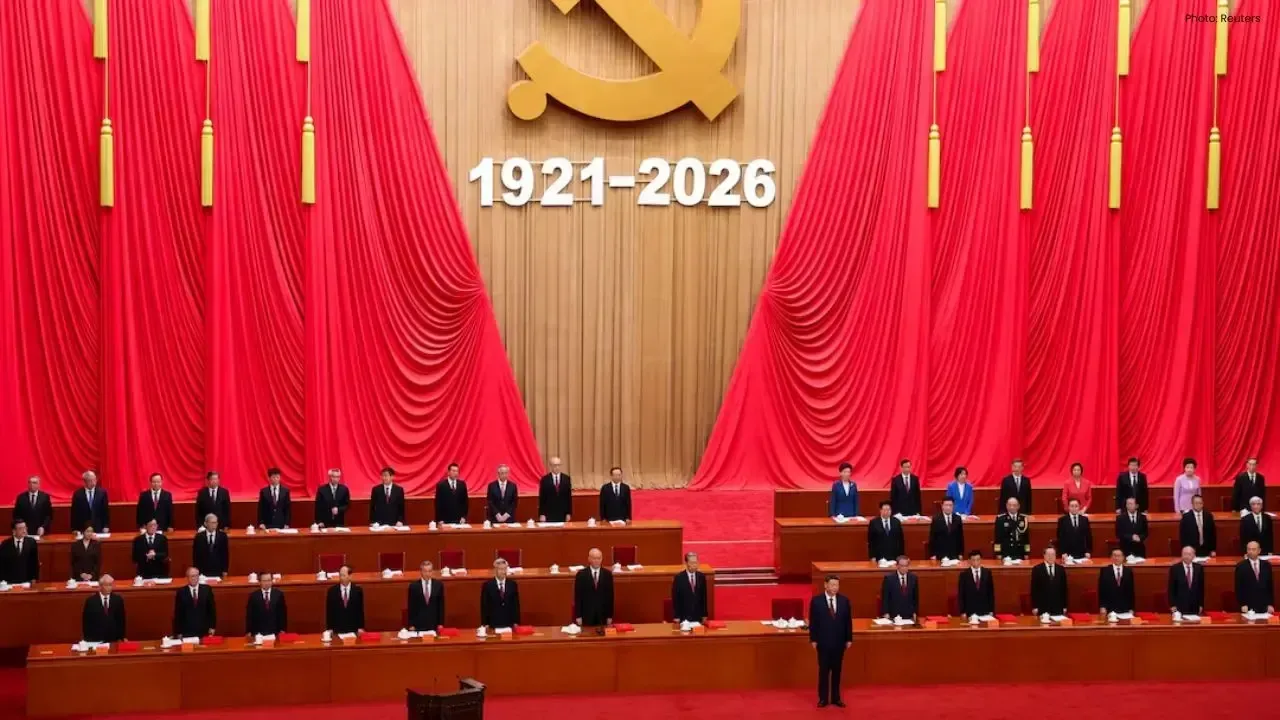
Anwar Congratulates Xi on CPC's 105th Anniversary
Malaysia reaffirms strong ties with China as PM Anwar Ibrahim sends a congratulatory letter to Presi

Thai Agriculture Team Reviews 2026 Farm Development Plans
Agriculture Ministry officials inspected livestock and organic rice projects in Nakhon Sawan to moni

Thailand, Canada Boost Ties in PM-Level Phone Talks
Thailand and Canada agreed to strengthen trade, security, OECD cooperation and ASEAN-Canada FTA talk