
You have not yet added any article to your bookmarks!
Join 10k+ people to get notified about new posts, news and tips.
Do not worry we don't spam!
Post by : Anis Farhan
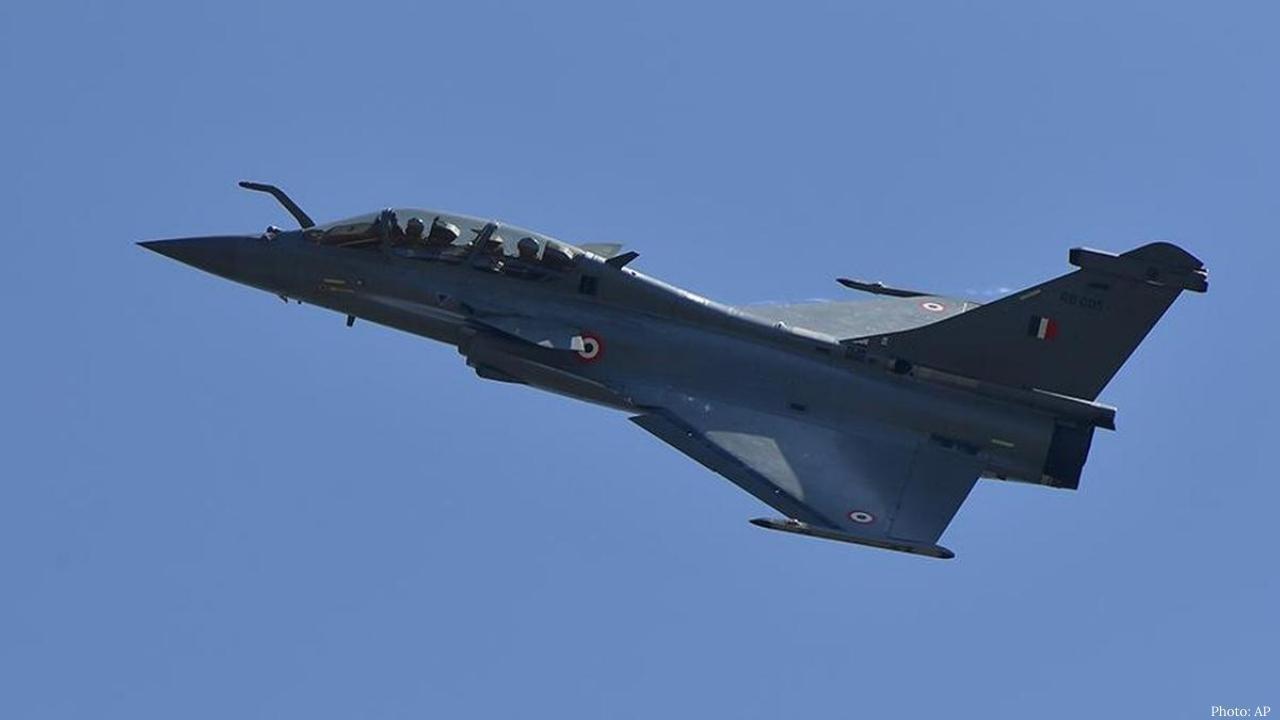
India’s Defence Acquisition Council (DAC), chaired by Defence Minister Rajnath Singh, has approved a high-value proposal to procure 114 Rafale fighter jets from French aerospace manufacturer Dassault Aviation. The move represents one of the most substantial defence procurement initiatives in recent years and marks a major step in modernising the Indian Air Force’s (IAF) combat fleet in response to growing geopolitical pressures and capability gaps within the armed forces.
The procurement plan is estimated to be valued at approximately ₹3.25 lakh crore, positioning it among the largest defence acquisitions in India’s history. The DAC’s approval paves the way for detailed negotiation, manufacturing planning and integration with India’s broader defence industrial ecosystem.
The move to approve the Rafale acquisition comes at a time when India’s air combat fleet is under significant strain. The current sanctioned squadron strength for the IAF is 42 squadrons, but recent internal assessments show the force operating at roughly 29 squadrons, reflecting ageing fleet retirements and delayed inductions of new aircraft. This shortfall has underscored the urgent need for advanced, combat-ready platforms to maintain deterrence in India’s airspace against multiple regional challenges.
The Indian government’s decision to proceed with a larger fleet of Rafale jets, equipped with advanced avionics and weapons systems, aims to close this capability gap in the medium term while indigenous platforms continue their production ramp-up.
Under the current plan, India is expected to acquire 114 Rafale multi-role fighter jets in a mix of single-seat and twin-seat variants. A portion of these aircraft will be obtained in “fly-away” condition, while the remainder will be assembled in India. Officials expect that about 80% of the jets will be manufactured domestically in collaboration with Dassault Aviation and Indian aerospace partners, integrating a significant level of indigenous content over time.
The jets will be equipped with a range of advanced systems, including long-range air-to-air Meteor missiles, SCALP cruise missiles, precision guided munitions and cutting-edge electronic warfare and sensor suites that enhance India’s tactical and strategic air combat capabilities.
This acquisition is also expected to complement ongoing modernisation efforts such as the procurement of HAL Tejas fighters and future fifth-generation platforms, thereby creating a balanced and future-ready air combat fleet.
The DAC’s approval of the Rafale procurement proposal sends a strong signal of India’s intent to modernise its military in the face of rising regional tensions, particularly along its northern and western borders. The additional fighter jets will significantly enhance strike range, air dominance and multi-role combat flexibility for the IAF.
Beyond operational capability, this deal also deepens strategic ties between India and France, reflecting a sustained partnership in defence cooperation that has been evolving over decades. The Rafale platform, already in service with the IAF and deployed in key exercises and operations, has showcased its effectiveness in diverse flight regimes and mission profiles, making it one of the central pillars of India’s aerial deterrence posture.
One of the notable aspects of the proposal is the emphasis on domestic production and technology absorption. A majority of the production for the 114 jets is expected to occur within India, involving partnerships between Dassault Aviation and Indian firms. This aligns with the broader Make in India initiative and aims to strengthen the country’s aerospace supply chain.
With increased local manufacturing content, the deal is also poised to create industrial and technological spin-offs in areas such as avionics, aircraft systems, maintenance, repair and overhaul (MRO) capabilities, and long-term sustainment of the fleet. Such collaborations can foster a more robust defence ecosystem less reliant on imported platforms.
The Indian Air Force faces significant capability demands, with indigenous platforms like the HAL Tejas Mk 1A and future next-generation fighters still under induction and development. The Rafale jets will provide a crucial capability bridge, ensuring that front-line combat readiness is maintained while domestic platforms transition into full operational roles.
Analysts underscore that the early deployment of additional Rafale jets will help address immediate operational needs, enhancing air defence posture and strike options, especially as India’s security environment becomes more complex and dynamic.
The Rafale proposal is part of a larger agenda being considered by the DAC, encompassing multiple defence procurement priorities, including air defence systems, maritime surveillance aircraft and significant indigenous projects. The council’s actions are expected to span all three major domains — air, land and sea — as India continues to strengthen its armed forces procurement footprint.
The DAC’s action has coincided with key international engagements, including the upcoming visit by French President Emmanuel Macron to India. The timing of the Rafale clearance ahead of this visit underscores the strategic value both nations place on defence cooperation and mutual trust.
India’s decision to pursue this deal at a moment of heightened geopolitical competition also reflects its broader foreign policy objective of diversifying strategic partnerships while enhancing its own military preparedness.
Valued at approximately ₹3.25 lakh crore, the Rafale procurement is a major financial commitment for India’s defence sector. The Defence Ministry’s proposed acquisition plan will require phased financing, commercial negotiations with Dassault and associated suppliers, and eventual approval from the Cabinet Committee on Security (CCS) before final contracts are concluded.
The investment also reflects India’s prioritisation of capital defence spending within its annual military budget, aimed at achieving a balanced force structure that can respond to evolving strategic imperatives.
Following the DAC’s approval, the acquisition process will move into detailed technical and commercial negotiations with the French side. Once terms are finalised, production timelines, delivery schedules and integration plans will be established. A phased induction of the jets into IAF squadrons is expected as logistical, training and infrastructure preparations unfold.
The next step after DAC clearance will be formal approval from the CCS, which will authorise contractual commitments and enable execution of the deal across manufacturing, delivery and support lifecycles.
The Defence Acquisition Council’s approval of the Rafale fighter jet acquisition proposal marks a critical milestone in India’s defence modernisation efforts and reflects a strategic intent to fortify the Indian Air Force’s combat capabilities for the decades ahead. This multi-billion-dollar decision will enhance air combat readiness, deepen defence cooperation with France, and accelerate domestic aerospace development as part of broader national security objectives.
In an era characterised by shifting geopolitical fault lines and advanced warfare requirements, the Rafale procurement stands as a defining investment in India’s defence preparedness and technological autonomy.
This article is based on verified reporting and publicly available information. It is intended for informational purposes and does not constitute government policy interpretation or official defence communication.










PM Modi Pays Tribute to Mahatma Gandhi, Urges People to Support Khadi
PM Modi pays tribute to Mahatma Gandhi on Gandhi Jayanti and urges citizens to support Khadi and the

Amazon Seeks to Offload $8 Billion in Nvidia Chips to Investors
Amazon plans to move $8 billion in Nvidia chips to investors, using a new financing model to strengt

Samsung Raises Galaxy S26 Prices as Memory Chip Costs Rise
Samsung raises Galaxy S26 prices in South Korea as rising memory chip costs put pressure on smartpho

Lewis Hamilton Calls Singapore Grand Prix One of F1's Toughest Races
Lewis Hamilton discusses the demanding Singapore Grand Prix and brings Plus44 and Almave to Singapor

Denmark's Pandora Opens World's Largest Jewellery Factory in Vietnam
Pandora opens its largest jewellery factory in Vietnam, expanding global production, strengthening s

Gautam Gambhir Questions Batting-Friendly Pitches After India's Record ODI Chase
Gautam Gambhir questions batting-friendly ODI pitches after India’s record chase, calling for a bett

