
You have not yet added any article to your bookmarks!
Join 10k+ people to get notified about new posts, news and tips.
Do not worry we don't spam!
Post by : Anis Farhan
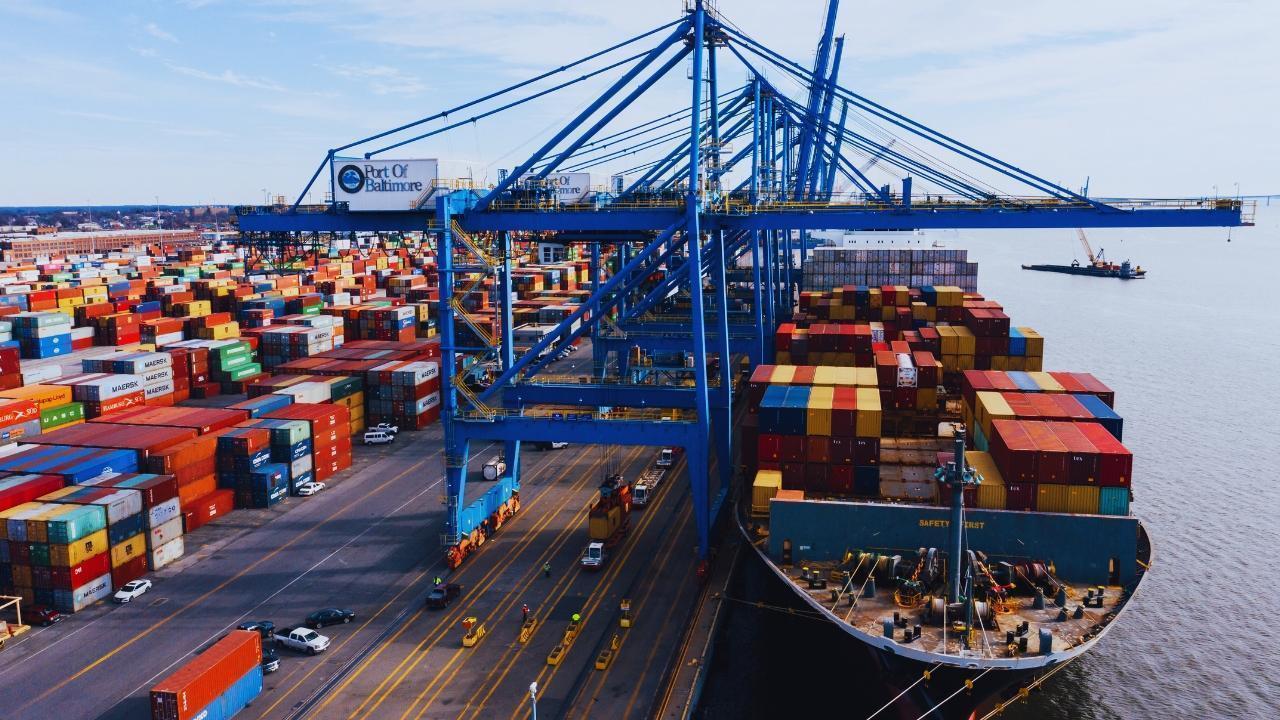
In a rapidly reconfiguring global trade environment, the India–Dubai Infrastructure Corridor is emerging as a transformative force. Formalized through strategic agreements and deepened by commercial partnerships, this corridor is not just about roads, ports, or pipelines — it’s about redefining how trade flows across Asia, the Gulf, and beyond.
With digitized systems, joint logistics hubs, and shared investment in infrastructure, this India–UAE initiative is gaining attention as a model for new-generation trade corridors — ones that prioritize speed, reliability, and technological integration over traditional geopolitical alignments.
The seeds of this infrastructure partnership were sown through a series of trade and investment pacts signed between India and the UAE over the past three years. The Comprehensive Economic Partnership Agreement (CEPA) signed in 2022 laid the legal foundation. But it’s in 2024–2025 that the vision began to materialize.
Key developments include:
Joint logistics parks in Gujarat and Jebel Ali, designed for seamless customs processing
Digital freight corridors to automate shipment tracking, invoicing, and compliance
Green energy and port modernization projects, co-funded by DP World and Indian infrastructure majors
The result? A reduction of shipping time between India and Dubai from 21 days to under 12, and in some cases, even faster for containerized freight.
The real significance of this corridor goes beyond bilateral gains. The India–Dubai partnership is being pitched as a “plug-and-play” route for global trade between South Asia, the Gulf, and even Europe.
Here’s how it fits into the bigger picture:
India as a manufacturing hub: With production shifting from China to India, the need for fast outbound shipping has skyrocketed. Dubai offers the perfect logistics node to channel goods toward Europe and Africa.
Dubai as a global warehouse: Dubai’s world-class infrastructure — particularly Jebel Ali Port and Dubai Trade’s single-window system — makes it a logical partner for consolidating and redistributing Indian goods.
Reduced reliance on China’s Belt and Road: This corridor offers an alternative to BRI-linked shipping routes, aligning with a global push to “de-risk” trade dependencies.
Unlike older infrastructure projects that focused solely on physical connectivity, the India–Dubai Corridor is driven by digital interoperability.
India’s Unified Logistics Interface Platform (ULIP) is now being integrated with Dubai’s Digital Trade Platform, allowing real-time customs clearance, cargo tracking, and cross-border payment reconciliation. Blockchain-backed documentation has also been introduced, reducing fraud and paperwork delays.
This digital-first approach is what makes the corridor stand out: it doesn't just move goods — it moves data and trust in tandem.
What makes this corridor dynamic is its private-public partnership model. Companies like DP World, Adani Ports, Tata Projects, and Emirates Logistics are not just vendors — they are stakeholders shaping the architecture.
In 2025, DP World announced a $1.2 billion investment in Indian port logistics, while Indian infrastructure firms are involved in upgrading Dubai’s inland freight terminals to handle the increased volume from South Asia.
This cooperation ensures execution speed, operational efficiency, and long-term viability. It also attracts institutional investors from Europe and Asia who see this corridor as a dependable, high-yield infrastructure asset.
The India–Dubai Infrastructure Corridor is not merely economic. It symbolizes a new mode of diplomacy — one where infrastructure equals influence.
For India, it’s a chance to project soft power and reliability as a trade partner. For Dubai, it’s about sustaining its position as the logistics capital of the Middle East in a world where global flows are shifting.
The corridor also strengthens India's standing within multilateral forums like the I2U2 group (India-Israel-UAE-U.S.), which is exploring new trade linkages and digital partnerships.
Looking forward, the corridor is poised for scale:
Expansion of connectivity to Saudi Arabia and Egypt through linked road-rail networks
Integration of renewable energy trade — especially green hydrogen and solar — using India’s RE output and Gulf demand
Creation of common customs protocols, which may set the standard for other transnational corridors
Moreover, there’s growing interest in replicating the model in regions like Africa, Central Asia, and Southeast Asia. The success of this corridor could be the blueprint for the next wave of non-aligned, multipolar trade routes.
This article is intended solely for editorial and informational purposes. It does not constitute investment, legal, or commercial advice. Readers are encouraged to consult professionals before acting on any economic or infrastructure developments discussed herein.










PM Modi Pays Tribute to Mahatma Gandhi, Urges People to Support Khadi
PM Modi pays tribute to Mahatma Gandhi on Gandhi Jayanti and urges citizens to support Khadi and the

Amazon Seeks to Offload $8 Billion in Nvidia Chips to Investors
Amazon plans to move $8 billion in Nvidia chips to investors, using a new financing model to strengt

Samsung Raises Galaxy S26 Prices as Memory Chip Costs Rise
Samsung raises Galaxy S26 prices in South Korea as rising memory chip costs put pressure on smartpho

Lewis Hamilton Calls Singapore Grand Prix One of F1's Toughest Races
Lewis Hamilton discusses the demanding Singapore Grand Prix and brings Plus44 and Almave to Singapor

Denmark's Pandora Opens World's Largest Jewellery Factory in Vietnam
Pandora opens its largest jewellery factory in Vietnam, expanding global production, strengthening s

Gautam Gambhir Questions Batting-Friendly Pitches After India's Record ODI Chase
Gautam Gambhir questions batting-friendly ODI pitches after India’s record chase, calling for a bett

