
You have not yet added any article to your bookmarks!
Join 10k+ people to get notified about new posts, news and tips.
Do not worry we don't spam!
Post by : Anis Farhan
Photo: Reuters
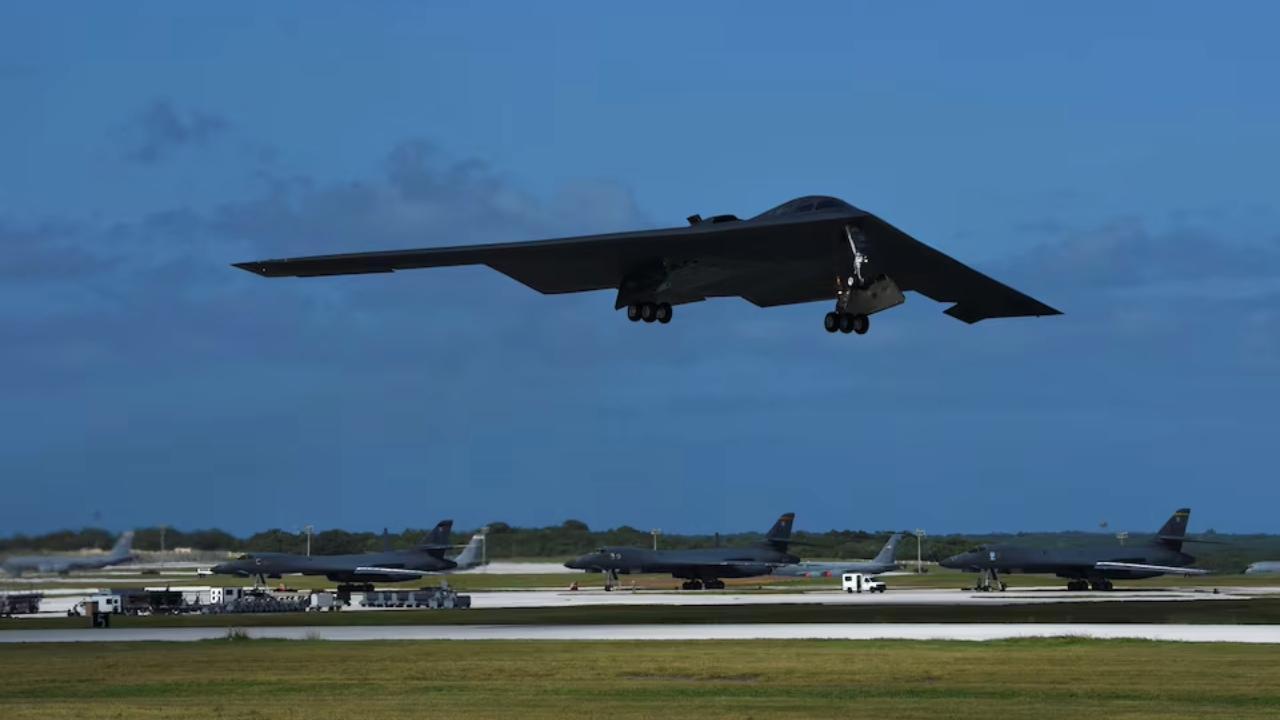
In the early hours of June 22, the skies above an undisclosed region witnessed something that had been planned in silence for months. The United States deployed its highly classified B‑2 Spirit stealth bombers to carry out a long-range strike on underground nuclear weapons facilities. These were not ordinary buildings. Deep below the surface, fortified bunkers were believed to hold weapons-grade material and components capable of triggering widespread destruction.
The bombers flew more than 12,000 kilometers in total, supported by mid-air refueling and diversionary aircraft that misled radar systems. The entire operation, lasting nearly 37 hours, was conducted with strict secrecy until every jet safely returned. Once completed, the mission was publicly confirmed—revealing a clear message: threats hidden underground are no longer safe.
Central to this operation was the use of the GBU‑57, known as the Massive Ordnance Penetrator. This bomb, one of the heaviest ever carried in active service, is designed to cut through reinforced concrete and steel before exploding deep underground. Until now, this technology had been mostly theoretical in combat use. Its deployment in this strike demonstrates a major turning point in the type of warfare the world may face moving forward.
The B‑2 bomber, unlike any other aircraft in service, is capable of delivering such massive weapons while remaining virtually undetected. Combining stealth with destructive precision, the aircraft’s role in this mission has reignited conversations about how modern militaries handle evolving nuclear risks—especially in regions where underground development is preferred for secrecy.
This strike wasn’t just about one target—it was about setting a precedent. By using a low-visibility, high-impact method, the operation showed that even the most deeply buried threats can now be reached. Officials stated that the mission was meant to eliminate facilities believed to be nearing active weapons production. The timing of the attack, just days before a major international summit, also signals its role in geopolitical messaging.
While no nation was directly named, the implications are clear. Military powers are now relying more on precision, technology, and speed rather than large-scale ground invasions. The global reaction has been mixed—some have called it a necessary measure in an increasingly unstable world, while others fear it may set the stage for more silent escalations in conflict zones.
This article is based on publicly available reports, military briefings, and global news coverage as of June 2025. NewsibleAsia does not endorse military action or speculate on classified information. Readers are encouraged to follow official government statements for verified updates.










PM Modi Pays Tribute to Mahatma Gandhi, Urges People to Support Khadi
PM Modi pays tribute to Mahatma Gandhi on Gandhi Jayanti and urges citizens to support Khadi and the

Amazon Seeks to Offload $8 Billion in Nvidia Chips to Investors
Amazon plans to move $8 billion in Nvidia chips to investors, using a new financing model to strengt

Samsung Raises Galaxy S26 Prices as Memory Chip Costs Rise
Samsung raises Galaxy S26 prices in South Korea as rising memory chip costs put pressure on smartpho

Lewis Hamilton Calls Singapore Grand Prix One of F1's Toughest Races
Lewis Hamilton discusses the demanding Singapore Grand Prix and brings Plus44 and Almave to Singapor

Denmark's Pandora Opens World's Largest Jewellery Factory in Vietnam
Pandora opens its largest jewellery factory in Vietnam, expanding global production, strengthening s

Gautam Gambhir Questions Batting-Friendly Pitches After India's Record ODI Chase
Gautam Gambhir questions batting-friendly ODI pitches after India’s record chase, calling for a bett

