You have not yet added any article to your bookmarks!
Join 10k+ people to get notified about new posts, news and tips.
Do not worry we don't spam!
Post by : Anis Farhan
Technological change has always influenced employment, but the speed and scale of Artificial Intelligence have caught labour markets off guard. Unlike earlier waves of automation that focused mainly on physical labour, AI is now affecting cognitive and decision-based work. Tasks once considered safe—data analysis, content creation, customer support, and even medical diagnostics—are increasingly being handled by algorithms.
This shift is not gradual. Many organisations are adopting AI tools within months, not years, leading to sudden changes in hiring patterns, job roles, and workforce structures. For employees, this creates a sense of uncertainty that extends beyond specific industries.
AI disruption is uneven. Some sectors feel the impact more sharply than others.
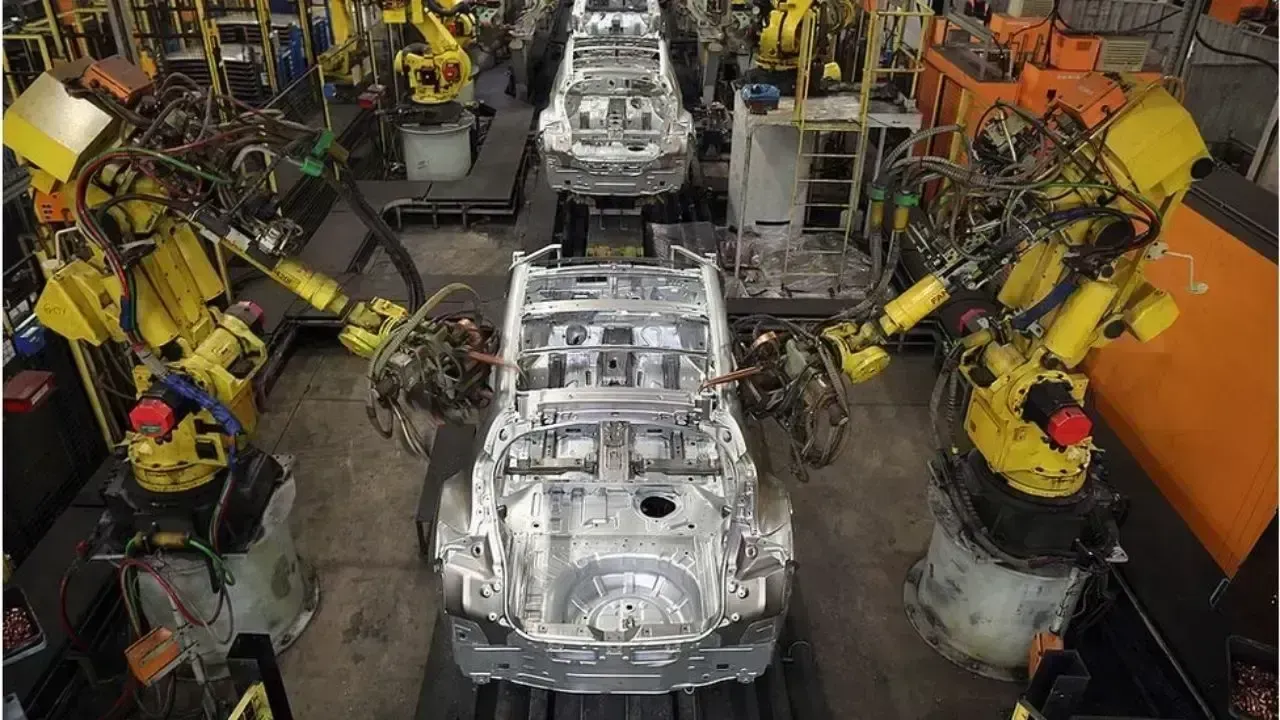
Routine and repetitive roles are the first to be affected. Data entry, basic accounting, tele-calling, and administrative processing are increasingly automated. In manufacturing, AI-driven robotics are replacing repetitive assembly tasks, while predictive systems reduce the need for manual quality checks.
At the same time, white-collar jobs are no longer immune. AI tools now draft reports, analyse contracts, generate marketing content, and even assist in legal research. This challenges the long-held belief that education alone guarantees job security.
While job losses dominate headlines, a quieter trend is equally important: job transformation. Many roles are not disappearing entirely but are being reshaped.
Employees are expected to work alongside AI systems, supervising outputs, making judgment calls, and handling complex exceptions. This changes skill requirements. Technical understanding, adaptability, and critical thinking are becoming more valuable than routine expertise.
However, this transition is uneven. Workers who lack access to training or digital exposure risk being left behind, deepening existing inequalities within the labour market.
AI disruption is also creating new job categories. Roles related to AI development, data governance, cybersecurity, and system oversight are expanding rapidly. Demand is growing for professionals who can train models, manage ethical risks, and interpret algorithmic outcomes.
Yet the pace of job creation does not always match the pace of job displacement. There is often a skills mismatch—new roles require specialised knowledge that displaced workers may not have. This gap makes reskilling urgent but challenging, especially for mid-career workers.
AI is influencing not just employment numbers but also wage structures. High-skilled workers who can leverage AI often see productivity gains and higher pay. Meanwhile, workers in automatable roles face wage pressure as supply outpaces demand.
In some sectors, AI enables companies to rely more on contract or gig-based arrangements, reducing job stability. This shift raises concerns about job quality, benefits, and long-term security, particularly in economies with weak social safety nets.
The impact of AI on labour markets varies significantly by region. Advanced economies with strong digital infrastructure are better positioned to absorb AI disruption through innovation and retraining. Developing economies, which rely heavily on labour-intensive industries, face greater risks.
Countries like India experience a dual challenge. On one hand, AI threatens entry-level service jobs. On the other, it offers opportunities in tech-driven sectors. The outcome depends heavily on education systems, policy responses, and access to digital skills.
One of the biggest structural problems is the gap between education and employment. Most education systems were designed for stable career paths, not constant technological disruption.
AI demands continuous learning, but formal education often focuses on static curricula. This mismatch leaves graduates unprepared and employers frustrated. Lifelong learning is no longer optional, yet access to quality reskilling remains uneven.
Beyond economics, AI disruption has a human cost. Job uncertainty affects mental health, confidence, and long-term planning. Workers worry not just about losing jobs, but about becoming irrelevant.
This anxiety is particularly strong among younger professionals entering unstable job markets and older workers who fear they may not adapt quickly enough. The emotional impact of technological disruption is becoming a significant workplace issue.
Governments are struggling to respond at the same pace as technological change. Labour laws, social security systems, and training programmes were not built for AI-driven disruption.
Policy responses now focus on reskilling initiatives, AI ethics, and employment protection. However, implementation often lags behind reality. Without coordinated efforts, the gap between technological progress and social preparedness will widen.
This remains one of the most debated questions. Historically, technology has created more jobs over time, but the transition periods have been painful. AI may follow a similar pattern, but the speed of change makes the adjustment harder.
The key difference lies in timing. If job creation and reskilling lag too far behind job displacement, societies may face prolonged periods of unemployment and inequality.
Artificial Intelligence is not simply changing labour markets—it is redefining them. The future of work will depend less on job titles and more on adaptability, learning ability, and human judgment.
Whether AI becomes a force for widespread prosperity or deeper inequality depends on how societies respond today. Investment in education, inclusive reskilling, and thoughtful regulation will determine whether workers are empowered by AI or displaced by it.
The disruption is already here. The challenge now is managing it before it manages us.
Disclaimer:
This article is intended for informational purposes only. The impact of Artificial Intelligence on labour markets varies across industries, regions, and skill levels, and outcomes may evolve as technology and policies change.










Jordan Burroughs Returns to Wrestling with 2028 Olympic Dream
Jordan Burroughs returns to wrestling with Real American Freestyle as the Olympic champion eyes a po

Lamborghini Catches Fire on Singapore's ECP, Causing Heavy Traffic
A Lamborghini caught fire on Singapore's ECP, causing heavy traffic and bus delays. No injuries were

Bangkok Airport Duty-Free Area Flooded by Pipe Burst
A burst water pipe flooded the duty-free shopping area at Bangkok's Suvarnabhumi Airport on July 16,

Nine Monks Killed in Thailand Pickup Truck Tragedy
An 11-year-old boy driving a pickup truck crashed into monks during a pilgrimage in northeastern Tha
Anwar Congratulates Xi on CPC's 105th Anniversary
Malaysia reaffirms strong ties with China as PM Anwar Ibrahim sends a congratulatory letter to Presi

Thai Agriculture Team Reviews 2026 Farm Development Plans
Agriculture Ministry officials inspected livestock and organic rice projects in Nakhon Sawan to moni