
You have not yet added any article to your bookmarks!
Join 10k+ people to get notified about new posts, news and tips.
Do not worry we don't spam!
Post by : Badri Ariffin
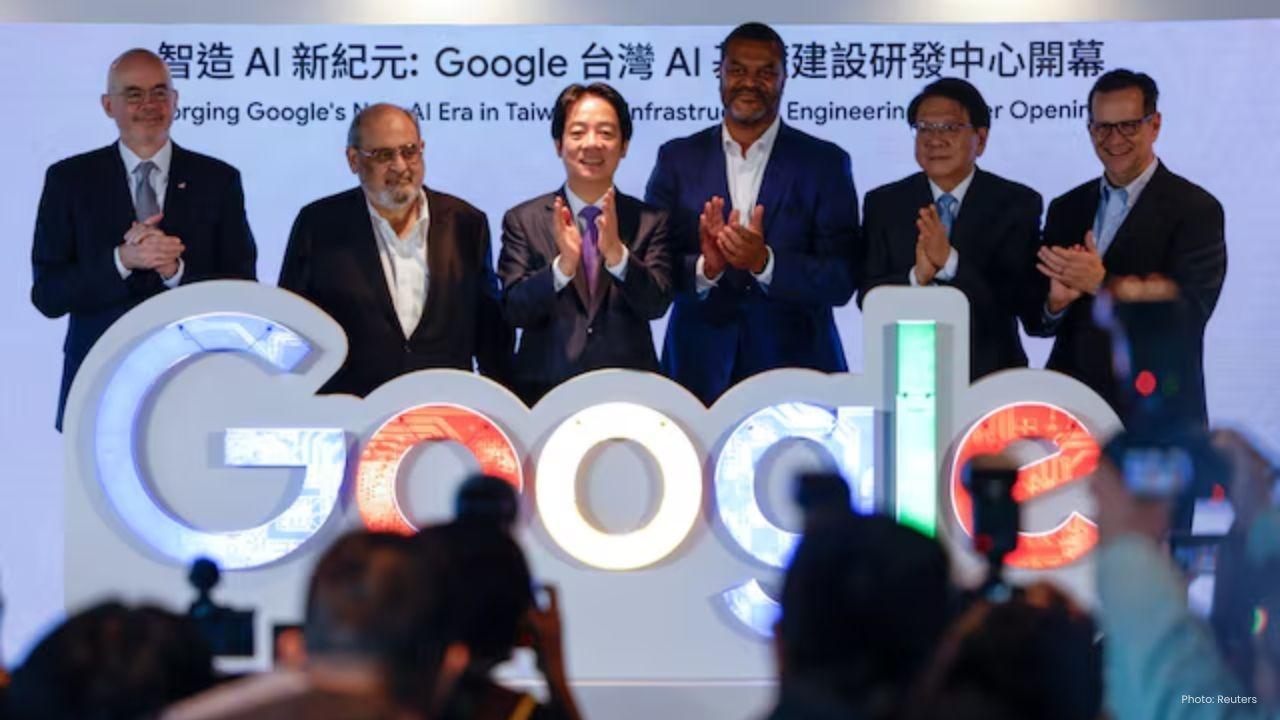
Google has marked a significant milestone by launching its largest AI infrastructure hardware engineering center situated outside the U.S., placing a strong emphasis on Taiwan. This significant initiative from Alphabet’s Google reflects not only a long-standing commitment to the island but also highlights its increasing prominence within the global AI landscape.
Why Taiwan?
Taiwan is well-established in the semiconductor industry, housing TSMC, the world’s foremost contract chip manufacturer. These semiconductors play a pivotal role in the AI revolution, powering everything from high-performance data centers to sophisticated AI frameworks.
By establishing this new hub in Taipei, Google positions itself advantageously close to vital hardware talent, manufacturing capabilities, and the innovation ecosystem driving AI's future.
What the Centre Will Do
The center will concentrate primarily on hardware development: Google aims to engineer and integrate AI chips — particularly its proprietary TPU (Tensor Processing Unit) processors — directly onto motherboards and servers.
The technology pioneered in Taipei won’t remain local; it is set to be deployed across Google’s global data centers, powering essential services and devices relied upon by billions daily.
Strategic and Symbolic Impact
Taiwanese President Lai Ching-te, at the opening ceremony, underscored the underlying significance of Google's investment, labeling the center not merely a business venture, but a testament to mutual trust — an indication that Taiwan stands as a dependable, long-term partner in high-stakes technology.
His comments also reflect Taiwan’s wider national aspirations: the government aims to utilize this infrastructure to foster a robust AI ecosystem, generate substantial economic value, and create hundreds of thousands of AI-related jobs by 2040.
Global Tech and Geopolitics
This development transcends the realm of semiconductors. Google’s strategic location bears geopolitical implications. The U.S., represented in Taipei, lauded the initiative for strengthening economic collaboration and innovation bonds with Taiwan.
To Google, this center represents more than just a research and development hub — it serves as a strategic asset in Asia, reinforcing resilience in supply chains and aligning with broader initiatives to secure technology infrastructure.








Hyundai raises profit target, expands hybrid lineup in the US
Hyundai hybrid cars get a major boost as the automaker raises its profit margin target and plans new

Josh Kerr and Jakob Ingebrigtsen Set for 1,500m Rivalry Rematch
Josh Kerr and Jakob Ingebrigtsen will renew their 1,500m rivalry at the Ultimate Championship in Bud

PSG Coach Luis Enrique Urges Players to Step Outside Comfort Zone
PSG coach Luis Enrique says players must leave their comfort zone and keep improving as the club tar

China’s Tiangong Sets New 400m Record at Robot Olympics
China’s Tiangong robot sets a new 400m record at the Robot Olympics, beating a South African robot i

George Russell Wins Dutch GP Sprint, Boosts Mercedes Morale
George Russell wins the Dutch GP Sprint from pole as Mercedes teammate Kimi Antonelli extends his F1

Australia 50/3 After Bangladesh Bowled Out for 64 in Second Test
Australia reached 50/3 after Bangladesh were bowled out for 64 in the second Test, with Mitchell Sta

