
You have not yet added any article to your bookmarks!
Join 10k+ people to get notified about new posts, news and tips.
Do not worry we don't spam!
Post by : Shakul
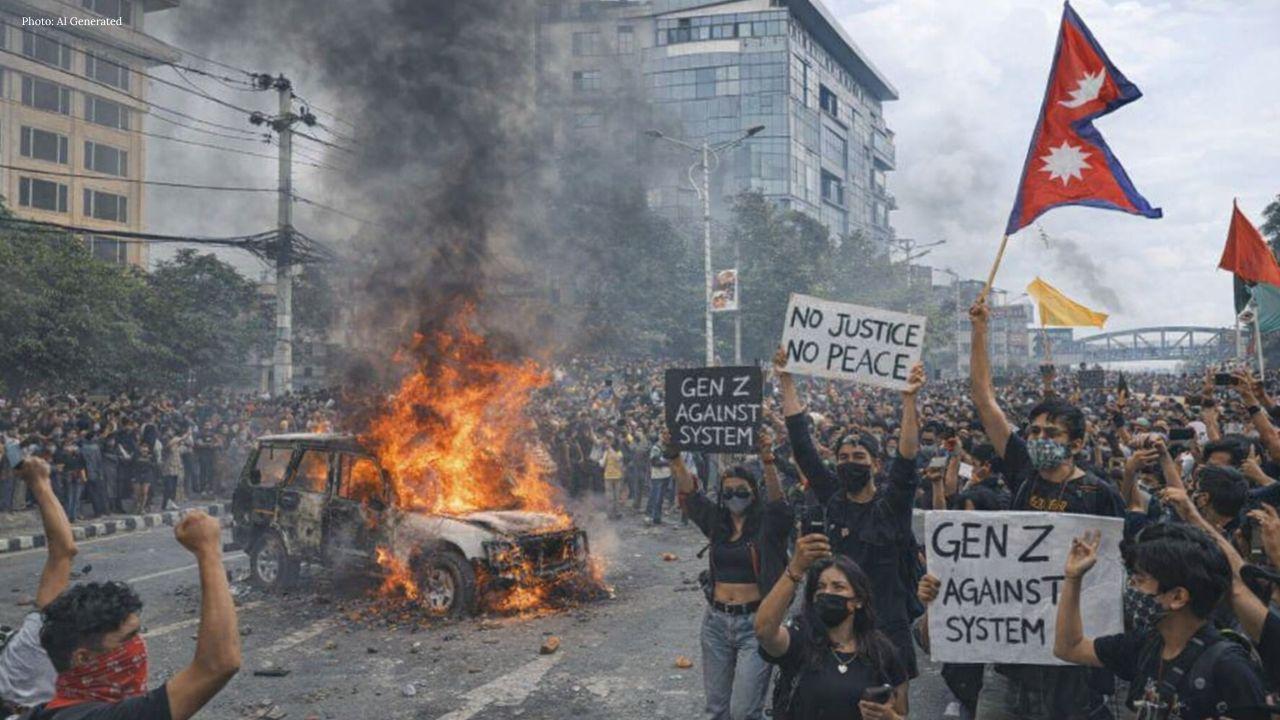
A leaked report from a judicial commission investigating Nepal’s deadly Gen Z protests has held former prime minister KP Sharma Oli and former home minister Ramesh Lekhak responsible for alleged negligence, recommending legal action against them.
The report, prepared by a three-member commission led by former judge Gauri Bahadur Karki, surfaced in the media before its official release, prompting the government to announce that it would make the findings public.
According to the report, security agencies, including the Nepali Army, had prior intelligence that the September 8 protests could escalate dangerously. However, no meeting of the National Security Council was convened at the time — a decision that falls under the authority of the prime minister.
During questioning, KP Sharma Oli stated that the government deliberately chose not to deploy the army, aiming to minimise the use of force and avoid casualties.
The protests, led largely by youth groups, turned violent, resulting in widespread arson and vandalism. Key state institutions, including the Supreme Court, Parliament building, and Singha Durbar, were targeted.
A total of 77 people lost their lives during the unrest, with 19 deaths recorded on the first day alone. The violence also caused extensive damage to public and private property worth billions.
The commission has recommended that Oli, Lekhak, and former police chief Chandra Kuber Khapung be prosecuted under Sections 181 and 182 of Nepal’s criminal code for criminal negligence, which carries a potential prison sentence of up to 10 years.
It also suggested legal action against several senior officials, including former home secretary Gokarna Mani Dawadi and Armed Police Force chief Raju Aryal, while recommending formal reprimands for others within the security leadership.
Interestingly, the report found no concrete evidence of organised infiltration into the protests, despite widespread public speculation. However, investigators noted a consistent pattern in arson attacks, including disabling CCTV cameras, draining water supplies, burning documents, and setting fire to buildings and vehicles.
The government had initially delayed releasing the report, reportedly due to concerns raised by security agencies that its publication could trigger unrest within the system.
The findings have intensified political tensions in Nepal, raising serious questions about accountability, governance, and the handling of one of the country’s deadliest protest movements in recent years.










PM Modi Pays Tribute to Mahatma Gandhi, Urges People to Support Khadi
PM Modi pays tribute to Mahatma Gandhi on Gandhi Jayanti and urges citizens to support Khadi and the

Amazon Seeks to Offload $8 Billion in Nvidia Chips to Investors
Amazon plans to move $8 billion in Nvidia chips to investors, using a new financing model to strengt

Samsung Raises Galaxy S26 Prices as Memory Chip Costs Rise
Samsung raises Galaxy S26 prices in South Korea as rising memory chip costs put pressure on smartpho

Lewis Hamilton Calls Singapore Grand Prix One of F1's Toughest Races
Lewis Hamilton discusses the demanding Singapore Grand Prix and brings Plus44 and Almave to Singapor

Denmark's Pandora Opens World's Largest Jewellery Factory in Vietnam
Pandora opens its largest jewellery factory in Vietnam, expanding global production, strengthening s

Gautam Gambhir Questions Batting-Friendly Pitches After India's Record ODI Chase
Gautam Gambhir questions batting-friendly ODI pitches after India’s record chase, calling for a bett

