You have not yet added any article to your bookmarks!
Join 10k+ people to get notified about new posts, news and tips.
Do not worry we don't spam!

Post by : Anis Farhan
Artificial intelligence has entered a new phase. With generative AI transforming industries, communication, and even governance, the technology is being framed not just as an economic driver but as a strategic asset. In Asia, where rapid digital adoption collides with complex geopolitics, generative AI is emerging as a decisive factor in the region’s sovereignty and global standing. Industry 5.0 — characterized by human–machine collaboration, personalization, and sustainable integration — is setting the stage for AI to move from being a background enabler to a frontline geopolitical instrument.
Generative AI enables more than creative text and images — it reshapes knowledge production, accelerates research, optimizes manufacturing, and enhances cyber-defense. For states, this makes AI not just a technology but an infrastructure of power. Control over datasets, compute capacity, and AI ecosystems is now linked to national security and economic independence. Nations that lead in AI development are positioned to set standards, capture markets, and extend influence far beyond their borders.
Asia sits at the center of this transformation. China, India, Japan, South Korea, and Singapore are investing heavily in AI, while Southeast Asian nations are seeking to integrate AI into their development strategies. The region combines vast user bases, skilled workforces, and thriving digital economies, making it both a producer and consumer of generative AI. Unlike the West, where regulation dominates discussions, Asia views AI through a lens of sovereignty and competitive advantage.
China has embraced generative AI as a tool of both economic modernization and ideological control. By cultivating domestic giants like Baidu and Alibaba Cloud, Beijing seeks to reduce reliance on Western technology while exporting its AI model abroad. AI is integrated into industrial policy, smart cities, and military applications. China’s approach reflects a broader vision of “digital sovereignty,” where control of algorithms and infrastructure ensures autonomy from external pressures.
India is charting its own course, positioning itself as a global AI service hub while emphasizing ethical and inclusive AI development. With strong IT infrastructure and a growing startup ecosystem, New Delhi views generative AI as a way to enhance productivity, governance, and citizen services. However, India also faces challenges in building hardware capacity and avoiding dependence on foreign cloud providers, forcing it to balance innovation with digital sovereignty.
Japan and South Korea are leveraging generative AI in alignment with their industrial strengths. Japan emphasizes human–machine collaboration, applying AI to robotics, healthcare, and advanced manufacturing. South Korea, with global champions like Samsung and LG, integrates AI into consumer electronics, semiconductors, and smart infrastructure. Both nations also invest in ethical AI frameworks, seeking to ensure trust and international credibility while securing strategic advantages.
Smaller nations like Singapore, Vietnam, and Malaysia are embracing AI as a means of boosting competitiveness. Singapore leads in policy frameworks, AI governance, and cross-border collaborations, while Vietnam and Malaysia invest in talent development and AI-enabled industries. Yet, these nations remain vulnerable to external dependencies — relying heavily on imported hardware, foreign cloud platforms, and global tech firms for access to advanced AI tools.
Industry 5.0 emphasizes personalization, sustainability, and collaboration between humans and machines. Generative AI is central to this shift, enabling customized production, adaptive learning systems, and predictive modeling across industries. In Asia, where manufacturing remains a backbone of economies, AI-driven Industry 5.0 promises to enhance efficiency while tailoring products to consumer needs. The convergence of AI, automation, and green technologies could allow Asia to leapfrog into a new era of industrial competitiveness.
Generative AI heightens the geopolitical competition between the U.S. and China, with Asia caught at the center. Access to advanced chips, control over training data, and standards-setting are now arenas of rivalry. Nations across Asia are pressured to choose alliances — adopting Western frameworks for trust and transparency, or aligning with China’s model of state-led digital ecosystems. This divide risks fragmenting the global AI landscape, creating parallel technological blocs.
For Asian nations, digital sovereignty means securing data, ensuring control over critical infrastructure, and avoiding overdependence on foreign providers. Generative AI intensifies these concerns. The ability of AI models to shape information ecosystems raises fears of disinformation, cyberattacks, and manipulation. Governments are responding with local AI strategies, sovereign cloud initiatives, and stricter regulations for foreign platforms, seeking to protect autonomy while fostering innovation.
The AI boom presents enormous opportunities for growth, job creation, and innovation. However, risks loom large. Unequal access to AI could widen regional disparities, while unchecked automation may disrupt labor markets. Environmental costs, particularly the energy consumption of training large models, pose additional challenges. For Asia, the task is not just adoption but responsible integration that balances profits with sustainability and social welfare.
Collaboration across Asia could reduce vulnerabilities and amplify strengths. Shared investment in semiconductor supply chains, cross-border AI governance frameworks, and talent mobility programs could strengthen the region’s sovereignty. Initiatives like ASEAN’s AI roadmap and trilateral cooperation between Japan, South Korea, and the U.S. signal a growing recognition that AI is both an economic and security priority requiring collective action.
Looking ahead, Asia’s trajectory in generative AI will determine whether the region becomes a rule-maker or rule-taker in the global order. If Asian nations successfully harness Industry 5.0 with homegrown innovation, robust governance, and regional cooperation, they could establish digital sovereignty while shaping global standards. Conversely, failure to balance external dependencies with internal growth could leave them vulnerable to technological domination by external powers.
Generative AI is not merely a tool — it is becoming a defining force in geopolitics. For Asia, where digital growth is explosive and sovereignty concerns are paramount, the transition to Industry 5.0 is both an opportunity and a challenge. Navigating this path requires balancing innovation with independence, competition with cooperation, and ambition with ethics. How Asia responds will shape not only its future but also the contours of global power in the AI-driven century.
This article is a researched editorial feature by Newsible Asia. While every effort has been made to ensure accuracy and balance, the subject involves rapidly evolving technologies and geopolitics. Readers are advised to follow ongoing updates for the latest developments.









Jordan Burroughs Returns to Wrestling with 2028 Olympic Dream
Jordan Burroughs returns to wrestling with Real American Freestyle as the Olympic champion eyes a po

Lamborghini Catches Fire on Singapore's ECP, Causing Heavy Traffic
A Lamborghini caught fire on Singapore's ECP, causing heavy traffic and bus delays. No injuries were

Bangkok Airport Duty-Free Area Flooded by Pipe Burst
A burst water pipe flooded the duty-free shopping area at Bangkok's Suvarnabhumi Airport on July 16,
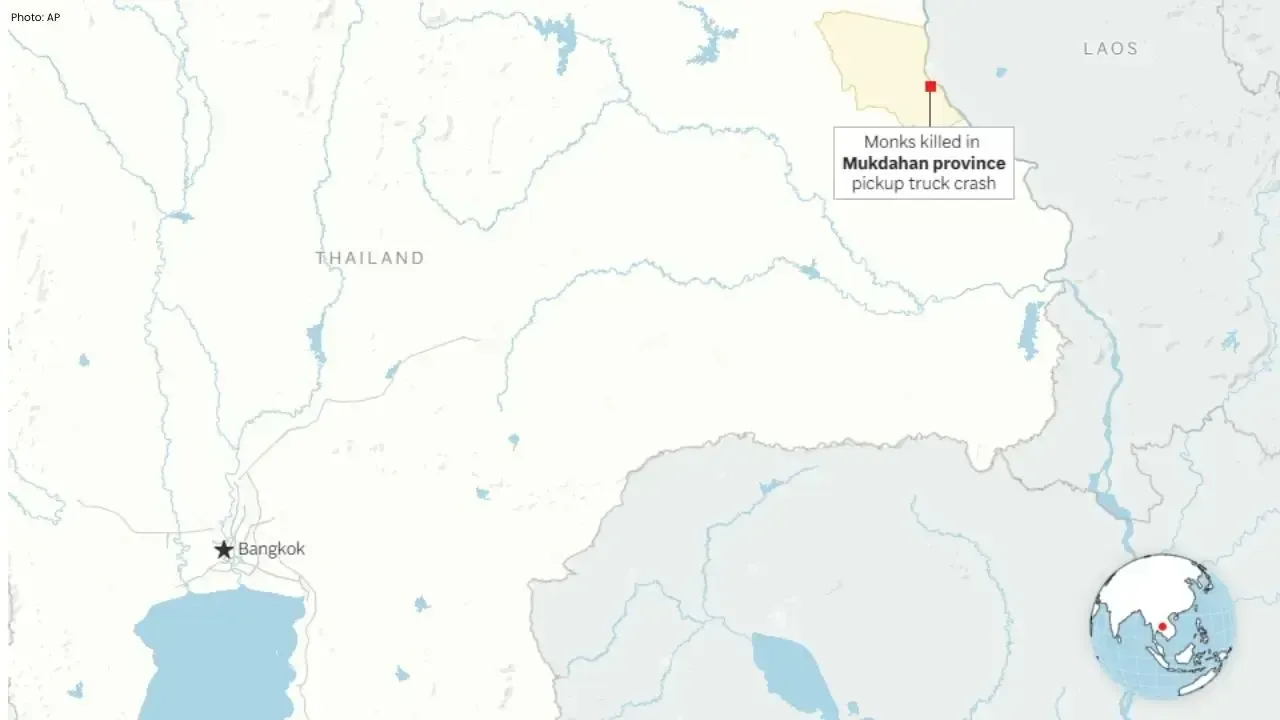
Nine Monks Killed in Thailand Pickup Truck Tragedy
An 11-year-old boy driving a pickup truck crashed into monks during a pilgrimage in northeastern Tha
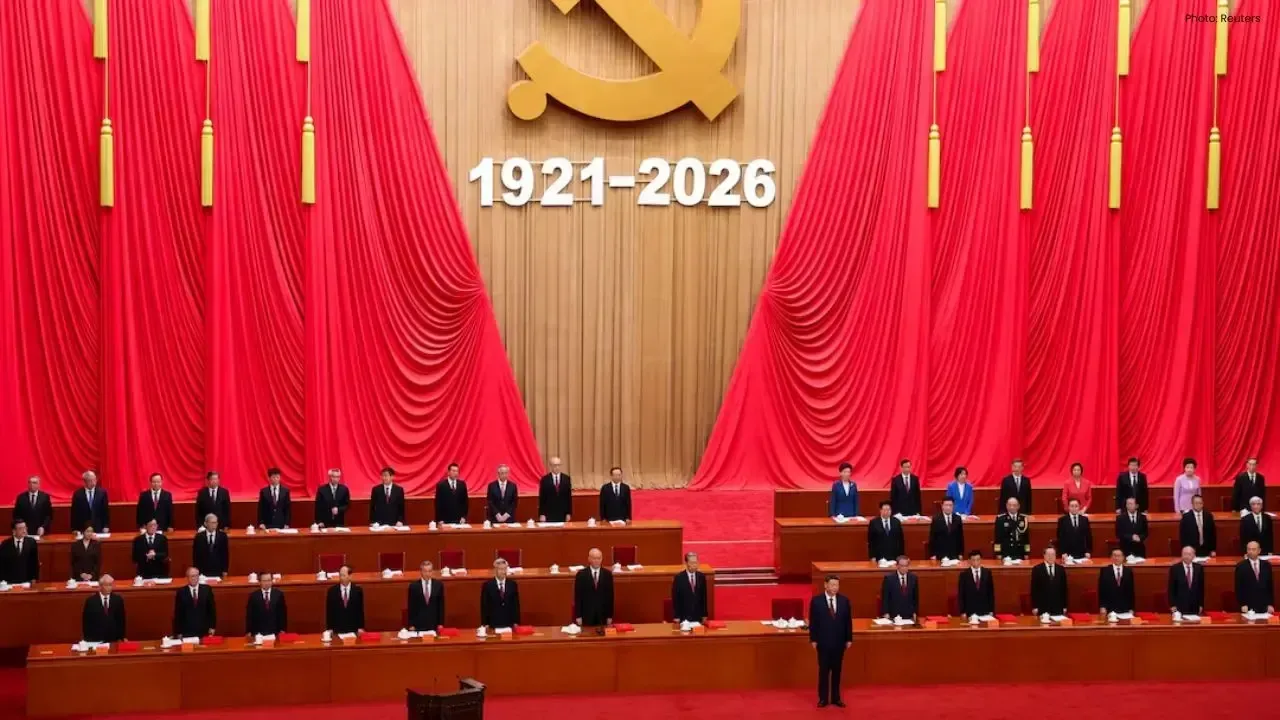
Anwar Congratulates Xi on CPC's 105th Anniversary
Malaysia reaffirms strong ties with China as PM Anwar Ibrahim sends a congratulatory letter to Presi
Thai Agriculture Team Reviews 2026 Farm Development Plans
Agriculture Ministry officials inspected livestock and organic rice projects in Nakhon Sawan to moni