You have not yet added any article to your bookmarks!
Join 10k+ people to get notified about new posts, news and tips.
Do not worry we don't spam!

Post by : Anis Farhan
Asia’s startup landscape is undergoing a profound transformation. Once synonymous with consumer apps and e-commerce platforms, the region’s entrepreneurial ecosystem is now pivoting toward deeper technological frontiers and sustainable solutions. From deep tech research in Singapore and South Korea to clean tech innovation in India and Indonesia, a new era of purpose-driven, high-impact startups is reshaping the way Asia imagines its future.
Deep tech—defined by its foundation in scientific discovery, advanced engineering, or complex software/hardware solutions—is quietly becoming Asia’s most promising startup sector. Unlike quick-to-market consumer apps, deep tech ventures often have longer R&D cycles, higher initial capital needs, and require a close link between academia and industry. Yet, governments across the region are actively nurturing these exact conditions.
In Singapore, for example, the National Research Foundation has been instrumental in fostering deep tech incubation programs linked to universities. The city-state’s push for quantum computing, synthetic biology, and cybersecurity research has encouraged startups like SpeQtral (quantum communication) and RWDC Industries (biopolymer tech) to grow from lab to market.
South Korea is also playing a pivotal role. With its heavy investments in robotics, semiconductors, and AI, Seoul has emerged as a tech capital bridging research and entrepreneurship. The country’s Tech Incubator Program for Startups (TIPS) is tailored to bring scientists out of labs and into the startup space, often in partnership with private VCs.
Climate change, pollution, and resource scarcity have turned Asia into both a victim and a laboratory for clean tech innovation. The urgent need to decarbonize industries and rethink energy infrastructure is giving rise to startups focused on everything from solar microgrids to carbon capture and sustainable agriculture.
India has seen a massive spike in clean tech entrepreneurship, particularly in the electric vehicle (EV) and renewable energy sectors. Startups like Euler Motors, Ather Energy, and ReNew Power have demonstrated that local innovations can deliver global impact—while being commercially viable.
In Indonesia, where urban waste and air pollution are mounting concerns, startups are devising biofuel alternatives, plastic waste conversion systems, and green logistics models. The government’s recent move to attract foreign investors into the clean energy sector has also incentivized more local founders to enter the space.
Asia’s funding landscape is evolving as well. Venture capital firms are no longer looking solely for explosive growth—they’re looking for impact. Investors want startups that can scale responsibly and solve real-world problems.
A new wave of funds—like Singapore’s TRIREC, India’s Climate Angels, and Japan’s UTEC (University of Tokyo Edge Capital)—are pouring millions into clean and deep tech ventures. These investors understand that returns in these sectors may take longer but promise long-term value and societal relevance.
Notably, the pandemic and post-COVID recovery period accelerated this shift in investor mindset. Health tech, agri-tech, and climate tech have gained significant traction among investors who now prefer “resilient” sectors over flashy but volatile ones.
Asia’s top academic institutions are no longer just centers of learning—they’re becoming startup factories. Universities across the region are establishing dedicated technology transfer offices, innovation labs, and venture studios.
At the Hong Kong University of Science and Technology (HKUST), faculty-led and student-led startups in robotics and sustainable energy are now among the most VC-backed in Asia. Meanwhile, Indian Institutes of Technology (IITs) have partnered with global firms to commercialize student innovations in fields ranging from AI to biotech.
This shift is especially visible in Japan, where deep tech commercialization used to lag. But with national universities spinning off startups at an increasing pace—especially in medical tech and semiconductors—the academic sector is quickly catching up.
Many Asian governments have adopted proactive policies to boost startup ecosystems, especially in high-tech sectors.
China’s “Made in China 2025” initiative continues to fuel R&D investments in AI, space tech, and green infrastructure. Thailand's “Thailand 4.0” policy is another example, aimed at creating an innovation-driven economy through public-private partnerships and smart industrial zones.
Vietnam and Malaysia have also launched their own startup-friendly strategies, offering tax incentives, seed funding schemes, and infrastructure support. With programs like Malaysia Digital Economy Blueprint (MyDIGITAL) and Vietnam National Innovation Center, these nations are preparing to be regional startup hubs over the next decade.
The region's millennial and Gen Z populations are showing strong interest in building startups with purpose. Unlike previous generations who pursued corporate careers, today’s young professionals are more willing to take risks, build for the planet, and solve pressing societal problems.
Hackathons, accelerator programs, and digital bootcamps are now part of the educational fabric across the region. Organizations like Antler, Plug and Play, and Y Combinator have expanded aggressively into Asia to support first-time founders working on ambitious ideas.
Remote work, freelancing, and cross-border collaboration have also allowed entrepreneurs to tap into global talent and funding without relocating, leveling the playing field for startups from Tier 2 and Tier 3 cities.
Despite its momentum, Asia’s startup scene—especially in deep tech and clean tech—faces a few key challenges:
Funding Gap for Early R&D: Many deep tech ideas die early due to lack of seed-stage capital.
Regulatory Bottlenecks: Clean tech startups often face outdated policies, especially in energy and waste sectors.
Talent Drain: High-potential entrepreneurs still seek opportunities in the West due to better support systems.
However, collaborative innovation hubs, cross-border alliances (like ASEAN’s startup initiative), and rising investor interest are slowly addressing these barriers. With the right alignment of policy, capital, and vision, Asia is poised to become the world’s innovation furnace, churning out solutions that are both scalable and sustainable.
Asia’s startup narrative is no longer centered around “the next big app.” It is now about the next meaningful breakthrough—whether it’s a quantum algorithm to secure data, or a bio-based material to replace plastic. This tectonic shift from hype-driven ventures to deeply impactful innovations is what defines Asia’s startup scene in 2025.
By betting on purpose-driven entrepreneurship, nurturing research-to-market pathways, and aligning capital with long-term goals, Asia is setting the stage not just for global leadership—but for genuine progress.
The content of this article is intended for informational and editorial purposes only. While every effort has been made to ensure the accuracy of the information presented, Newsible Asia does not guarantee the completeness or timeliness of data regarding companies, startups, or government initiatives. Readers are advised to consult official sources or experts before making any investment, business, or environmental decisions based on this content. All views expressed are those of the writer and do not necessarily reflect the official stance of Newsible Asia or its partners.








Lamborghini Catches Fire on Singapore's ECP, Causing Heavy Traffic
A Lamborghini caught fire on Singapore's ECP, causing heavy traffic and bus delays. No injuries were

Bangkok Airport Duty-Free Area Flooded by Pipe Burst
A burst water pipe flooded the duty-free shopping area at Bangkok's Suvarnabhumi Airport on July 16,
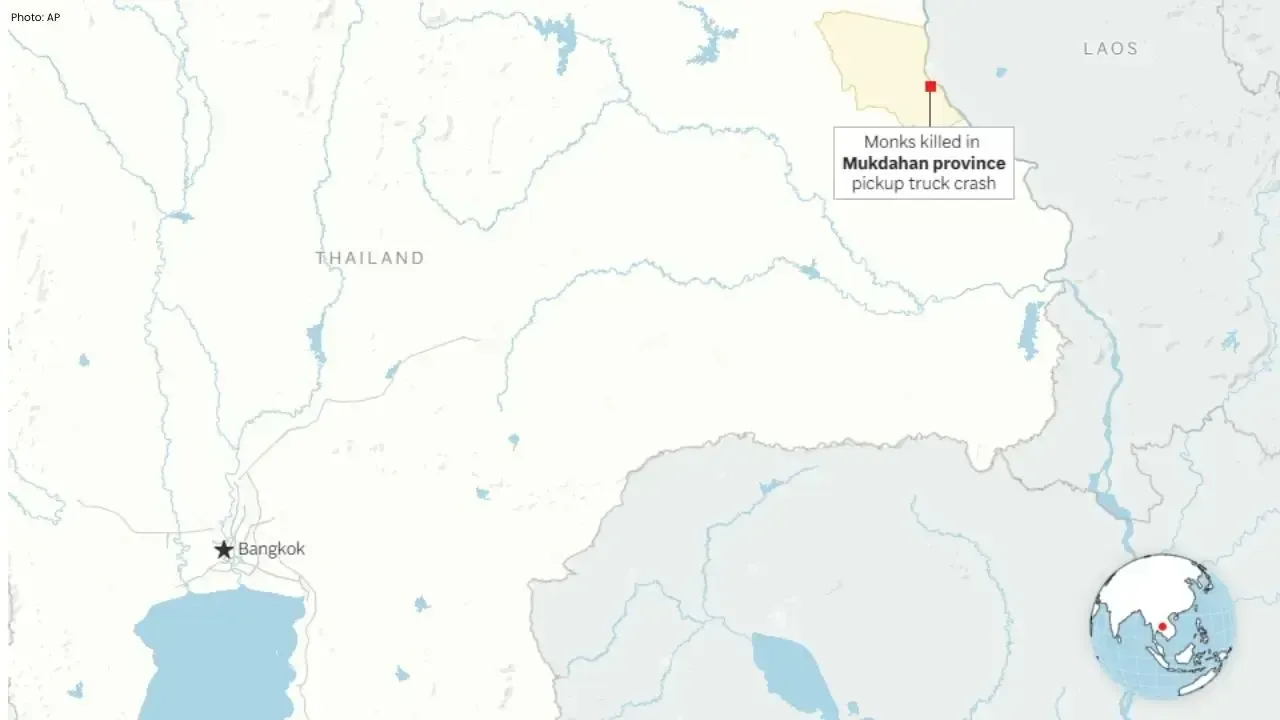
Nine Monks Killed in Thailand Pickup Truck Tragedy
An 11-year-old boy driving a pickup truck crashed into monks during a pilgrimage in northeastern Tha
Anwar Congratulates Xi on CPC's 105th Anniversary
Malaysia reaffirms strong ties with China as PM Anwar Ibrahim sends a congratulatory letter to Presi
Thai Agriculture Team Reviews 2026 Farm Development Plans
Agriculture Ministry officials inspected livestock and organic rice projects in Nakhon Sawan to moni

Thailand, Canada Boost Ties in PM-Level Phone Talks
Thailand and Canada agreed to strengthen trade, security, OECD cooperation and ASEAN-Canada FTA talk