You have not yet added any article to your bookmarks!
Join 10k+ people to get notified about new posts, news and tips.
Do not worry we don't spam!

Post by : Anis Farhan
Asia has rapidly become the center of global digital growth, with billions of internet users, thriving e-commerce markets, and cutting-edge innovations in AI, fintech, and smart cities. Yet, the very speed of this transformation has made the region a prime target for cybercriminals. In 2025, cyberattacks are no longer abstract threats—they are daily realities affecting banks, hospitals, schools, and government systems. As data breaches and ransomware incidents pile up, public anxiety about digital safety is intensifying. But while the risks are skyrocketing, responses remain uneven, exposing deep vulnerabilities across the region.
Asia accounts for more than half of the world’s internet users, making it a goldmine for hackers. In 2025, the region saw a 35% increase in reported cyber incidents compared to the previous year. High-profile cases include ransomware shutting down hospitals in India, phishing attacks targeting millions in Indonesia, and large-scale data breaches affecting banks in Japan and South Korea.
Financial losses are enormous, with estimates suggesting that Asia’s economies may lose over $1 trillion annually to cybercrime. Beyond money, the human cost is growing—patients denied care due to hacked hospital systems, small businesses crippled by extortion demands, and citizens left vulnerable after massive data leaks.
For ordinary people, fear of cybercrime is increasingly shaping digital behavior. Surveys across Asia show declining trust in online payments, hesitation to store personal information on apps, and rising concern about digital privacy. In countries like Malaysia and the Philippines, parents are limiting their children’s online use due to cyberbullying and scams.
Yet, private companies remain at the center of the storm. Small and medium enterprises (SMEs), which make up the backbone of Asian economies, are particularly at risk. Many lack strong security systems, making them easy prey for hackers. Startups, focused on growth rather than security, are also frequent victims, with losses that sometimes force them out of business.
Governments across Asia have recognized the cyber threat, but responses vary widely. Singapore has one of the most advanced cybersecurity frameworks, including strict regulations and public awareness campaigns. Japan has invested heavily in cyber defense ahead of major international events. China has combined strict data control policies with state-driven cybersecurity initiatives.
On the other hand, several developing economies lack comprehensive laws or enforcement capacity. Many still rely on outdated frameworks that cannot address modern threats such as AI-driven phishing, deepfakes, or cross-border ransomware networks. The lack of harmonized regional cooperation further weakens defenses, as hackers exploit legal loopholes and jurisdictional gaps.
Beyond criminal groups, Asia faces growing risks from state-backed cyber operations. Geopolitical rivalries are spilling into cyberspace, with hacking campaigns targeting critical infrastructure, defense networks, and even election systems. Alleged cyber espionage between regional powers has intensified, raising the stakes for both security and diplomacy.
The blurred line between criminal activity and state-sponsored operations makes defense even more complex. For ordinary citizens, the consequences remain the same: more breaches, more uncertainty, and greater vulnerability.
Large corporations in finance, telecommunications, and technology are investing heavily in cybersecurity, but even they are not immune. The 2025 breach of a major Asian cloud provider exposed sensitive data of millions of users across multiple countries, proving that no system is failproof.
Industry experts warn that while corporations spend billions on digital defenses, smaller companies remain the weakest link. Without coordinated support, the cyber resilience of entire economies remains fragile.
Cybersecurity is not just a technical issue—it’s a social one. Public education remains one of Asia’s biggest challenges. Millions of first-time internet users across rural and semi-urban areas fall victim to scams, phishing messages, and fake apps. Digital literacy campaigns are growing, but they often fail to reach the most vulnerable populations.
Experts argue that cybersecurity awareness should be taught in schools, workplaces, and communities, much like public health education. Until societies treat digital safety as a shared responsibility, the cycle of fear and vulnerability will continue.
Asia’s fragmented response to cyber threats stands in stark contrast to the borderless nature of digital crime. Regional bodies like ASEAN have begun discussions on coordinated cybersecurity frameworks, but progress is slow. Stronger cross-border collaboration could help track cybercriminal networks, harmonize laws, and share best practices.
Furthermore, Asia could lead the world in innovating cyber defense solutions. With its talent pool in AI, blockchain, and cloud computing, the region has the capacity to pioneer new security technologies—if governments and industries invest wisely.
Cybersecurity in Asia is at a turning point. Public fear is rising, private companies are shouldering massive risks, and policy gaps remain stubbornly wide. Unless decisive action is taken, the costs—economic, social, and political—will only grow. The challenge is not simply to respond to attacks but to build a resilient digital ecosystem that can adapt to evolving threats.
The future of Asia’s digital economy depends on whether its governments, businesses, and citizens can collectively build the trust and security needed for a safe online world.
This article has been produced under Newsible Asia’s editorial guidelines. It is intended for informational purposes only, based on reports and expert analyses available as of September 2025.








Jordan Burroughs Returns to Wrestling with 2028 Olympic Dream
Jordan Burroughs returns to wrestling with Real American Freestyle as the Olympic champion eyes a po

Lamborghini Catches Fire on Singapore's ECP, Causing Heavy Traffic
A Lamborghini caught fire on Singapore's ECP, causing heavy traffic and bus delays. No injuries were

Bangkok Airport Duty-Free Area Flooded by Pipe Burst
A burst water pipe flooded the duty-free shopping area at Bangkok's Suvarnabhumi Airport on July 16,
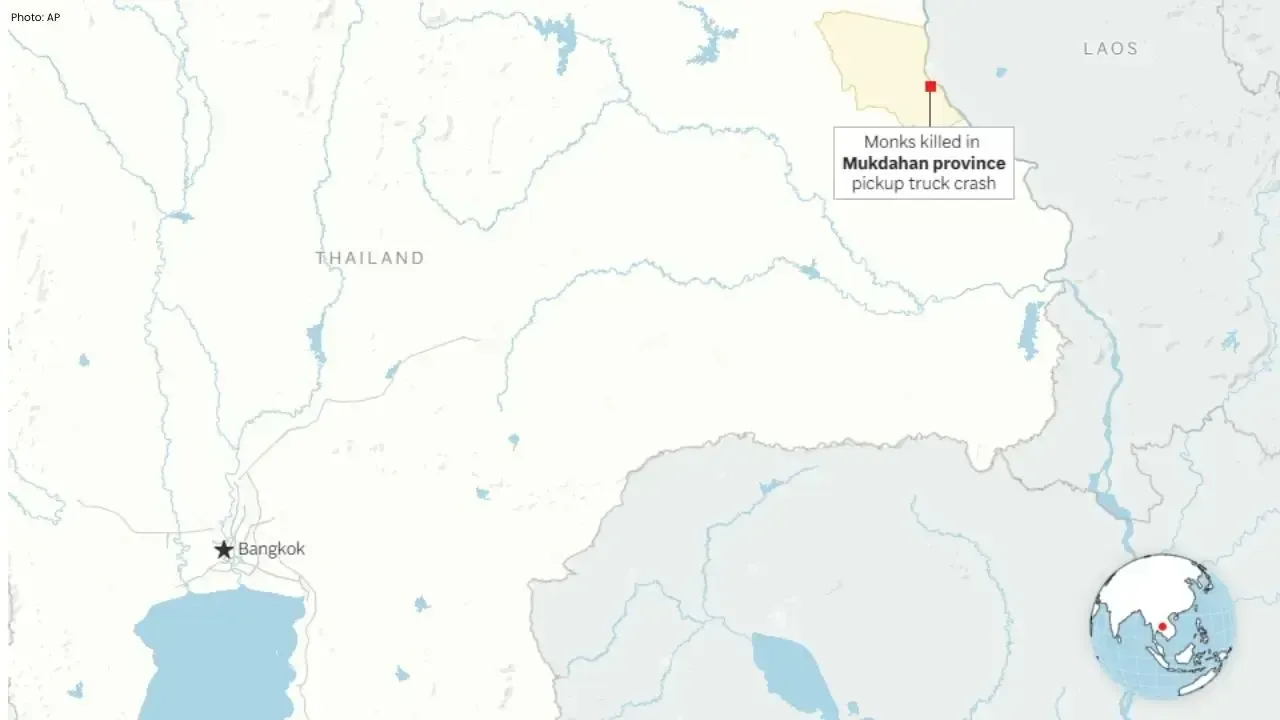
Nine Monks Killed in Thailand Pickup Truck Tragedy
An 11-year-old boy driving a pickup truck crashed into monks during a pilgrimage in northeastern Tha

Anwar Congratulates Xi on CPC's 105th Anniversary
Malaysia reaffirms strong ties with China as PM Anwar Ibrahim sends a congratulatory letter to Presi

Thai Agriculture Team Reviews 2026 Farm Development Plans
Agriculture Ministry officials inspected livestock and organic rice projects in Nakhon Sawan to moni