You have not yet added any article to your bookmarks!
Join 10k+ people to get notified about new posts, news and tips.
Do not worry we don't spam!
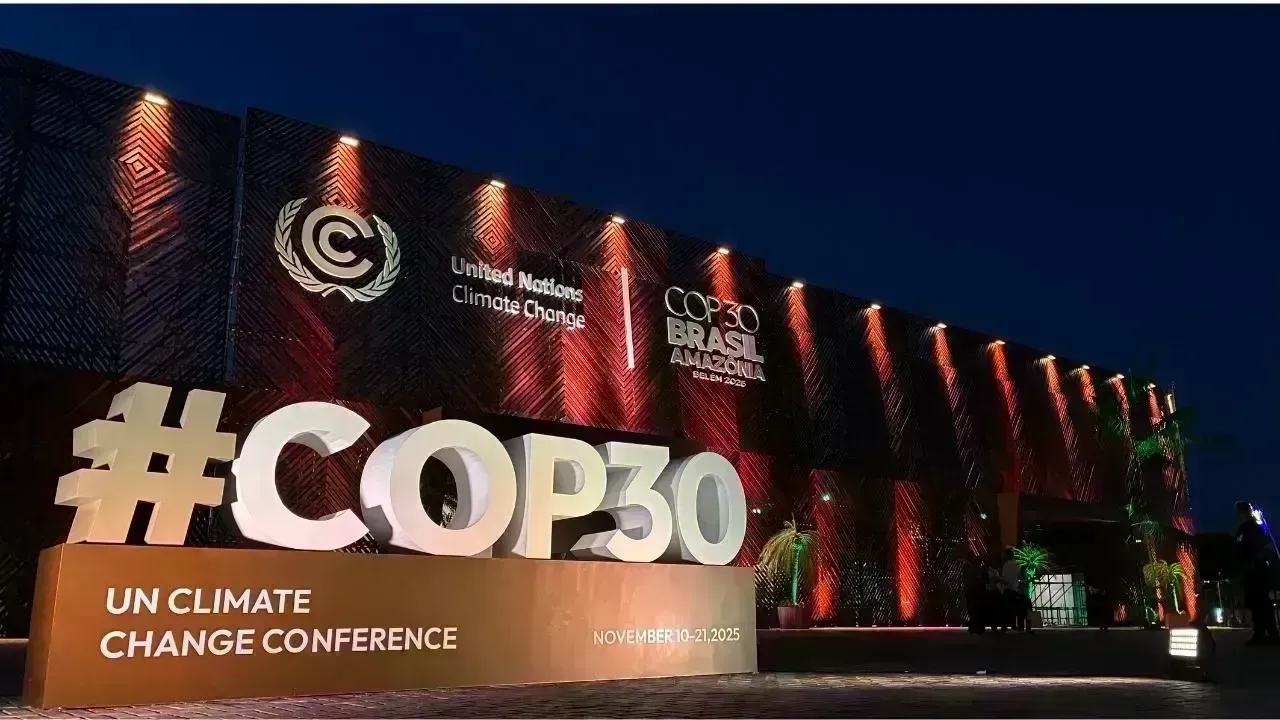
Post by : Anis Farhan
Photo: COP30
As each year brings a global climate summit, buzzwords like "historic," "breakthrough," and "turning point" flood the media. COP30 was no different, as leaders showed up with extensive delegations, cameras capturing their every move, and experts engaged in vigorous late-night discussions. For a fleeting moment, global focus shifted toward pressing environmental issues—heating oceans, burning forests, and contaminated air.
However, for countless individuals facing extreme temperatures, sudden deluges, and soaring food costs, one pivotal question persists: what substantial changes will this conference prompt in their daily lives?
Farmers grappling with erratic rainfall, families in coastal zones watching the ocean's advance, city dwellers enduring blistering heat, and mothers contending with rising electricity costs find global assurances remote. Climate dialogues often resemble theatrical performances, while ordinary life becomes a perilous environment of escalating hazards.
As COP30 concludes, it’s essential to critically assess beyond official communications and optimistic projections.
The Conference of the Parties, popularly referred to as COP, was established to unite governments in addressing climate change through a consolidated negotiating framework. The core aim is straightforward yet ambitious: all nations need to act collectively because the planet itself recognizes no borders.
Greenhouse gases emitted in one nation contribute to warming suffered by all. Regions that are least responsible for pollution endure the most devastating floods. Climate change symbolizes one of the starkest inequalities of our time.
COP meetings were designed to address these disparities by:
Establishing legally binding and morally compelling targets
Encouraging financial support from wealthier nations to those in need
Facilitating clean technology shifts
Encouraging collaboration over competition
Every summit vows to pave the way for progress, yet many struggle against the reality of implementation.
COP30 wrapped up with various declarations, agreements, and communiqués. On paper, the outlook appears positive. Yet, the uncomfortable reality is that while signing agreements is easily accomplished, overhauling an economy proves immensely challenging.
Climate commitments reflect high aspirations, but aspirations without effective enforcement remain fragile.
Targets set for 2040 and 2050 sound impressive, yet they delay the tough choices required today. Coal plants continue to run, forests are still being cleared, and cities expand without adaptation plans.
At COP30, as in previous years, numerous nations reaffirmed their pledges to cut emissions. But reaffirmation does not equate to actual implementation.
Climate change transcends environmental concerns; it fundamentally revolves around economic factors.
Transitioning to a clean energy economy necessitates substantial investment, technology, and infrastructure. Initiatives like solar power facilities, electric transportation systems, cleaner industries, and climate-resilient cities require considerable funding.
COP30 heavily concentrated on financial matters. Developing nations posed a crucial inquiry: who will foot the bill?
Nations most affected by climate calamities are often those least responsible for the crisis. Their demand is for equity—not charity—seeking justice rather than mere sympathy.
Yet, climate financing remains a largely contentious issue in global talks. Wealthy nations promise financial aid, but delays in allocation undermine the sincerity of those pledges.
For communities ravaged by floods and droughts, budgetary allocations from conferences are meaningless unless they translate into action on the ground.
One of the most poignant discussions at COP30 centered around loss and damage, acknowledging that some climatic outcomes spell irrevocable harm.
When communities face permanent inundation, coastlines disappear, or ecosystems collapse, the term "adaptation" loses its significance. These losses demand not only recognition but also compensation and assistance.
Unfortunately, the existing funding strategies for loss and damage are both limited and ambiguous. While agreements exist, their execution remains tentative.
Victims of climate change continue to wait—not for pity—but for a chance at survival.
While significant focus is placed on emissions reduction—which is crucial—adaptation measures are often sidelined.
Climate change should not just focus on mitigation; it is about enabling communities to live with its consequences:
Cities resilient to floods
Housing designed to withstand heat
Agricultural practices attuned to climate realities
Enhanced water management practices
Coastal protection measures
Such measures are not mere luxuries; they are essential.
While COP30 reiterated the need for resilience, the more pressing inquiry pertains to execution speed.
By the time policies are finalized, climatic sequels have often already disrupted lives.
Year after year, phrases resurface:
“Immediate actions needed”
“Global unity”
“Shared accountability”
“Historic opportunity”
“Collective future”
Such phrases no longer stir emotions due to their overuse without tangible progress.
Trust from the public dissipates when rhetoric outstrips reality.
People gauge success not through statements, but through tangible elements like electricity bills, food security, and water availability.
Enterprises carry a dual role in emissions and eco-innovation. At COP30, businesses disclosed green investment pledges and sustainability roadmaps.
However, corporate practices often comprise:
On public stages: emissions pledges.
Off public stages: persisting ecological degradation.
Green branding has become the norm. Yet, “greenwashing” remains pervasive, with firms promising carbon neutrality while maintaining polluting activities.
Unless monitored stringently, corporate involvement risks becoming superficial rather than genuinely transformative.
Young climate activists approached COP30 brimming with emotion, urgency, and a clear message: they will inherit a more adverse world.
Yet, decision-making power largely lies with older generations.
While young voices receive applause, existing systems remain unchanged.
This generational dissonance shapes climate policy; the youth speak while the past retains control.
Discussions around climate often highlight a subtle struggle between development aspirations and accountability.
Developing nations assert:
“We deserve to progress too.”
Wealthier counterparts respond:
“The planet can't sustain that.”
Both sides have valid points.
True fairness must address the balance of ambitions and responsibilities.
COP30 failed to substantially narrow this philosophical and political gap.
Despite rhetoric on clean energy, fossil fuel reliance remains entrenched.
Coal operations continue to fuel economies. Oil revenue dominates policy discussions. Gas is still categorized as a “transitional fuel,” even as the climate crisis deepens.
The energy transition is presently occurring—but at a far slower pace than needed.
Shaping energy involves political will more than technological advancements.
A significant yet overlooked dimension of climate change is its inflationary effects.
Droughts drive food costs up.
Storms wreak havoc on infrastructure.
Heatwaves spike electricity consumption.
Floods disrupt supply chains.
Climate change is no longer seen merely as an environmental dilemma; it has morphed into a household budget concern.
Yet, COP30 dialogues often fail to directly connect climate strategies to everyday financial realities.
People demand genuine solutions, not mere slogans.
COP30 faced challenges in:
Setting enforceable deadlines
Ensuring financial commitments
Establishing consequences for inactivity
Clearly phasing out fossil fuel dependency
Creating robust legal frameworks
In essence, it adhered to the trend of discussions without concrete follow-through.
Nonetheless, progress was made in several areas:
Elevated renewables investment commitments
Various nations enhanced their climate pledges
Increased focus on adaptation strategies
Loss and damage efforts retained significance
Recognition for climate education emerged
However, progress that lacks execution equates to potential—not security.
Cynicism among citizens is on the rise.
Climate summits feel increasingly disconnected from:
Everyday existence
Costs
Employment
Healthcare
Housing
When climate strategies overlook people's lived realities, the public’s willingness to engage diminishes.
For COP gatherings to contribute authentically to global climate change mitigation, they should prioritize:
Immediate emission targets
Binding regulations for climate funds
Clear and transparent funding processes
Locally-oriented adaptation initiatives
Transformative infrastructure projects
Support programs for job transitions
Real climate success must manifest in tangible actions, not just symbolic gestures.
Constant alarms without solutions drain societal patience.
Fear alone cannot fuel change indefinitely; there must be tangible reasons for hope.
In spite of geopolitical hold-ups, individuals retain agency.
Minimize waste
Save energy
Support brands with eco-friendly practices
Insist on accountability
Vote aligned with climate goals
Educate local communities
No one person can solve climate issues.
But collective community action can pressure systemic change.
While setbacks exist, discontinuing global dialogue would exacerbate challenges.
The climate crisis is too substantial to disregard negotiations.
Nonetheless, COP demands reform.
Less theatrics.
More deadlines.
Increased responsibility.
COP30 wasn't a failure, but it also didn't achieve its maximum potential.
It has become what such gatherings frequently transform into: a hub for promises.
The fate of the planet isn’t determined by pledges.
It is dictated by scientific reality.
Carbon won't engage in negotiation.
Oceans don’t bargain.
Heat persists without pause.
Real progress manifests when policies translate into projects, words translate into actions—when speeches lead to buildings, movements, and preventive structures.
Until a paradigm shift occurs, COP meetings will perpetuate rhetoric.
And the challenges facing our planet will continue to intensify.
This article serves informational purposes only, framing insights and analysis surrounding public climate discourse. It does not represent official policy stances or negotiated results.







Josh Kerr and Jakob Ingebrigtsen Set for 1,500m Rivalry Rematch
Josh Kerr and Jakob Ingebrigtsen will renew their 1,500m rivalry at the Ultimate Championship in Bud

PSG Coach Luis Enrique Urges Players to Step Outside Comfort Zone
PSG coach Luis Enrique says players must leave their comfort zone and keep improving as the club tar

China’s Tiangong Sets New 400m Record at Robot Olympics
China’s Tiangong robot sets a new 400m record at the Robot Olympics, beating a South African robot i

George Russell Wins Dutch GP Sprint, Boosts Mercedes Morale
George Russell wins the Dutch GP Sprint from pole as Mercedes teammate Kimi Antonelli extends his F1

Australia 50/3 After Bangladesh Bowled Out for 64 in Second Test
Australia reached 50/3 after Bangladesh were bowled out for 64 in the second Test, with Mitchell Sta

Jordan Burroughs Returns to Wrestling with 2028 Olympic Dream
Jordan Burroughs returns to wrestling with Real American Freestyle as the Olympic champion eyes a po