You have not yet added any article to your bookmarks!
Join 10k+ people to get notified about new posts, news and tips.
Do not worry we don't spam!
Post by : Anis Farhan
Every year, South Asia braces itself for the arrival of the monsoon. While rains bring relief to parched lands and fill reservoirs vital for agriculture, they also trigger devastating floods that displace millions, destroy infrastructure, and claim lives. Countries such as India, Bangladesh, Nepal, Pakistan, and Sri Lanka sit on the frontlines of climate vulnerability, where erratic weather patterns are becoming the new normal. This recurring cycle of destruction has forced governments, communities, and international organizations to rethink how resilience is built in the face of worsening monsoon fury.
One of the clearest indicators of climate change in South Asia is the intensification of monsoon rains. Over the past two decades, rainfall patterns have shifted dramatically, with shorter bursts of heavy downpours replacing steady seasonal showers. Such shifts overwhelm drainage systems, cause riverbanks to burst, and inundate low-lying settlements. For instance, Bangladesh experiences nearly annual flooding, while states in India such as Assam, Bihar, and Kerala face recurring disasters that uproot millions. Scientists have warned that warming in the Indian Ocean is amplifying cyclonic activity, leading to even more unpredictable weather events.
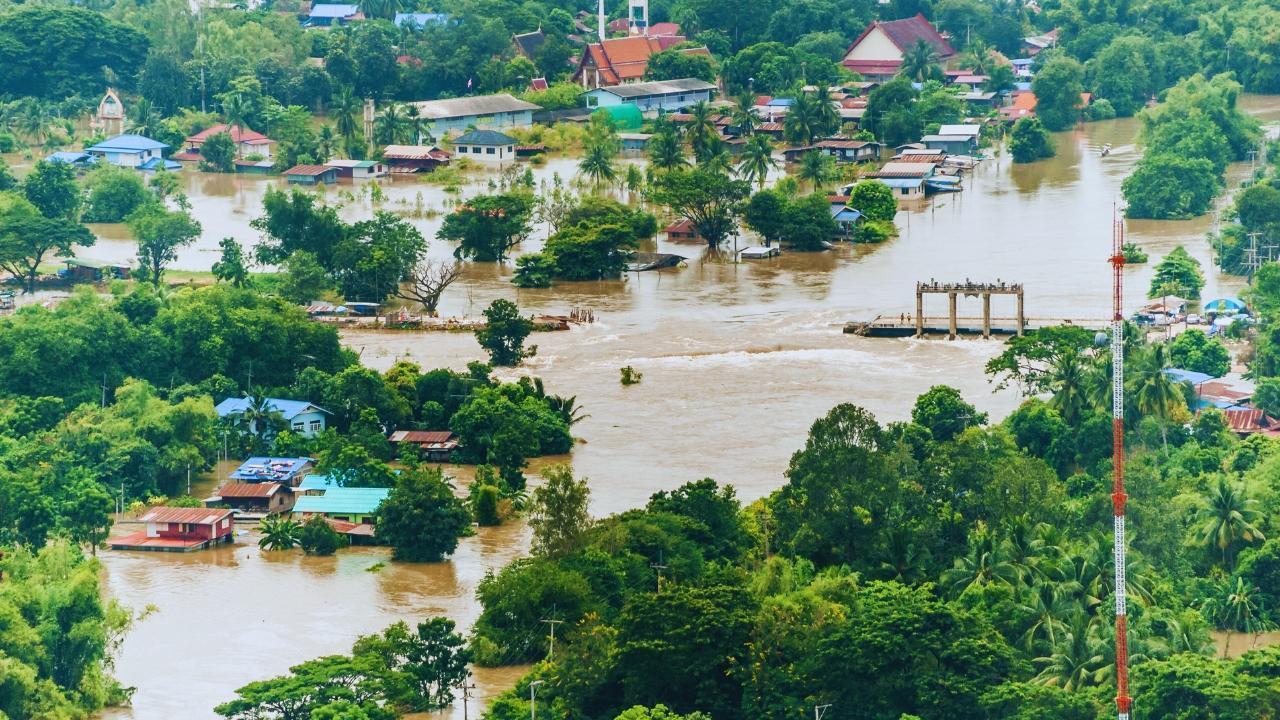
Floods are not just natural events; they are humanitarian crises. Entire villages are submerged, agricultural land is washed away, and urban areas come to a standstill. Millions lose their homes, and thousands are forced into relief camps each season. Children and the elderly are particularly vulnerable, facing heightened risks of malnutrition and disease outbreaks. The floods of 2022 in Pakistan left nearly one-third of the country underwater, with damages estimated at over $30 billion, underscoring the devastating human and economic toll that floods inflict on already fragile economies.
South Asia’s economy is heavily dependent on agriculture, which employs more than half of its population. Floods destroy standing crops, erode fertile soil, and disrupt food supply chains. Farmers already grappling with debt face insurmountable losses, pushing many into poverty. Beyond agriculture, industries also face severe disruptions. Roads, railways, and power grids collapse under floodwaters, halting production and trade. Tourism, a major revenue source for Nepal, Sri Lanka, and parts of India, also suffers when heritage sites and transport links are damaged, reducing international arrivals.
While rural areas often receive the bulk of attention, urban flooding has emerged as a significant challenge. Cities like Mumbai, Dhaka, and Karachi are increasingly vulnerable due to unplanned construction, poor drainage systems, and encroachment on wetlands. Rapid urbanization has replaced natural water-absorbing land with concrete, leaving stormwater with nowhere to go. In 2015, Chennai witnessed a historic flood that paralyzed the city, leaving tech companies, hospitals, and schools stranded for weeks. Such events highlight the urgent need for resilient urban planning.
Across South Asia, communities are stepping up with local solutions to adapt to monsoon fury. In Bangladesh, floating schools and farms have become innovative adaptations, ensuring education and food security continue even during floods. In India, self-help groups in flood-prone villages are training women in disaster preparedness, turning them into first responders during emergencies. Nepal’s rural communities have turned to rainwater harvesting and early warning systems, empowering citizens to respond swiftly when floods approach.
Governments in South Asia are increasingly aware that floods require long-term policy interventions. India has invested in flood forecasting systems and river embankment projects, while Bangladesh has pioneered community-based disaster risk management programs. Pakistan has introduced climate adaptation strategies that aim to rebuild better after floods. On a regional scale, organizations such as SAARC (South Asian Association for Regional Cooperation) and the Bay of Bengal Initiative for Multi-Sectoral Technical and Economic Cooperation (BIMSTEC) have recognized the need for collaborative disaster management, though political tensions often hinder effective cooperation.
Technology has emerged as a powerful ally in mitigating flood impacts. Satellite imagery, AI-driven weather forecasting, and drone monitoring are enabling quicker and more accurate disaster responses. Mobile applications now alert citizens of rising river levels or impending storms, saving countless lives. Additionally, digital mapping of flood-prone areas helps governments plan safer housing and infrastructure projects. However, the challenge lies in ensuring equitable access to these technologies, especially for vulnerable rural populations.
South Asia’s vulnerability raises broader questions about climate justice. Despite contributing minimally to global carbon emissions, the region bears some of the heaviest burdens of climate change. International aid and funding have played a critical role in post-disaster recovery, but experts argue that more sustainable, long-term financing mechanisms are needed. The loss and damage fund discussed at global climate summits is a step in the right direction, but implementation remains slow. Without equitable support, developing nations in South Asia will continue to suffer disproportionately.
Building climate resilience in South Asia requires more than just immediate relief measures. It demands an integrated approach that combines infrastructural improvements, policy reforms, community engagement, and international cooperation. Investing in flood-resilient housing, restoring natural ecosystems such as wetlands, and enhancing regional cooperation can collectively mitigate the impact of floods. Equally important is shifting the narrative from disaster response to disaster preparedness, ensuring that South Asia is not merely reacting to floods but actively preparing to withstand them.
Monsoon floods are no longer seasonal inconveniences but existential threats that define the future of South Asia. The region’s response will determine not only how it survives annual deluges but also how it thrives in a climate-altered world. Strengthening resilience is no longer optional—it is a necessity for survival, growth, and human dignity. If South Asia can successfully adapt, it may well become a global model of resilience against climate change.
This article has been prepared for informational and editorial purposes for Newsible Asia. It highlights the challenges of climate change and flooding in South Asia, drawing from current developments and research. The views expressed are not representative of any government or institution. Readers are encouraged to consult official reports and expert studies for verified data and policy insights.









Jordan Burroughs Returns to Wrestling with 2028 Olympic Dream
Jordan Burroughs returns to wrestling with Real American Freestyle as the Olympic champion eyes a po

Lamborghini Catches Fire on Singapore's ECP, Causing Heavy Traffic
A Lamborghini caught fire on Singapore's ECP, causing heavy traffic and bus delays. No injuries were

Bangkok Airport Duty-Free Area Flooded by Pipe Burst
A burst water pipe flooded the duty-free shopping area at Bangkok's Suvarnabhumi Airport on July 16,

Nine Monks Killed in Thailand Pickup Truck Tragedy
An 11-year-old boy driving a pickup truck crashed into monks during a pilgrimage in northeastern Tha

Anwar Congratulates Xi on CPC's 105th Anniversary
Malaysia reaffirms strong ties with China as PM Anwar Ibrahim sends a congratulatory letter to Presi

Thai Agriculture Team Reviews 2026 Farm Development Plans
Agriculture Ministry officials inspected livestock and organic rice projects in Nakhon Sawan to moni