You have not yet added any article to your bookmarks!
Join 10k+ people to get notified about new posts, news and tips.
Do not worry we don't spam!
Post by : Rameen Ariff
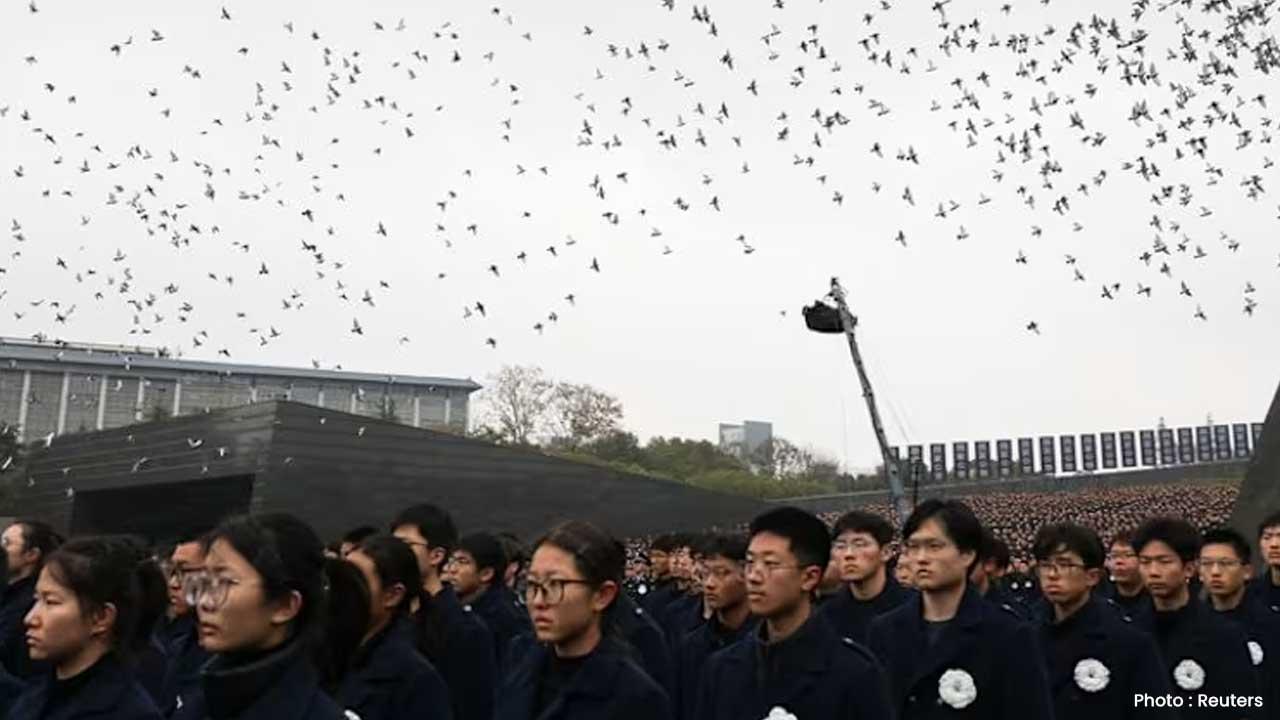
Nanjing, China – China observed a quiet memorial on Saturday, December 13, to mark the 88th anniversary of the 1937 Nanjing Massacre, a tragic event in which Japanese troops reportedly killed 300,000 people in what was then China’s capital. President Xi Jinping did not attend the ceremony, amid rising diplomatic tensions between Beijing and Tokyo over Taiwan.
The memorial took place at the Nanjing Massacre Museum, with officials, police officers, and schoolchildren in attendance. Shi Taifeng, head of the Chinese Communist Party's powerful organization department, spoke at the ceremony, referencing Xi’s earlier remarks during a military parade in September marking 80 years since the end of World War II. Shi emphasized China’s resilience and warned against any attempts to revive militarism, stating, “History has proven and will continue to prove that any attempt to revive militarism, challenge the postwar international order, or undermine world peace and stability will never be tolerated.”
Unlike previous years, the ceremony was brief and subdued, lasting less than half an hour. Doves were released as part of the memorial, symbolizing peace. China first established a national memorial day for the massacre in 2014, when Xi called on both China and Japan to set aside hatred and prevent historical grievances from affecting current relations. Xi last attended in 2017 but did not speak publicly.
Tensions between China and Japan have increased recently after Japanese Prime Minister Sanae Takaichi stated last month that a hypothetical Chinese attack on Taiwan could provoke a Japanese military response. While Shi did not mention Takaichi by name, his remarks alluded to Japan’s historical militarism and the ongoing need to uphold peace.
The Nanjing Massacre remains a deeply sensitive topic in China. While Chinese sources report 300,000 deaths, post-World War II Allied tribunals estimated the toll at 142,000. Some conservative Japanese scholars and politicians have denied that the massacre occurred, fueling historical disputes between the two nations.
In a show of remembrance, China’s Eastern Theatre Command also released an image on social media depicting a symbolic bloody sword, representing the suffering during the war. The post referenced historical animosity, reinforcing the enduring memory of the massacre and its importance in Chinese history.
The low-key ceremony reflected both the solemnity of the memorial and the current diplomatic strains between China and Japan, serving as a reminder of the nation’s painful past while emphasizing China’s stance on peace and vigilance against militarism.








Starc Compares Australia's Tough Year to McIlroy's Major Sweep
Mitchell Starc says Australia winning three away Test series and the World Cup would match Rory McIl

France’s Sesterce Plans $11 Billion AI Data Centre in Finland
Sesterce plans a $11 billion AI data centre in Finland, with major expansion, green energy plans and

Danaher to Launch AI-Powered Autonomous Research Lab in 2027
Danaher plans an AI research lab for 2027, combining robotics and automation to speed up drug discov

Musk Welcomes German Support for Tesla Driver Assistance Tech as EU Approval Push Continues
Elon Musk welcomes Germany's backing for Tesla FSD as the company seeks EU approval amid speed, safe

Microsoft and Nvidia CEOs to Unveil AI Laptop at San Francisco Event
Microsoft and Nvidia showcase a new AI laptop with RTX Spark chips as they push powerful local AI co
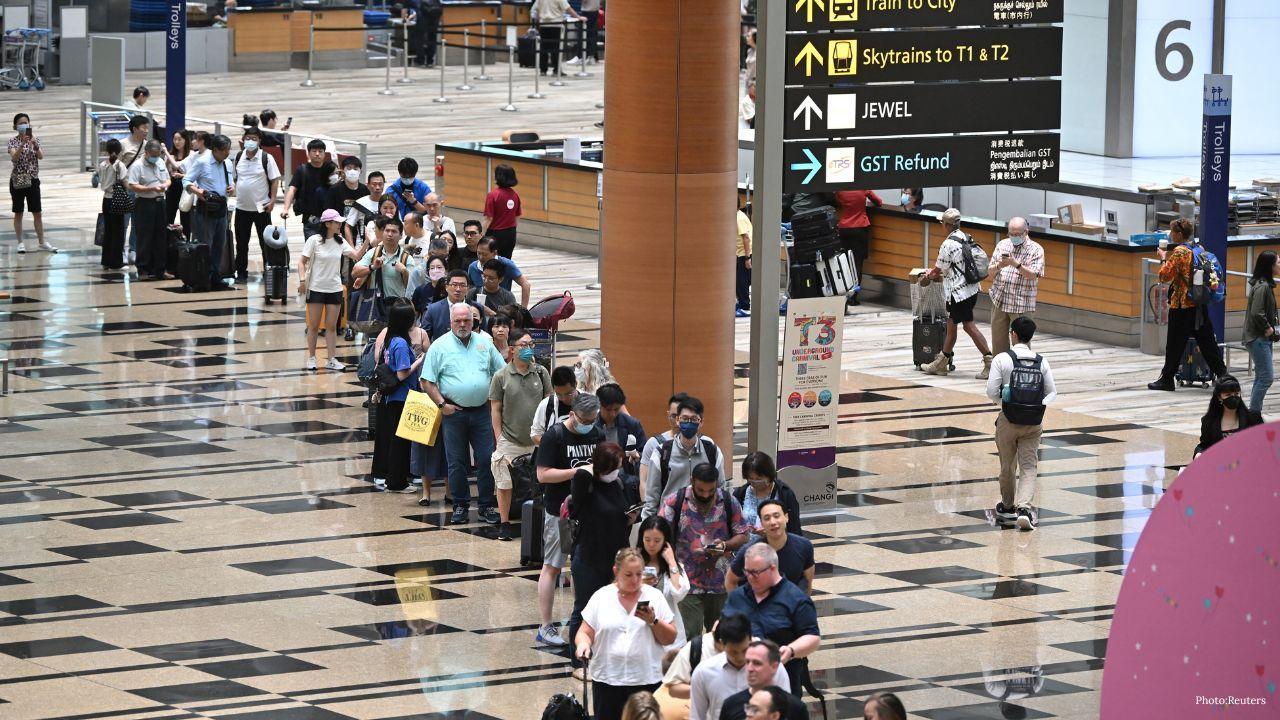
Man to face charges over perfume thefts at Changi Airport
A 47-year-old man faces charges over perfume theft at Changi Airport after six items worth nearly S$