
You have not yet added any article to your bookmarks!
Join 10k+ people to get notified about new posts, news and tips.
Do not worry we don't spam!
Post by : Badri Ariffin
China and Australia are making visible efforts to steady their relationship despite renewed tensions over military encounters in the South China Sea and growing strategic rivalry in the Asia-Pacific region.
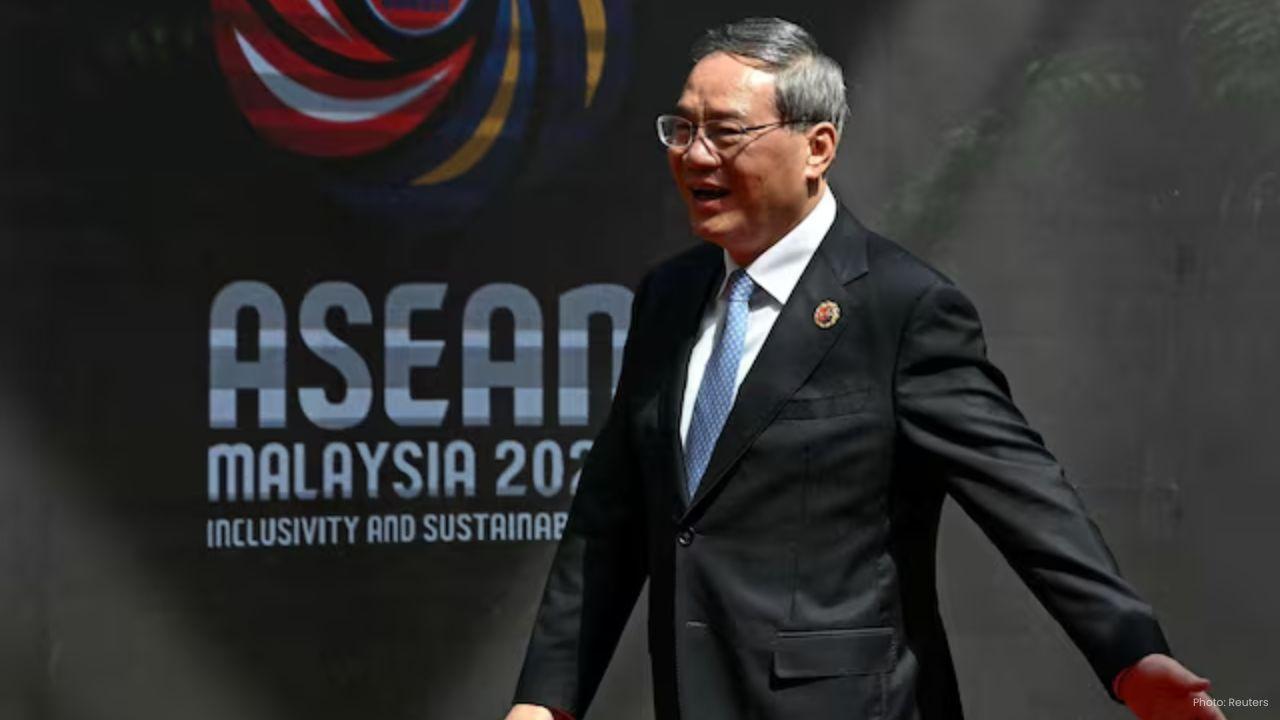
On Monday, Chinese Premier Li Qiang met Australian Prime Minister Anthony Albanese on the sidelines of a Southeast Asian summit in Kuala Lumpur. According to China’s official Xinhua agency, Li expressed Beijing’s readiness to “build a more stable and strategic partnership” with Canberra, emphasizing that current ties are moving in a “positive direction.”
Albanese, who visited China in July to rebuild relations strained under the previous Australian administration, has consistently called for open communication while maintaining Australia’s security stance. His visit marked a cautious reset after years of trade friction and political mistrust.
Military Tensions Still Shadowing Diplomacy
The meeting came just days after a heated exchange between the two nations over a South China Sea encounter involving their militaries. Australia accused a Chinese fighter jet of releasing flares dangerously close—about 30 meters—from one of its patrol planes. Beijing countered the claim, saying the Australian aircraft had “intruded” into Chinese airspace.
This was not an isolated event. In February, Australia made similar complaints, describing another Chinese jet’s actions as “unsafe and unprofessional.” Such incidents highlight the persistent friction in a region where China asserts sweeping territorial claims that overlap with those of multiple Southeast Asian nations.
Strategic Moves in the Pacific
While both sides trade diplomatic barbs, their strategic interests remain deeply intertwined. China has been expanding its influence in the Pacific through trade and security pacts, including agreements with the Solomon Islands and Papua New Guinea.
Australia, meanwhile, recently signed a deal with Papua New Guinea to access its military facilities—seen as a move to balance Beijing’s growing sway across the Pacific. The agreement underscores how both nations are positioning themselves in a delicate power game that extends beyond bilateral relations.
Trade and Cooperation Remain the Glue
Despite the occasional military flashpoints, economic ties have remained remarkably resilient. China continues to be Australia’s largest trading partner, with both governments frequently reaffirming their commitment to free trade, green development, and cooperation in high-tech and digital sectors.
During their discussion in Kuala Lumpur, Li Qiang reiterated that China is open to deeper collaboration in the green economy, innovation, and digital transformation—areas that align with both nations’ long-term growth ambitions.
A Cautious Calm Ahead
While old tensions linger, both sides appear intent on preventing them from derailing progress. Monday’s meeting sent a quiet but clear message: dialogue remains the only viable path forward.
For now, China and Australia seem to be choosing diplomacy over confrontation—an approach that may help keep the world’s most contested waters a little calmer.








Michael Bracewell Chooses Casual Contract, Targets BBL Opportunity
Michael Bracewell moves to a casual contract as he eyes a BBL opportunity while remaining available

Tuchel Says Alex Scott Can Challenge Declan Rice for England Midfield Spot
Thomas Tuchel says Alex Scott can challenge Declan Rice for an England midfield place after his impr

Air Quality Turns Unhealthy in Central and Western Singapore Amid Haze
Singapore haze pushes PSI above 100 in central and western areas as smoke from regional hotspots rai

PM Modi Pays Tribute to Mahatma Gandhi, Urges People to Support Khadi
PM Modi pays tribute to Mahatma Gandhi on Gandhi Jayanti and urges citizens to support Khadi and the

Amazon Seeks to Offload $8 Billion in Nvidia Chips to Investors
Amazon plans to move $8 billion in Nvidia chips to investors, using a new financing model to strengt

Samsung Raises Galaxy S26 Prices as Memory Chip Costs Rise
Samsung raises Galaxy S26 prices in South Korea as rising memory chip costs put pressure on smartpho

