You have not yet added any article to your bookmarks!
Join 10k+ people to get notified about new posts, news and tips.
Do not worry we don't spam!
Post by : Anis Farhan
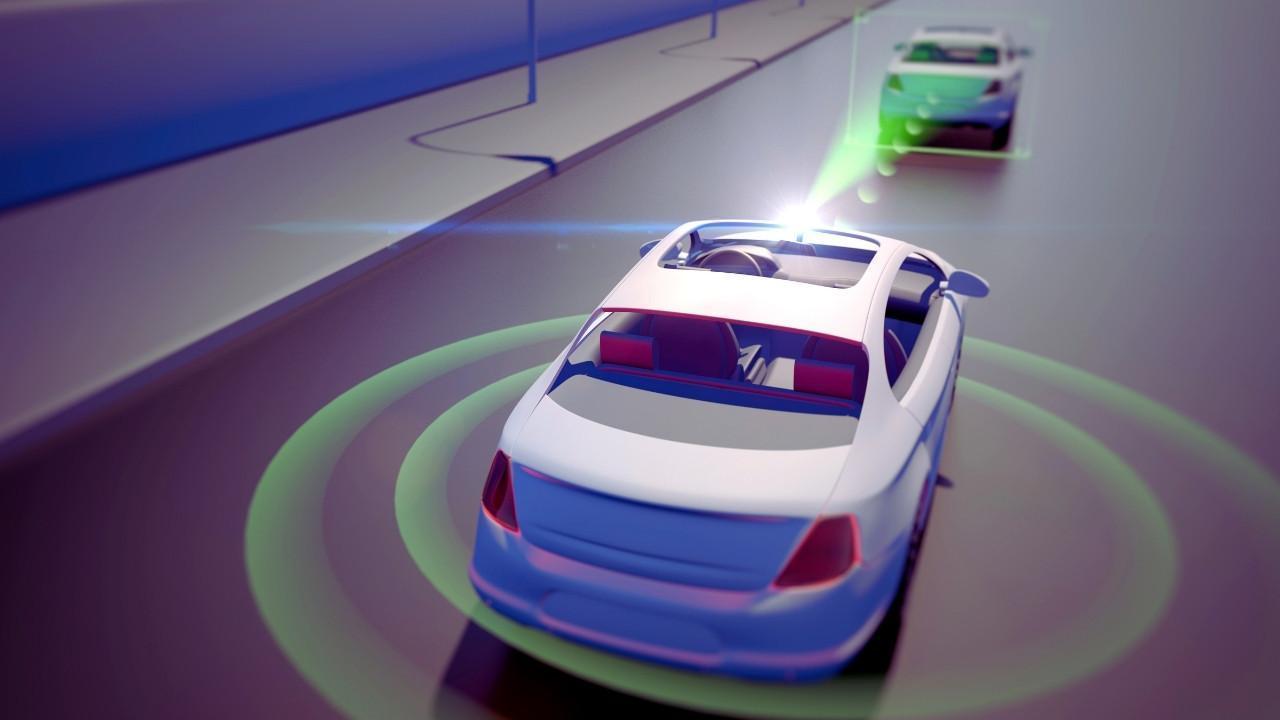
The idea of cars driving themselves was once the stuff of science fiction, but today, autonomous vehicles (AVs) are becoming a reality in Asia’s bustling metropolises. From Singapore’s smart city experiments to Japan’s robotics-driven innovations, trials of driverless cars and shuttles are shaping the future of urban mobility. These developments promise reduced congestion, lower emissions, and safer roads, yet they also raise important questions about safety, ethics, and regulation.
Across Asia, where densely populated cities face traffic challenges and rising pollution, the push toward autonomous technology is strong. However, regulators are still grappling with how to integrate AVs into complex traffic systems dominated by human drivers, motorbikes, and pedestrians. The path forward requires a delicate balance between progress and caution.
Asia’s rapid urbanization has created some of the world’s most congested cities. Governments see autonomous vehicles as a solution to traffic, emissions, and urban mobility challenges. Countries like Singapore, China, Japan, and South Korea have invested heavily in artificial intelligence, robotics, and 5G networks, making them prime candidates for early AV deployment.
Singapore, in particular, has gained international attention for its government-led AV trials, where driverless buses and taxis are being tested in controlled districts. China has also launched large-scale pilot programs in cities like Beijing and Shenzhen, backed by domestic tech giants. Japan, meanwhile, sees AVs as crucial for supporting its aging population by providing mobility solutions for seniors.
One of the biggest challenges facing autonomous vehicles is regulation. Unlike conventional cars, AVs require new safety standards, liability laws, and traffic rules. Governments across Asia are taking different approaches:
Singapore has established one of the most advanced regulatory environments, with clear frameworks for AV testing and deployment.
China is rapidly developing laws while giving local governments authority to issue licenses for pilot zones.
Japan has amended its Road Traffic Act to allow Level 3 automation under specific conditions.
India, while behind in deployment, is debating whether AVs would threaten employment for millions of drivers, delaying large-scale adoption.
Striking a balance between innovation and safety is proving difficult. Regulations must encourage investment while protecting road users from potential risks.
Safety is at the heart of the AV debate. Autonomous systems rely on sensors, cameras, and artificial intelligence to navigate unpredictable environments. Yet, Asian cities are particularly challenging, with chaotic traffic patterns, jaywalking pedestrians, and motorbikes weaving through traffic.
Incidents in global AV trials—such as crashes during testing in the U.S.—have made regulators cautious. In Asia, trust is even harder to establish because public acceptance plays a crucial role. If passengers and pedestrians do not feel safe, widespread adoption will stall, regardless of technological advances.
To address this, cities are running trials in carefully controlled zones. For example, Singapore has deployed AV buses in neighborhoods with lower traffic density, while Japan has tested driverless shuttles in rural towns before expanding to urban areas.
Autonomous vehicles cannot succeed without supportive infrastructure. Reliable 5G networks, smart traffic systems, and advanced mapping are essential. Countries like South Korea and Japan are ahead in this regard, thanks to their advanced technology ecosystems.
China, with its massive investment in smart cities, is also building the infrastructure required for widespread AV adoption. However, in countries like Indonesia, India, and the Philippines, outdated infrastructure and poor road conditions present significant hurdles.
The success of AVs will depend not only on technology inside the vehicles but also on how cities adapt their roads, signals, and communication systems to accommodate them.
The rise of autonomous vehicles carries both opportunities and challenges for Asian economies. On one hand, AVs could reduce accidents, lower healthcare costs, and improve logistics efficiency. Driverless delivery vans and trucks could transform e-commerce and supply chains, particularly in urban areas with high demand.
On the other hand, AVs threaten jobs in transport sectors. Millions of taxi, truck, and bus drivers across Asia face uncertainty as automation advances. Policymakers will need to address potential unemployment, retraining programs, and social safety nets to ensure a just transition.
Public trust is key to the success of autonomous vehicles. In Asia, reactions vary. In Japan, where people are accustomed to robotics and automation, AVs face less skepticism. In contrast, in India and parts of Southeast Asia, people remain wary about handing control to machines, particularly on roads known for unpredictability.
Education campaigns, transparent safety data, and gradual exposure through pilot programs may help build confidence. Once people experience AVs in controlled environments—such as university campuses, tech parks, or dedicated lanes—they are more likely to accept them as part of everyday life.
Looking forward, Asia is expected to play a central role in shaping global AV development. Key trends include:
Integration with Public Transport: Cities like Singapore plan to blend AVs into bus and metro systems to improve last-mile connectivity.
Cross-Border Collaborations: Japan and South Korea are working with international carmakers and tech firms to standardize AV technology.
Gradual Scaling: AVs will likely start in niche roles such as shuttles, delivery vehicles, and industrial transport before moving to mainstream passenger use.
The long-term vision is clear: safer, smarter, and more sustainable cities. But the transition will take decades of careful planning, collaboration, and technological evolution.
Autonomous vehicles in Asia are no longer an abstract concept but a fast-developing reality. Trials in Singapore, China, Japan, and South Korea showcase immense potential, yet challenges around regulation, safety, infrastructure, and public trust remain unresolved.
For Asian metropolises, the road ahead is about balance—welcoming innovation while safeguarding lives and livelihoods. If governments, tech companies, and communities work together, AVs could redefine urban life in the coming decades, making cities not just smarter but safer and more inclusive.
This article is for informational purposes only and reflects research and observations on autonomous vehicle developments in Asia. It does not represent the editorial stance of Newsible Asia.










Australia 50/3 After Bangladesh Bowled Out for 64 in Second Test
Australia reached 50/3 after Bangladesh were bowled out for 64 in the second Test, with Mitchell Sta

Jordan Burroughs Returns to Wrestling with 2028 Olympic Dream
Jordan Burroughs returns to wrestling with Real American Freestyle as the Olympic champion eyes a po

Lamborghini Catches Fire on Singapore's ECP, Causing Heavy Traffic
A Lamborghini caught fire on Singapore's ECP, causing heavy traffic and bus delays. No injuries were

Bangkok Airport Duty-Free Area Flooded by Pipe Burst
A burst water pipe flooded the duty-free shopping area at Bangkok's Suvarnabhumi Airport on July 16,
Nine Monks Killed in Thailand Pickup Truck Tragedy
An 11-year-old boy driving a pickup truck crashed into monks during a pilgrimage in northeastern Tha

Anwar Congratulates Xi on CPC's 105th Anniversary
Malaysia reaffirms strong ties with China as PM Anwar Ibrahim sends a congratulatory letter to Presi