You have not yet added any article to your bookmarks!
Join 10k+ people to get notified about new posts, news and tips.
Do not worry we don't spam!

Post by : Rameen Ariff
Asia is rapidly emerging as a global hub for technology and robotics. From industrial automation to healthcare innovations, countries across the continent are taking major strides in shaping the future. Nations like China, Japan, South Korea, and India are not only adopting new technology but are also producing cutting-edge solutions that are influencing industries, cities, and households. The integration of robotics into daily life is transforming work, education, healthcare, and entertainment in ways that were unimaginable a decade ago.
Japan has always been at the forefront of technological innovation. The country has earned a global reputation for excellence in robotics, particularly in industrial applications. Japanese robots are highly precise, reliable, and capable of performing tasks that require extreme accuracy.
Industrial Use: Japanese factories employ robots to assemble cars, electronics, and machinery. Companies like Fanuc and Yaskawa produce robotic arms that can work 24/7 without fatigue, significantly increasing efficiency and reducing errors.
Healthcare Innovations: Japan’s aging population has prompted the development of robots that can assist elderly individuals with mobility, medication management, and companionship. Robots like Pepper, developed by SoftBank Robotics, can engage in conversation, recognize emotions, and even provide basic entertainment.
Education and Research: Universities in Japan focus on robotics research, producing advanced humanoid robots that can learn tasks, interact with humans, and assist in teaching children complex subjects such as coding and mathematics.
The combination of industrial precision and human-like interaction makes Japan a global leader in robotics innovation.
South Korea is not just advancing in robotics but is also building smart, tech-driven cities. The nation is leveraging robotics, AI, and automation to improve the quality of urban life.
Smart City Projects: Seoul is an example of a city that integrates technology in everyday life. Sensors, cameras, and automated traffic systems manage congestion, reduce accidents, and optimize energy consumption. Citizens benefit from faster public services, efficient waste management, and safer neighborhoods.
Robotics in Manufacturing: South Korean companies like Hyundai and Samsung are heavily investing in automated factories. Robots now perform welding, assembly, and quality inspection with minimal human intervention. This boosts productivity and ensures consistent product quality.
Service Industry: In hotels, restaurants, and hospitals, robots are increasingly used for tasks such as food delivery, customer assistance, and medical support. For example, some hospitals use robotic nurses to monitor patients and deliver medicines, allowing human staff to focus on complex care.
South Korea demonstrates how robotics can transform not only industry but also the urban environment, creating safer, more efficient, and smarter cities.
China’s technology sector has grown tremendously in the last decade. The country is now one of the largest markets for robotics and advanced technology.
Industrial Robots: Chinese manufacturers are rapidly adopting robots to enhance productivity and reduce labor costs. Factories now employ robots for assembly, packaging, and logistics operations.
Healthcare Robots: Hospitals in China use robots for surgeries, patient care, and drug delivery. Surgical robots help doctors perform complex operations with higher precision, improving patient outcomes.
Service and Retail: Robots are becoming more visible in daily life. Restaurants use robotic chefs, and hotels have robot concierges that guide guests, carry luggage, and manage room services. Delivery robots are also being tested to bring packages to homes and businesses.
Startup Ecosystem: China’s booming tech startups focus on innovative applications of robotics, from autonomous vehicles to educational robots. This thriving ecosystem is making China a hub of creativity and rapid technology adoption.
China’s large population, government support, and private investment have positioned it as a major player in robotics and tech innovation.
 4. India – The Emerging Tech Power
India is gradually establishing itself as a strong contender in the field of robotics. While it is not yet as advanced as Japan or South Korea, India is showing remarkable progress.
Startups and Innovation: Indian tech startups are developing robots for healthcare, agriculture, education, and manufacturing. For example, robots that assist in planting crops, monitor soil conditions, and automate repetitive tasks are helping farmers increase efficiency.
Educational Robotics: Schools and universities in India encourage students to create robotics projects. These initiatives help develop critical thinking, creativity, and technical skills among young learners. Robotics competitions and hackathons are gaining popularity, promoting innovation across the country.
Healthcare Applications: Some Indian hospitals now use robotic assistants for surgeries, patient monitoring, and rehabilitation. These advancements are helping improve healthcare access and quality, especially in urban centers.
Challenges: Despite progress, India faces challenges like high costs, lack of technical expertise, and limited research funding. However, government initiatives such as “Make in India” and startup incubators are helping overcome these obstacles.
India’s growing tech ecosystem shows promise, and it is expected to become a significant player in robotics in the near future.
Robotics in healthcare is transforming medical services across Asia. Hospitals and clinics are now using robots for tasks ranging from surgeries to patient care.
Surgical Robots: Robotic-assisted surgery allows doctors to perform minimally invasive procedures with precision. These surgeries result in smaller incisions, faster recovery times, and fewer complications.
Patient Care: Robots help monitor patients, deliver medicines, and assist in physical therapy. For elderly and disabled patients, robots can provide companionship, mobility assistance, and emergency alerts.
Pandemic Response: During health crises like the COVID-19 pandemic, robots played a crucial role in disinfecting hospitals, delivering supplies, and reducing human exposure to viruses.
Healthcare robotics is not only improving efficiency but also enhancing patient safety and comfort.
Robots are no longer limited to industrial and medical applications. They are increasingly entering households and workplaces across Asia.
Home Use: Cleaning robots, smart assistants, and even educational robots are becoming common in Asian homes. These devices help with chores, learning, and entertainment.
Education: Robots are used in classrooms to teach coding, science, and language skills interactively. This makes learning engaging and helps children develop problem-solving abilities.
Workplace: Companies are using robots for repetitive tasks such as document sorting, delivery of materials, and customer support. This allows employees to focus on more creative and strategic work.
The integration of robots into daily life is changing routines, saving time, and increasing productivity.
Despite the progress, robotics in Asia faces several challenges:
Cost and Accessibility: Advanced robots are expensive, limiting their adoption among small businesses and households.
Technical Expertise: Operating and maintaining robots requires specialized skills, which are still in short supply.
Job Concerns: Automation raises fears about job loss in traditional industries. Governments and companies must balance automation with job creation.
Ethical Considerations: As robots interact more with humans, ethical questions arise about privacy, safety, and social impact.
However, these challenges also present opportunities. Training programs, affordable robotics solutions, and regulations that ensure ethical use can make robotics more accessible and beneficial.
The future of robotics in Asia is promising:
Integration Across Sectors: From agriculture to education, robotics will continue to transform multiple sectors.
Innovation and Research: Universities, research institutes, and private companies will continue developing smarter and more capable robots.
Global Leadership: Asia is expected to lead the global robotics market, with innovations that could influence the entire world.
Human-Robot Collaboration: The focus will be on using robots to assist humans, making work safer and more efficient rather than replacing jobs entirely.
As technology becomes more affordable and accessible, robotics will be an integral part of everyday life in Asia.
Asia’s advancements in robotics and technology are reshaping industries, cities, healthcare, and homes. Japan, South Korea, China, and India are leading the way with innovative solutions that improve efficiency, safety, and quality of life. While challenges exist, the opportunities are enormous. With continued investment, research, and ethical use, robotics will remain a driving force for progress in Asia, making the future smarter, safer, and more connected than ever.
The content provided on Newsible Asia is for informational purposes only. While we strive to ensure accuracy and reliability, the news, opinions, and views expressed in this article are those of the original sources or contributors. Newsible Asia does not take responsibility for any actions taken based on the information provided.










Australia 50/3 After Bangladesh Bowled Out for 64 in Second Test
Australia reached 50/3 after Bangladesh were bowled out for 64 in the second Test, with Mitchell Sta

Jordan Burroughs Returns to Wrestling with 2028 Olympic Dream
Jordan Burroughs returns to wrestling with Real American Freestyle as the Olympic champion eyes a po

Lamborghini Catches Fire on Singapore's ECP, Causing Heavy Traffic
A Lamborghini caught fire on Singapore's ECP, causing heavy traffic and bus delays. No injuries were

Bangkok Airport Duty-Free Area Flooded by Pipe Burst
A burst water pipe flooded the duty-free shopping area at Bangkok's Suvarnabhumi Airport on July 16,
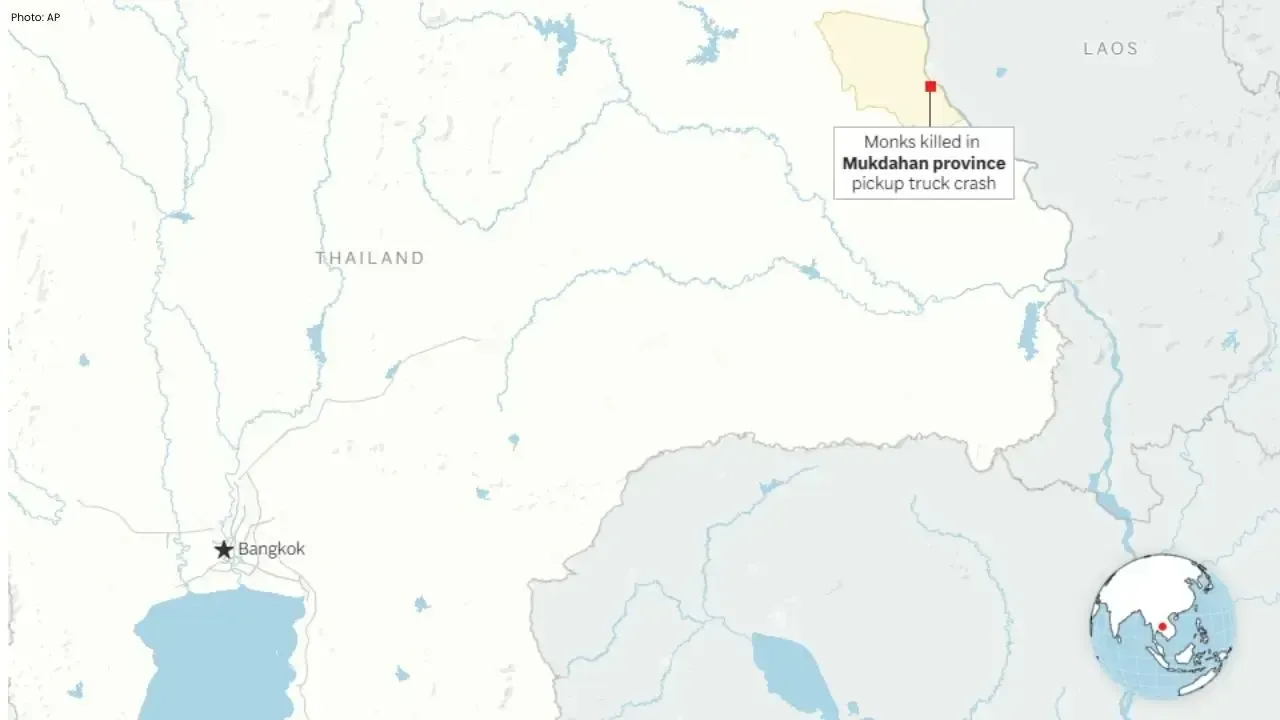
Nine Monks Killed in Thailand Pickup Truck Tragedy
An 11-year-old boy driving a pickup truck crashed into monks during a pilgrimage in northeastern Tha

Anwar Congratulates Xi on CPC's 105th Anniversary
Malaysia reaffirms strong ties with China as PM Anwar Ibrahim sends a congratulatory letter to Presi