You have not yet added any article to your bookmarks!
Join 10k+ people to get notified about new posts, news and tips.
Do not worry we don't spam!

Post by : Anis Farhan
Thailand has long been considered the jewel of Southeast Asia’s tourism crown, and for good reason. With its pristine beaches, rich cultural heritage, and world-class hospitality, it has historically ranked as the number-one destination for Chinese travelers. But something has changed. In a surprising shift, Chinese tourists are no longer flocking to the Land of Smiles in the numbers once expected. The drop is so significant that it’s reshaping travel flows across Asia and raising tough questions for Thailand’s tourism-dependent economy.
Once contributing as much as 28% of Thailand’s total foreign arrivals, Chinese tourists now account for far less, with some industry insiders warning that the 2025 projections may fall well below half of pre-pandemic levels. The reasons are complex—ranging from safety concerns and geopolitical shifts to a growing preference for “alternative Asia” destinations. As the region reopens and rebuilds after COVID-19, Thailand finds itself no longer the default choice for outbound Chinese tourism.
Before the pandemic, Chinese tourists made up nearly 11 million of Thailand’s annual 40 million visitors. The return of Chinese outbound travel in 2023 was expected to reboot the Thai economy, especially in sectors such as retail, hospitality, transportation, and entertainment. But in 2024 and early 2025, arrivals from China have been notably underwhelming.
Despite visa-free policies and direct flight reinstatements, Chinese travelers now constitute less than 15% of total arrivals to Thailand. Meanwhile, destinations like Singapore, Malaysia, and even the UAE have seen a boost in Chinese visitor numbers. Industry analysts are scrambling to understand why Thailand is no longer the go-to destination.
One of the most widely cited reasons behind this decline is safety. Incidents involving tourist scams, violent crime, and social media reports of mistreatment have eroded confidence among Chinese travelers. In 2023, a viral video of a Chinese influencer describing her robbery experience in Thailand sparked an online debate about whether the country was still a “safe haven” for Chinese citizens.
Though Thai authorities responded quickly and promised tighter security, the damage was already done in the digital sphere. In today’s social media-driven travel ecosystem, a single negative story can trigger mass sentiment shifts. Chinese tourists, especially younger travelers, are becoming more cautious about where they go—and how safe they feel once they arrive.
This change in sentiment doesn’t exist in a vacuum. With safety concerns already heightened due to global instability, destinations like Japan, South Korea, and Singapore—seen as more controlled and organized—have begun attracting cautious travelers who might have otherwise gone to Thailand.
Beyond safety, there’s also a more profound behavioral shift happening. Chinese travelers, especially the younger generation, are looking for deeper experiences. They want destinations that offer storytelling, cultural immersion, and curated adventures. Thailand’s once-winning combination of cheap shopping, nightlife, and packaged tours is starting to feel dated.
This generation is interested in heritage architecture in Penang, wellness retreats in Bali, and gastronomic trails in Vietnam. The traditional Thai holiday model—pattaya beaches, elephant rides, and low-budget massages—is losing ground to “experience-first” travel.
Moreover, digital-native Chinese travelers are no longer dependent on group tours. With mobile-first planning, translation apps, and social influencers shaping decisions, today’s tourists are less interested in mass-market destinations and more inclined to explore offbeat or emerging regions.
There’s also a political undercurrent affecting travel flows. Bilateral relations, trade tensions, and visa policy fluctuations have all played a role in deterring or redirecting Chinese tourists. At the same time, regional competitors are aggressively courting the Chinese market, offering tailored campaigns, cultural familiarity, and incentives.
For example:
Malaysia has ramped up Chinese-language tourism campaigns and halal-certified packages that appeal to both Muslim and Chinese tourists.
Singapore continues to capitalize on its image as a high-tech, secure, and convenient stopover destination.
Indonesia has simplified visa policies and expanded Mandarin-speaking tour infrastructure in Bali and Jakarta.
Thailand, though popular, can no longer rely solely on its reputation. With travelers becoming more selective, brand fatigue is real, and without constant reinvention, even the best-known destinations can fall out of favor.
The tourism slowdown isn’t just about airports and tour guides—it has deep economic ripple effects. Small and mid-sized businesses that heavily relied on Chinese tourists—like street vendors, boutique hotels, tuk-tuk drivers, and market sellers—are among the hardest hit.
Duty-free malls, high-end retailers, and restaurant chains in cities like Bangkok, Phuket, and Chiang Mai have reported drops in sales, with many scaling back Chinese-language services due to reduced demand. Some businesses have begun pivoting toward other regional markets—Korean, Indian, and Russian tourists—but the gap left by Chinese visitors is proving difficult to fill.
The Thai government, which once saw tourism as the "low-hanging fruit" of GDP growth, is being forced to reconsider its dependence on a single demographic group. The idea of "quantity over quality" is slowly giving way to conversations about sustainable tourism and diversified market strategies.
If Thailand wants to recapture the Chinese market—or at least stabilize its position—it needs to take deliberate and strategic steps. These include:
Rebuilding Trust: Safety isn’t just about crime stats. It's also about perception. Active media campaigns, influencer engagement, and transparency about tourist protections are essential.
Personalizing the Experience: Offering culturally sensitive services, curated travel apps in Mandarin, and AI-driven concierge services can go a long way.
Upgrading Infrastructure: From airport signage to public transport to seamless e-payment options for Chinese platforms, convenience is key.
Telling New Stories: Thailand needs to highlight lesser-known destinations, local artisans, heritage villages, and eco-friendly experiences that match the changing tastes of Gen Z travelers.
Leveraging Soft Power: Pop culture, cinema, food, and history must be used as tools to reintroduce Thailand in a new light. Appealing to emotion, nostalgia, and curiosity is the new game in tourism marketing.
Thailand’s struggle to retain its Chinese tourist base is more than a post-pandemic anomaly—it’s a litmus test for the future of travel in Asia. In an era where safety, personalization, and authenticity are more valuable than low prices and convenience, Thailand must rethink how it presents itself to a global audience.
The days of passive tourism are gone. To remain relevant, countries must actively compete for travelers’ attention and constantly evolve with their expectations. Thailand still has all the right ingredients—stunning landscapes, rich culture, and world-class hospitality—but the recipe needs to be reimagined for the 2025 traveler.
If it succeeds, Thailand could not only regain its top spot but also set a new standard for resilient, future-ready tourism in Southeast Asia.
This article is intended for informational and editorial purposes only. The views presented are based on market trends, tourism data, and industry observations. Readers are advised to consult official tourism bodies or travel advisories for real-time updates and travel planning.










Lamborghini Catches Fire on Singapore's ECP, Causing Heavy Traffic
A Lamborghini caught fire on Singapore's ECP, causing heavy traffic and bus delays. No injuries were

Bangkok Airport Duty-Free Area Flooded by Pipe Burst
A burst water pipe flooded the duty-free shopping area at Bangkok's Suvarnabhumi Airport on July 16,
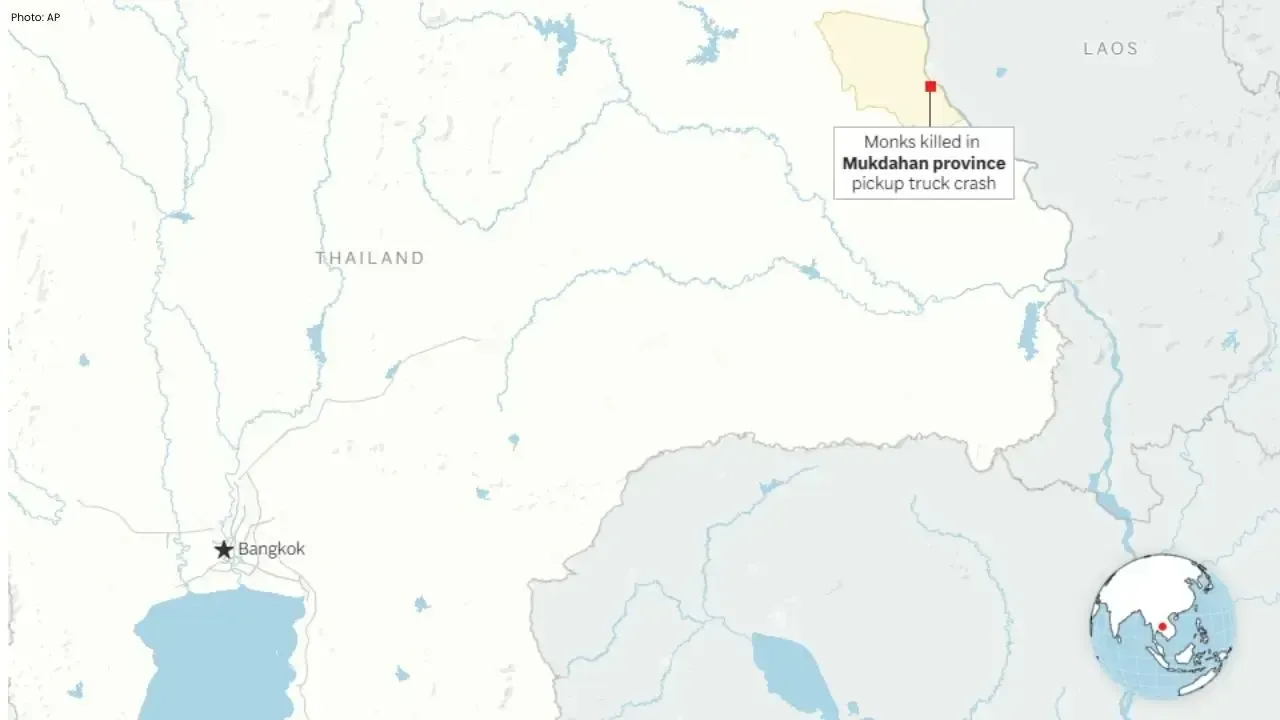
Nine Monks Killed in Thailand Pickup Truck Tragedy
An 11-year-old boy driving a pickup truck crashed into monks during a pilgrimage in northeastern Tha

Anwar Congratulates Xi on CPC's 105th Anniversary
Malaysia reaffirms strong ties with China as PM Anwar Ibrahim sends a congratulatory letter to Presi

Thai Agriculture Team Reviews 2026 Farm Development Plans
Agriculture Ministry officials inspected livestock and organic rice projects in Nakhon Sawan to moni

Thailand, Canada Boost Ties in PM-Level Phone Talks
Thailand and Canada agreed to strengthen trade, security, OECD cooperation and ASEAN-Canada FTA talk