You have not yet added any article to your bookmarks!
Join 10k+ people to get notified about new posts, news and tips.
Do not worry we don't spam!
Post by : Anis Farhan
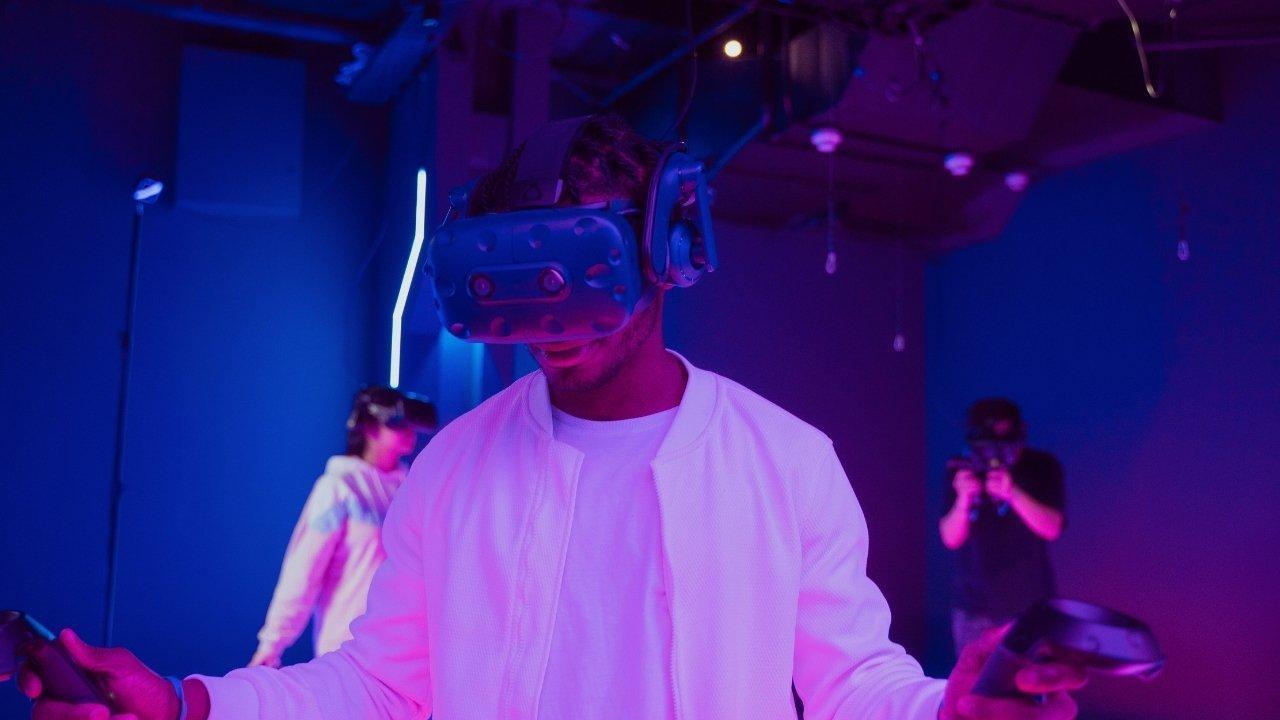
For years, augmented reality (AR) and virtual reality (VR) were dismissed as niche technologies, primarily associated with gaming headsets and sci-fi-inspired experiences. But in 2025, this narrative is rapidly changing. AR and VR are breaking free from the boundaries of entertainment, moving into sectors such as retail, healthcare, education, and even social interactions. What once seemed futuristic is now becoming part of everyday life.
The mainstream adoption of AR/VR signals a deeper cultural and technological shift. It’s no longer about escaping into digital fantasy worlds—it’s about integrating immersive technologies into real-world scenarios to make experiences more interactive, personalized, and engaging. Whether you are shopping for clothes without visiting a mall, attending a university lecture from thousands of miles away, or exploring virtual concerts, AR/VR is reshaping how humans interact with technology, businesses, and each other.
The early years of AR/VR revolved around gaming. Titles like Beat Saber, Pokémon Go, and immersive VR shooters captured the imagination of young users and gamers. While these laid the foundation for adoption, the future of AR/VR lies in its ability to add value outside gaming.
Today, companies are embedding AR/VR into practical services. Retail giants are enabling customers to “try before they buy” through AR apps. Universities are experimenting with virtual classrooms where students attend from across the world, using avatars and immersive environments. Medical professionals are harnessing VR for complex surgeries, training simulations, and even therapy.
This expansion signals that AR/VR is no longer just entertainment—it’s a toolkit for industries seeking new ways to engage, educate, and innovate.
Retail is one of the most visible industries embracing AR. For shoppers, the ability to preview products digitally before purchasing is becoming standard. Furniture retailers allow customers to place a virtual sofa in their living room through an AR app to see how it fits. Fashion brands let users try on clothes, accessories, or makeup virtually before clicking “buy.”
This technology not only boosts convenience but also reduces return rates for online retailers. More importantly, it adds a layer of personalization. Shopping is no longer about browsing endless catalogs—it’s about tailoring products to individual needs in real time. As AR becomes more sophisticated, it will likely become the default mode of e-commerce, bridging the gap between physical and digital experiences.
Education has historically struggled with accessibility, but VR is beginning to change that. Instead of reading about history in a textbook, students can now walk through the streets of ancient Rome using VR headsets. Medical students can practice surgeries in highly realistic simulations, learning in safe but lifelike conditions.
Beyond traditional classrooms, VR is breaking down geographical barriers. A child in a rural village can attend the same immersive lesson as one in a major city, simply by logging into a VR platform. This democratization of knowledge has the potential to level the playing field for millions of learners worldwide.
Healthcare is another domain witnessing an AR/VR revolution. VR therapy is being used to treat phobias, PTSD, and anxiety by gradually exposing patients to controlled scenarios in safe environments. Surgeons are using AR overlays during operations to visualize internal organs and improve accuracy. Rehabilitation programs employ VR exercises that keep patients engaged while aiding recovery.
The emotional and cognitive benefits are also striking. For elderly patients, VR can create environments that trigger memories or reduce loneliness by offering social interactions in virtual spaces. These applications highlight AR/VR’s role not just as technology but as a tool for well-being and healing.
While gaming remains a cornerstone of AR/VR, the entertainment industry is broadening the scope dramatically. Virtual concerts are drawing audiences of millions, allowing fans to experience performances without leaving home. Movie directors are experimenting with immersive storytelling, where viewers don’t just watch but actively explore cinematic worlds.
Sports are another emerging frontier. Fans can use VR to watch games as though they are sitting in a stadium, complete with multiple angles and interactive stats. These immersive experiences suggest that the future of entertainment will blend physical and digital realities seamlessly.
Businesses see AR/VR as more than a gimmick—it’s a driver of revenue and efficiency. Immersive tech reduces costs in areas like training, where VR can simulate complex environments without expensive logistics. It enhances customer engagement by offering interactive product experiences, strengthening brand loyalty.
For companies, the reach of AR/VR is global. A brand in Tokyo can showcase products in real time to a customer in London, eliminating physical barriers. This global scalability ensures that AR/VR is not just a technological trend but a strategic necessity for businesses seeking relevance in a hyperconnected market.
Despite the hype, AR/VR faces hurdles before fully embedding into daily life. Hardware costs remain high, and headsets can still feel bulky or uncomfortable for prolonged use. Internet infrastructure, especially in rural areas, must improve to handle the data-intensive demands of immersive experiences.
There are also concerns about privacy and ethics. AR/VR systems often rely on sensitive biometric data, raising questions about security. Prolonged use may have health implications, such as eye strain or reduced physical activity. Moreover, as virtual worlds become more realistic, the line between digital and physical reality may blur, creating new psychological challenges.
Perhaps the biggest change AR/VR brings is cultural. People are adjusting to the idea that experiences do not need to be physically grounded to be meaningful. From attending weddings virtually to participating in workplace meetings through avatars, society is beginning to accept that “presence” is not limited to physical space.
This cultural acceptance is as important as technological development. The more people value virtual experiences, the more industries will invest in expanding them. Over time, AR/VR could reshape norms around work, education, entertainment, and even social rituals.
Looking ahead, AR/VR will likely become as common as smartphones. As devices shrink, costs drop, and networks improve, immersive technology will blend seamlessly into everyday life. Glasses with built-in AR features could replace phones, offering real-time directions, translations, and social interactions. VR could evolve into shared digital environments where people spend as much time as they do in physical spaces.
This mainstream future will not arrive overnight, but the momentum is undeniable. Industries across the spectrum are already investing heavily, ensuring that AR/VR is not a passing fad but a foundational shift in how humanity interacts with technology.
The evolution of AR/VR proves that immersive technology is far more than a gaming novelty. From retail and education to healthcare and entertainment, it is becoming a transformative force across industries. While challenges remain, the promise of richer, more connected experiences ensures that AR/VR will only grow in influence.
As AR/VR moves into the mainstream, the world is not just witnessing a technological upgrade but a cultural revolution—one that redefines how we live, learn, shop, and connect in a digital-first era.
This article is for informational purposes only and does not constitute business, medical, or educational advice. Readers should consult industry professionals for specific applications of AR/VR.









Jordan Burroughs Returns to Wrestling with 2028 Olympic Dream
Jordan Burroughs returns to wrestling with Real American Freestyle as the Olympic champion eyes a po

Lamborghini Catches Fire on Singapore's ECP, Causing Heavy Traffic
A Lamborghini caught fire on Singapore's ECP, causing heavy traffic and bus delays. No injuries were

Bangkok Airport Duty-Free Area Flooded by Pipe Burst
A burst water pipe flooded the duty-free shopping area at Bangkok's Suvarnabhumi Airport on July 16,

Nine Monks Killed in Thailand Pickup Truck Tragedy
An 11-year-old boy driving a pickup truck crashed into monks during a pilgrimage in northeastern Tha

Anwar Congratulates Xi on CPC's 105th Anniversary
Malaysia reaffirms strong ties with China as PM Anwar Ibrahim sends a congratulatory letter to Presi

Thai Agriculture Team Reviews 2026 Farm Development Plans
Agriculture Ministry officials inspected livestock and organic rice projects in Nakhon Sawan to moni