You have not yet added any article to your bookmarks!
Join 10k+ people to get notified about new posts, news and tips.
Do not worry we don't spam!

Post by : Anis Farhan
The Amazon rainforest—often referred to as the “lungs of the planet”—is burning at an unprecedented rate in 2025. Satellite data released this week revealed that the number of active wildfires has surged by more than 65% compared to the same period last year. Over 20,000 separate fire outbreaks have been recorded in just the last two months across Brazil, Peru, and Bolivia. Environmental groups, scientists, and global leaders are now raising alarms over the mounting ecological damage and the political decisions accelerating the crisis.
Brazil, home to nearly 60% of the Amazon biome, has seen the sharpest increase in fire activity. This spike coincides with recent changes in environmental oversight, including reduced penalties for illegal logging and a drastic decline in funding for forest monitoring programs. The situation is rapidly becoming a full-blown ecological and humanitarian emergency.
While dry seasons naturally increase the risk of wildfires, experts agree that the current surge in the Amazon is largely man-made. The following factors are contributing to the crisis:
Illegal Logging and Land Grabbing: With enforcement reduced, loggers and land developers are clearing forests with impunity. Fires are often used as a tool to quickly eliminate tree cover for agricultural or mining purposes.
Policy Rollbacks: Environmental agencies have faced deep budget cuts. Several state-level governments in Brazil have relaxed inspection protocols, making it easier for exploitative activities to continue unnoticed.
Global Demand for Soy and Beef: Agricultural expansion remains one of the leading drivers of Amazon deforestation. Brazil’s beef and soy industries have grown more reliant on land cleared illegally.
Climate Stress: The Amazon is becoming hotter and drier due to climate change, making it more vulnerable to fire. Rainfall has been below average this season, and rising temperatures have lowered soil moisture levels dramatically.
The Amazon rainforest is one of the world’s most critical carbon sinks. Its dense vegetation stores billions of tons of carbon dioxide, helping regulate global temperatures. But with more trees burning and being cut down, the rainforest is approaching a dangerous tipping point where it may no longer absorb more carbon than it emits.
Environmental scientists warn that continued deforestation and fires could shift the Amazon from a carbon sink to a carbon source, accelerating the pace of global warming. This shift would not only worsen climate crises worldwide but also damage regional rainfall cycles across South America, affecting water availability in Brazil, Argentina, and beyond.
Aside from its role in climate regulation, the Amazon is home to an estimated 10% of the world’s known species. The current wildfire outbreak has already scorched large habitats critical to jaguars, macaws, giant otters, and countless plant species—many of which are found nowhere else on Earth.
Conservationists report mass displacement of wildlife, with numerous species fleeing burning zones only to encounter human settlements or farmland where survival is difficult. Entire ecological chains are being disrupted. Some endangered species could be pushed to extinction if these fires continue unabated.
The damage isn’t just environmental—it’s deeply human. The fires have encroached on protected Indigenous territories, threatening their homes, health, and way of life. Communities such as the Yanomami, Kayapo, and Munduruku are facing food and water shortages, respiratory illnesses, and forced migration due to the destruction of their land.
Many Indigenous leaders are speaking out, calling the fires a form of “environmental violence” driven by economic greed and governmental neglect. The weakened enforcement of protective laws has left many without recourse or support as fires creep closer to ancestral lands.
In some areas, smoke levels have become so severe that health officials are warning of long-term respiratory damage, especially among children and the elderly. Rural hospitals in fire-hit regions are overwhelmed with cases of smoke inhalation and related complications.
The rollback of deforestation regulations in Brazil has drawn widespread international condemnation. Countries in Europe and North America are once again debating trade sanctions or import bans on products linked to illegal deforestation. Several multinational food and fashion companies are under renewed pressure to disclose their Amazon supply chains and ensure they are not complicit in environmental destruction.
In response to criticism, Brazil’s federal government has promised to review its policies and reallocate emergency funds to firefighting efforts. However, critics argue that these gestures are reactive and insufficient, lacking the long-term commitment needed to protect the Amazon from systemic degradation.
Brazil’s federal firefighting agency is stretched thin. With thousands of fires burning simultaneously, resources are scarce and response times are lagging. Military support has been deployed to some areas, but vast stretches of the forest remain inaccessible due to rough terrain and lack of infrastructure.
International aid has begun trickling in, with neighboring countries offering equipment and personnel, but logistical challenges remain. The Amazon’s remote geography makes aerial firefighting expensive and time-consuming.
Local NGOs and volunteer groups have stepped in, but many lack proper gear or training. They face enormous risks trying to protect both the environment and vulnerable populations. Several volunteers have been injured in recent weeks while combating fires with minimal equipment.
Experts are calling for a multi-tiered response, including:
Restoring Environmental Governance: Reinstating and strengthening policies that deter illegal deforestation is the first step. That includes empowering environmental enforcement agencies with proper budgets and authority.
Indigenous Empowerment: Indigenous communities must be given more control over land management. Studies show deforestation rates are lowest in regions where Indigenous peoples have land sovereignty.
Sustainable Trade Policies: Global markets must hold companies accountable for using deforestation-linked materials. Certification schemes and transparent supply chains can help.
International Cooperation: Climate change and rainforest loss are global issues. Richer nations must increase funding for conservation, reforestation, and climate adaptation in developing regions.
Technological Monitoring: Real-time satellite surveillance, drones, and AI-based deforestation alerts can help governments respond faster and more precisely to emerging fires.
The fires raging through the Amazon in 2025 are not simply acts of nature—they are symptoms of political choices, economic greed, and institutional failure. The world has seen this before, but this year’s wildfire season stands out in scale, severity, and symbolism.
Unless bold and coordinated action is taken, the Amazon’s fate may soon be irreversible. The forest that has supported life on Earth for millennia may succumb to flames and bulldozers—not because we couldn’t stop it, but because we didn’t.
This article is intended for informational and editorial purposes only. The data and analysis presented are based on publicly available reports, satellite imagery, and expert commentary as of the time of publication. Readers are encouraged to consult environmental agencies, scientific journals, and official government statements for the most up-to-date and verified information regarding Amazon wildfires and deforestation policies.









Lamborghini Catches Fire on Singapore's ECP, Causing Heavy Traffic
A Lamborghini caught fire on Singapore's ECP, causing heavy traffic and bus delays. No injuries were

Bangkok Airport Duty-Free Area Flooded by Pipe Burst
A burst water pipe flooded the duty-free shopping area at Bangkok's Suvarnabhumi Airport on July 16,
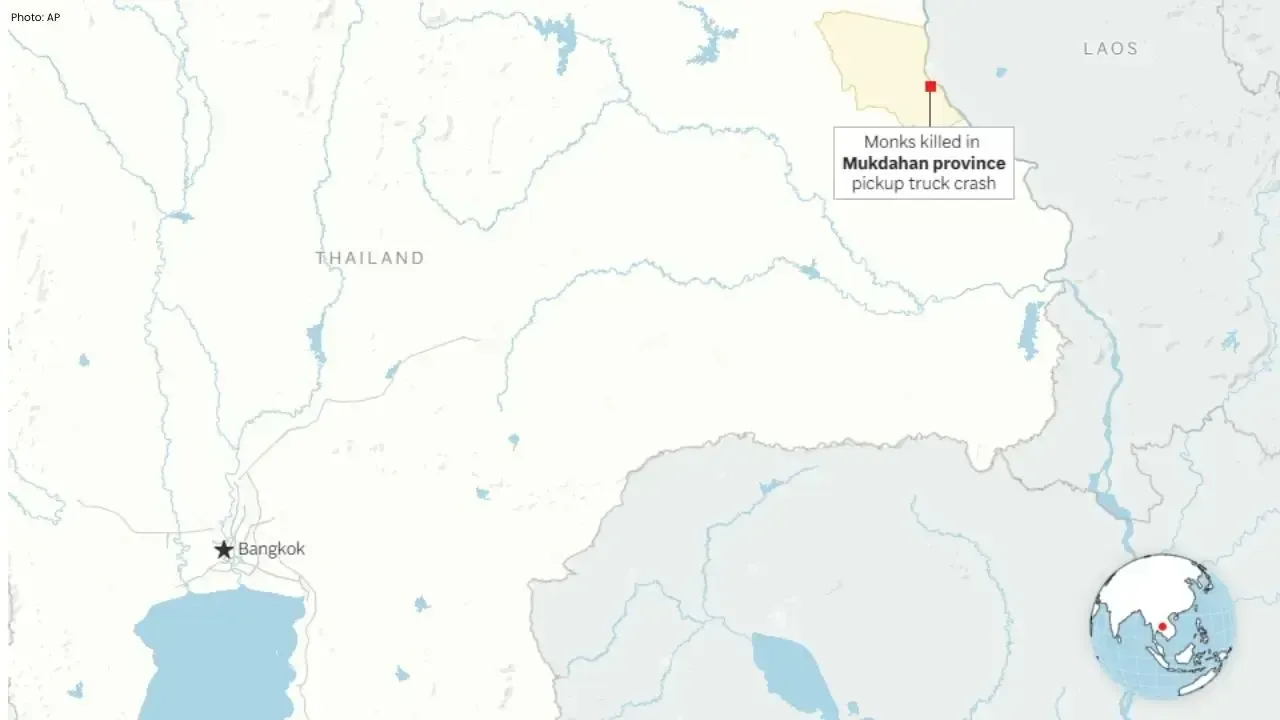
Nine Monks Killed in Thailand Pickup Truck Tragedy
An 11-year-old boy driving a pickup truck crashed into monks during a pilgrimage in northeastern Tha

Anwar Congratulates Xi on CPC's 105th Anniversary
Malaysia reaffirms strong ties with China as PM Anwar Ibrahim sends a congratulatory letter to Presi

Thai Agriculture Team Reviews 2026 Farm Development Plans
Agriculture Ministry officials inspected livestock and organic rice projects in Nakhon Sawan to moni

Thailand, Canada Boost Ties in PM-Level Phone Talks
Thailand and Canada agreed to strengthen trade, security, OECD cooperation and ASEAN-Canada FTA talk