
You have not yet added any article to your bookmarks!
Join 10k+ people to get notified about new posts, news and tips.
Do not worry we don't spam!
Post by : Anis Farhan
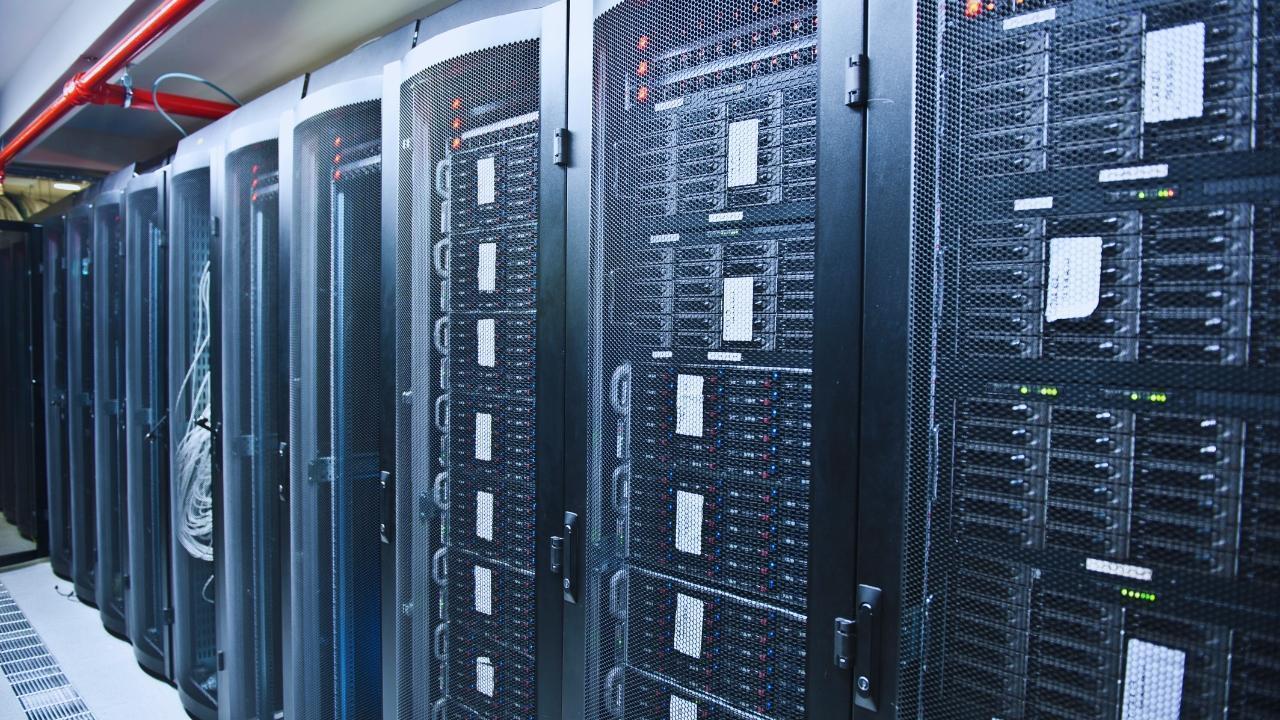
Artificial intelligence is often seen as an invisible force — code, models, and neural nets floating in the cloud. But behind every chatbot reply and predictive algorithm lies something deeply physical: data centers, and with them, an escalating demand for water.
In 2025, as Southeast Asia’s AI and cloud infrastructure expands, so too does its hidden environmental footprint. At the center of this challenge is a troubling question: Can the region’s AI ambitions align with its water security goals?
It’s not just about power anymore. It’s about hydration — and sustainability.
AI workloads, especially training large models like LLMs, are extremely energy-intensive. That energy generates heat — and to prevent overheating, data centers rely heavily on cooling systems, most of which require water.
There are two primary cooling methods:
Evaporative cooling, which uses water to remove heat from air
Liquid immersion or direct water cooling, which uses fluid to cool hardware components directly
Estimates suggest that training a single large AI model can consume over 500,000 liters of water — equivalent to the daily water needs of 5,000 people. And this doesn’t even include the water used during inference and daily operations.
With generative AI scaling rapidly, especially in Southeast Asia’s tech-forward cities, the pressure on local water systems is becoming impossible to ignore.
The region is experiencing a data center gold rush:
Singapore remains the regional leader, with over 80 data centers and plans to double capacity by 2027.
Malaysia, particularly Johor, is attracting hyperscale data center investments from Amazon, Microsoft, and Tencent.
Indonesia and Thailand are building regional cloud zones to support growing AI and fintech ecosystems.
AI is the primary driver behind this growth. From training local LLMs to powering recommendation systems for e-commerce, these workloads demand 24/7 uptime and rapid cooling cycles.
Yet, many of these new facilities are being built in water-stressed regions, raising environmental and social concerns about long-term viability.
Singapore, despite being a tech powerhouse, has limited freshwater resources. Around 60% of its water is imported from Malaysia, and climate models project growing volatility in rainfall patterns.
To manage this, the city-state paused data center approvals in 2019, then reintroduced a “green quota system” in 2022 — only allowing new centers that meet strict energy and water efficiency benchmarks.
In 2025, Singapore’s Green Data Centre Roadmap mandates:
Maximum Water Usage Effectiveness (WUE) of 1.2
Use of non-potable NEWater (recycled water) for cooling
Mandatory liquid-free cooling technologies for hyperscale centers
Microsoft, for example, is piloting submerged cooling systems using dielectric fluid, while Equinix is deploying rooftop evaporative coolers that cut water use by 40%.
Johor and Batam — two emerging data center hubs — appear to have more abundant water reserves. But experts warn that:
Rainfall is increasingly erratic due to climate change
Agricultural and residential water demands are rising
Infrastructure for wastewater recycling and reuse is underdeveloped
These regions are at risk of repeating mistakes made by data centers in the American Southwest and parts of India, where water extraction for cooling led to aquifer depletion and community backlash.
In 2025, civil society groups in Malaysia’s Kulai district are calling for greater transparency on water consumption disclosures from new tech parks — a signal that public scrutiny is rising.
Fortunately, several innovations are emerging to balance AI growth with sustainability:
Air cooling in combination with desert-specific HVAC design
Liquid immersion cooling, which can reduce both power and water usage
AI-powered thermal optimization, using ML to dynamically adjust cooling needs
On-site water recycling systems, especially for hyperscale facilities
Time-shifted inference, where non-urgent workloads run at night to reduce cooling needs
In 2025, Thailand's Ministry of Digital Economy is co-developing a Green AI Certification Standard with input from cloud providers, aimed at promoting water-aware AI architecture across public and private cloud services.
The regulatory frameworks across Southeast Asia are still evolving. While energy efficiency metrics like Power Usage Effectiveness (PUE) are well known, Water Usage Effectiveness (WUE) is less standardized.
Some governments are beginning to act:
Indonesia is drafting a Digital Infrastructure Environmental Code
Malaysia is requiring Environmental Impact Assessments (EIAs) for all new data centers over 50 MW
Singapore is offering tax incentives for operators that meet both low PUE and low WUE thresholds
But environmentalists say this may not be enough. They argue for mandatory water usage disclosures, tiered tariffs for water-hungry tech, and regional coordination to avoid cross-border water stress scenarios.
The water question also ties into AI ethics. If generative AI is consuming massive environmental resources to produce content that may or may not be essential, who decides what is worth the cost?
Should we prioritize data centers for education and healthcare AI, while limiting large-scale model training for entertainment or marketing bots? These are questions policymakers will face as environmental limits become clearer.
In short: Sustainable AI isn't just about fairness and bias — it’s about physical survival.
As Southeast Asia accelerates into the AI era, it faces a crucial test: can we build intelligence without exhausting our environment?
Data centers are the physical bones of artificial intelligence. And without sustainable water strategies, the dream of a tech-enabled future could dry up — literally.
Balancing innovation with environmental stewardship isn’t easy. But with the right policies, technologies, and public will, AI and sustainability can still coexist — drop by drop.
This article is intended for editorial and informational purposes only. It does not constitute environmental or technical advice. Readers are encouraged to consult climate scientists, regulatory authorities, and sustainability experts before making infrastructure decisions.










PM Modi Pays Tribute to Mahatma Gandhi, Urges People to Support Khadi
PM Modi pays tribute to Mahatma Gandhi on Gandhi Jayanti and urges citizens to support Khadi and the

Amazon Seeks to Offload $8 Billion in Nvidia Chips to Investors
Amazon plans to move $8 billion in Nvidia chips to investors, using a new financing model to strengt

Samsung Raises Galaxy S26 Prices as Memory Chip Costs Rise
Samsung raises Galaxy S26 prices in South Korea as rising memory chip costs put pressure on smartpho

Lewis Hamilton Calls Singapore Grand Prix One of F1's Toughest Races
Lewis Hamilton discusses the demanding Singapore Grand Prix and brings Plus44 and Almave to Singapor

Denmark's Pandora Opens World's Largest Jewellery Factory in Vietnam
Pandora opens its largest jewellery factory in Vietnam, expanding global production, strengthening s

Gautam Gambhir Questions Batting-Friendly Pitches After India's Record ODI Chase
Gautam Gambhir questions batting-friendly ODI pitches after India’s record chase, calling for a bett

