You have not yet added any article to your bookmarks!
Join 10k+ people to get notified about new posts, news and tips.
Do not worry we don't spam!

Post by : Anis Farhan
Across Asia, Artificial Intelligence is revolutionizing how students learn. From AI tutors in Seoul to smart classrooms in Singapore, the future of education looks digitized, data-driven, and deeply personalized. But beneath the celebration of this high-tech shift lies a growing concern—will rural Asia be left behind?
In countries like India, Indonesia, Vietnam, and the Philippines, where significant portions of the population still reside in villages or underdeveloped towns, the integration of AI in education isn’t just a question of innovation—it’s a question of access. As metropolitan schools deploy machine learning to personalize learning, automate grading, and predict student outcomes, rural schools struggle with electricity, internet, and even qualified teachers.
In this critical juncture of 2025, the question is no longer whether AI will reshape education—it already is. The real question is: Will it be inclusive, or will it widen an already dangerous digital divide?
AI in education goes far beyond smartboards or learning apps. Today, AI is used to:
Personalize learning paths based on student behavior and performance.
Automate administrative tasks, freeing up teacher time.
Provide language translation for multilingual classrooms.
Enable remote education via adaptive platforms.
Predict dropouts and recommend intervention strategies.
Platforms like Byju’s in India, Ruangguru in Indonesia, and Educa in Thailand have begun integrating AI into their digital offerings. Governments are also entering the scene—India's NEP 2020 encourages AI tools in classrooms, while Vietnam is piloting AI-based vocational training systems.
But this optimism sits alongside a grim reality: most rural schools lack reliable internet, digital infrastructure, and AI-literate educators. The risk? A two-speed education system where urban elites surge ahead, and rural youth are stuck in a loop of underfunded, analog learning.
To understand how stark the rural-urban tech gap is, consider this:
In India, only 24% of rural households had internet access as of 2024, compared to 76% in urban areas.
In the Philippines, rural students lost over 80% more school time than urban students during the pandemic due to tech and connectivity barriers.
In Indonesia, many rural schools still lack basic digital tools, let alone AI-compatible systems.
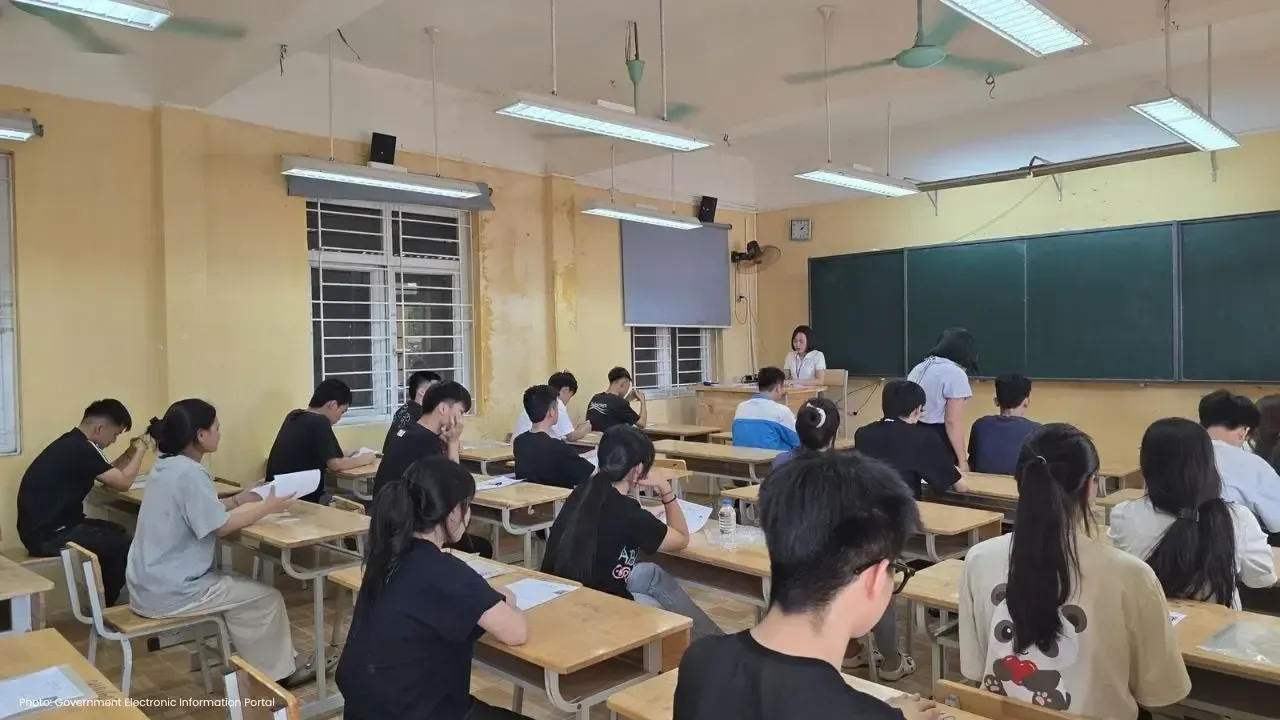
AI education platforms require consistent electricity, internet, tablets or smartphones, and a trained facilitator. But in many rural parts of Asia, even chalkboards and ceiling fans remain luxuries.
This infrastructure gap doesn’t just limit access—it conditions perception. Students who never interact with smart tech during school are less likely to pursue digital careers or adapt to future workplaces dominated by AI.
One of the biggest roadblocks to AI integration in rural education is not technology—it’s teachers.
Even in regions where devices have been distributed or platforms deployed, many teachers are unfamiliar with AI tools. Worse, some fear being replaced by algorithms that can tutor students without human intervention.
But the reality is that AI is not a teacher substitute—it’s a force multiplier. When used right, it can help overburdened rural educators customize content, track student progress, and fill gaps in subject knowledge.
Some NGOs and governments are launching pilot programs to train rural teachers in AI basics. In Thailand, for example, the Ministry of Education partnered with AI developers to train 500 rural teachers in adaptive learning tools in 2025. But such efforts remain isolated.
Until teacher training becomes central to the AI rollout, rural classrooms will remain digital deserts in an otherwise data-rich educational landscape.
Another under-discussed issue is the linguistic and cultural bias in most AI education tools.
Many platforms are optimized for English or urban dialects, leaving students who speak indigenous or minority languages excluded.
AI-driven curricula often prioritize STEM subjects, leaving local culture, history, and crafts behind.
Standardized content doesn’t account for contextual learning needs—like agriculture-focused vocational training for rural learners.
In rural Asia, education isn’t just about academic excellence—it’s often tied to livelihoods, identity, and local context. If AI systems ignore this, they risk creating irrelevant, even alienating learning experiences for rural youth.
Despite these challenges, AI can still be the bridge that connects rural learners to opportunity—if implemented thoughtfully.
Here are some emerging models that show promise:
Startups are developing low-bandwidth AI platforms that work offline or with intermittent connectivity. For example, India’s 'DigiShaala' initiative uses solar-powered tablets preloaded with AI curriculum that syncs when internet is available.
In parts of Indonesia and Bangladesh, AI-enabled learning kiosks are being set up in community halls. Students can access tutoring, assessments, and career guidance, even without home internet.
AI chatbots are being tested on platforms like WhatsApp to deliver small, interactive lessons in local languages—ideal for students with shared devices or low attention spans.
In Vietnam, a pilot program uses AI to flag students at risk of dropping out based on attendance and performance. Counselors then intervene with targeted support—bridging access, not widening it.
These examples prove that AI can work for rural Asia, but only when it’s adapted to ground realities—not copy-pasted from urban contexts.
If AI tools are designed only for the connected elite, they will replicate and reinforce inequality. But if governments, developers, and educators prioritize inclusivity from the ground up, AI can deliver extraordinary value.
This means:
Subsidizing infrastructure in underserved areas.
Designing multilingual, culturally relevant content.
Training rural educators in AI fluency, not just usage.
Creating public-private partnerships that treat education as a shared responsibility.
AI must become a right, not a reward—available to every child regardless of their postal code.
The real test of AI in education will not be how it performs in urban tech labs, but how it changes lives in remote villages, forest communities, and flood-prone islands.
Asia holds more than half the world’s youth population. Millions of them live in rural pockets, disconnected from the global AI buzz. Yet they hold the potential to drive the region’s next great leap—if given the tools, training, and trust to participate.
The road to equitable AI education is long, but essential. It’s not just about digital access—it’s about dignity, agency, and a fair shot at the future.
This article is for editorial purposes only. The data and examples cited are based on publicly available reports and government announcements as of 2025. Readers are advised to consult local education departments or verified development programs for current implementation status.








Lamborghini Catches Fire on Singapore's ECP, Causing Heavy Traffic
A Lamborghini caught fire on Singapore's ECP, causing heavy traffic and bus delays. No injuries were

Bangkok Airport Duty-Free Area Flooded by Pipe Burst
A burst water pipe flooded the duty-free shopping area at Bangkok's Suvarnabhumi Airport on July 16,

Nine Monks Killed in Thailand Pickup Truck Tragedy
An 11-year-old boy driving a pickup truck crashed into monks during a pilgrimage in northeastern Tha

Anwar Congratulates Xi on CPC's 105th Anniversary
Malaysia reaffirms strong ties with China as PM Anwar Ibrahim sends a congratulatory letter to Presi
Thai Agriculture Team Reviews 2026 Farm Development Plans
Agriculture Ministry officials inspected livestock and organic rice projects in Nakhon Sawan to moni

Thailand, Canada Boost Ties in PM-Level Phone Talks
Thailand and Canada agreed to strengthen trade, security, OECD cooperation and ASEAN-Canada FTA talk