You have not yet added any article to your bookmarks!
Join 10k+ people to get notified about new posts, news and tips.
Do not worry we don't spam!
Post by : Anis Farhan
In a world where online video content has become central to how people consume entertainment, news, education, and community, even a brief disruption in service can send ripples across the digital universe. On the evening of October 15, 2025 (continuing into early October 16 in some regions), YouTube and its associated services—YouTube Music and YouTube TV—encountered a widespread outage. The interruption lasted roughly an hour, but in that short span, thousands of users worldwide were unable to stream videos, access content, or simply log in.
Such an outage is more than a technical hiccup—it shakes user trust, spotlights infrastructure vulnerability, and tests how corporations respond when their platforms go dark. In this article, we delve deep into what unfolded during the YouTube outage, its potential causes, how the platform handled the crisis, reactions from users, and lessons we can draw from this interruption.
The outage began in the late afternoon to evening hours worldwide. Users across multiple continents reported that videos failed to play or immediately stopped with error messages like “Playback error” or “Something went wrong.” Some experienced app crashes, while others couldn’t even access the home page or search results.
Data from outage-monitoring platforms showed a sudden spike in user reports. In the U.S. alone, more than 366,000 complaints surfaced at the height of the disruption. Many other countries reported playback issues, app crashes, and login failures across both mobile and desktop platforms. The disruption was not isolated to YouTube’s main video service; YouTube Music and YouTube TV were also hit.
Roughly within an hour or so, YouTube began restoring services to affected users. By October 16, the company announced that the issue had been resolved across all its platforms. Though services resumed, the root cause has not been publicly disclosed.
The outage was truly global in nature. Regions across North America, Europe, Asia, Australia, and more reported similar errors. In many cities, large numbers of users saw the outage simultaneously—major metropolitan areas like New York, Los Angeles, London, and cities across India featured heavily in user logs and complaint maps.
The volume of outage reports suggests that the issue was systemic rather than local. The fact that YouTube Music and YouTube TV were also affected further emphasizes that the disruption likely originated at some common infrastructure level—possibly in backend systems, content delivery networks (CDNs), or server clusters managing multiple services.
For a platform that hosts billions of users and streams, even a one-hour global disruption translates into millions of failed video views, lost ad impressions, and a notable dent in user experience.
For many users, the outage instantly turned routine access into frustration:
Some users saw blank screens or apps that failed to load entirely.
Others watched videos stall or immediately fail with error prompts.
A section of users tried workarounds like refreshing, reloading the app, or switching networks, but received the same errors.
Some mobile users uninstalled and reinstalled the app; this occasionally fixed the issue once services were partially restored.
Offline playable content—videos downloaded to offline mode—remained accessible for some users, but that did little to alleviate the frustration of not being able to access fresh streaming.
Social media lit up within minutes. The phrase “Is YouTube down?” quickly trended, with users migrating to platforms like X (formerly Twitter) to confirm whether the disruption was isolated or global. Meme creators wasted no time: humorous takes about refreshing pages, blaming Wi-Fi, or watching the outage unfold in real time flooded timelines. Some compared the scramble to check YouTube’s status to a mass migration onto other social platforms mid-outage.
YouTube, via its support channels and status updates, acknowledged the outage within a short window. They informed users via official accounts that they were investigating the issue and asked for patience. Once services began to stabilize, YouTube confirmed that the problem had been resolved across its video, music, and TV services.
However, the company did not disclose the technical details behind the outage—such as which systems failed, whether it was due to software bugs, network issues, traffic overload, or security events. The lack of transparency in the root cause left room for speculation among technology watchers, users, and media outlets.
This kind of response is not uncommon: large platforms often hesitate to share internal technical diagnostics publicly to avoid reputational damage or revealing vulnerabilities. Yet for users and observers, such silence often breeds speculation and erodes trust.
While no official explanation has been confirmed, several plausible scenarios can explain a multi-service outage of this scale:
Backend Server Failures or Overload
If critical backend servers or clusters handling video storage, user authentication, or request routing fail or become overloaded, many services can cascade into disruption.
Content Delivery Network (CDN) Glitches
YouTube heavily relies on CDNs to cache and serve video content closer to users. If certain CDN nodes experience failures—due to hardware failure, network congestion, or misconfigurations—users in those regions may see playback errors.
Network Routing / DNS Issues
A misconfiguration in DNS routing, or problems in network backbone providers, could prevent client devices from reaching YouTube servers even if those servers are healthy.
Software Bugs or Deployment Errors
A faulty software update or a bug introduced in a recent deployment could cause services to fail under load or at certain execution points.
Security Event or DDoS Attack
A coordinated denial-of-service (DoS) or distributed (DDoS) attack targeting YouTube’s infrastructure could disrupt access. Alternatively, internal security protection mechanisms might trigger overcorrections that inadvertently block legitimate traffic.
Configuration or Access Control Mistakes
Changes to permissions, firewall settings, or routing rules in internal infrastructure can accidentally cut off access to critical systems.
Because the outage affected multiple services (video, music, TV), the issue likely lies at a shared layer—such as authentication services, networking, or shared backend infrastructure.
The outage’s significance extends beyond inconvenience:
User trust and reliability questioned
Even brief downtime erodes confidence, especially when users depend on the platform for work, entertainment, and content distribution.
Monetary losses
Ad impressions lost during the downtime translate to revenue losses—not just for YouTube but for creators reliant on ad income.
Content scheduling disruptions
Creators who planned premieres, live streams, or synchronized content launches found their schedules thrown off.
Platform credibility
For a tech giant like YouTube, outages raise questions about infrastructure robustness—especially amidst competition from other platforms.
Media and brand perception
News outlets and tech media quickly pick up such incidents, shaping public perception about how well the platform manages crises.
Collateral disruption
Services tied to YouTube (embedding videos in websites, social media previews, tertiary apps relying on its APIs) were also affected, amplifying the ripple effect.
While large platforms often manage rapid recovery, each outage holds important lessons for resilience and user relations:
Timely, transparent updates help users feel informed and less frustrated. Even if the technical cause is not yet known, acknowledging the issue, providing status checkpoints, and updating users can reduce anxiety.
Critical systems should be designed with multiple failovers—redundancy in backend servers, databases, routing layers, and CDNs. No single point of failure can cripple multiple services.
Rolling out changes in stages and monitoring a small subset before full deployment helps catch potential faults early and limit their blast radius.
Automated systems should detect unusual error spikes or traffic anomalies and trigger alerts—or even automated rollbacks—to prevent full-scale outages.
Platforms can inject controlled failures internally (in non-production or shadow environments) to test how systems respond under stress. This builds resilience against real incidents.
Even a partial technical explanation helps restore confidence. Publishing a postmortem (after validation) with lessons learned, corrective measures, and future safeguards demonstrates accountability.
When YouTube (or any major service) goes down, here are helpful steps and perspectives for regular users and creators alike:
Stay calm; check multiple sources
Confirm if it’s your device/network or a global problem via outage tracker sites or social media.
Try basic troubleshooting
Restart the app or browser, clear cache, or reconnect to the network.
Switch devices or connectivity
If Wi-Fi fails, try mobile data or a different network. Try alternate devices if possible.
Leverage offline content
If you have videos downloaded or cached, they may still work—so always keeping content for offline use helps.
Wait for official updates before drastic actions
Deleting accounts, uninstalling apps permanently, or overreacting rarely helps and may lead to further frustration.
Plan content launches flexibly
For creators, avoid rigid timed events that depend on perfect platform uptime. Build buffer time for contingencies.
The YouTube outage of October 2025 was a stark reminder that even platforms of the highest scale are not immune to technical failures. For an hour or so, the platform that millions depend on went dark, and in that span users felt the disruption in real time. The outage unveiled the fragility behind seamless user experiences and underscored the importance of resilience, crisis communication, and infrastructure best practices.
While the immediate disruption has been resolved, the event should prompt YouTube—and all major tech platforms—to reexamine how they architect, monitor, and respond. For users and creators, it’s a reminder that no system is infallible, and building in flexibility, backups, and understanding can help cushion the blow when even the largest platforms stumble.
This article is based on publicly available reports and user data at the time of writing. The causes, scale, and details of the YouTube outage may evolve as more information becomes available.









George Russell Wins Dutch GP Sprint, Boosts Mercedes Morale
George Russell wins the Dutch GP Sprint from pole as Mercedes teammate Kimi Antonelli extends his F1

Australia 50/3 After Bangladesh Bowled Out for 64 in Second Test
Australia reached 50/3 after Bangladesh were bowled out for 64 in the second Test, with Mitchell Sta

Jordan Burroughs Returns to Wrestling with 2028 Olympic Dream
Jordan Burroughs returns to wrestling with Real American Freestyle as the Olympic champion eyes a po

Lamborghini Catches Fire on Singapore's ECP, Causing Heavy Traffic
A Lamborghini caught fire on Singapore's ECP, causing heavy traffic and bus delays. No injuries were

Bangkok Airport Duty-Free Area Flooded by Pipe Burst
A burst water pipe flooded the duty-free shopping area at Bangkok's Suvarnabhumi Airport on July 16,
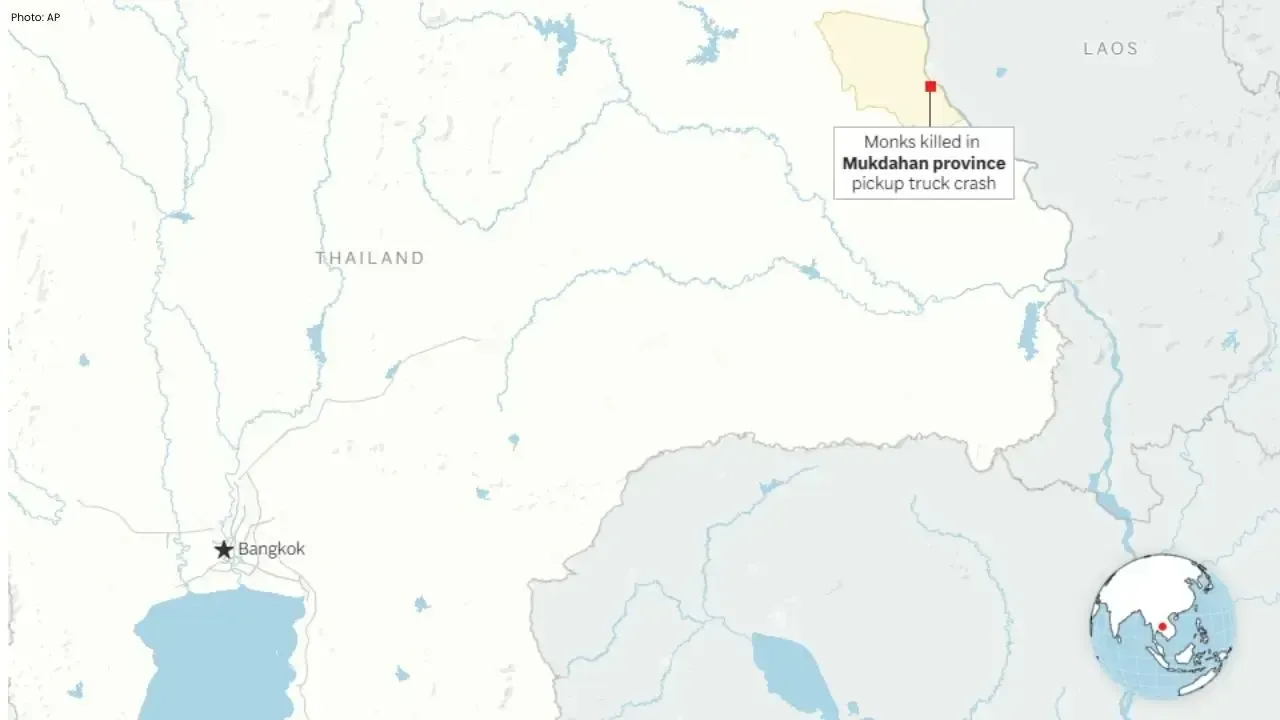
Nine Monks Killed in Thailand Pickup Truck Tragedy
An 11-year-old boy driving a pickup truck crashed into monks during a pilgrimage in northeastern Tha