You have not yet added any article to your bookmarks!
Join 10k+ people to get notified about new posts, news and tips.
Do not worry we don't spam!
Post by : Meena Ariff
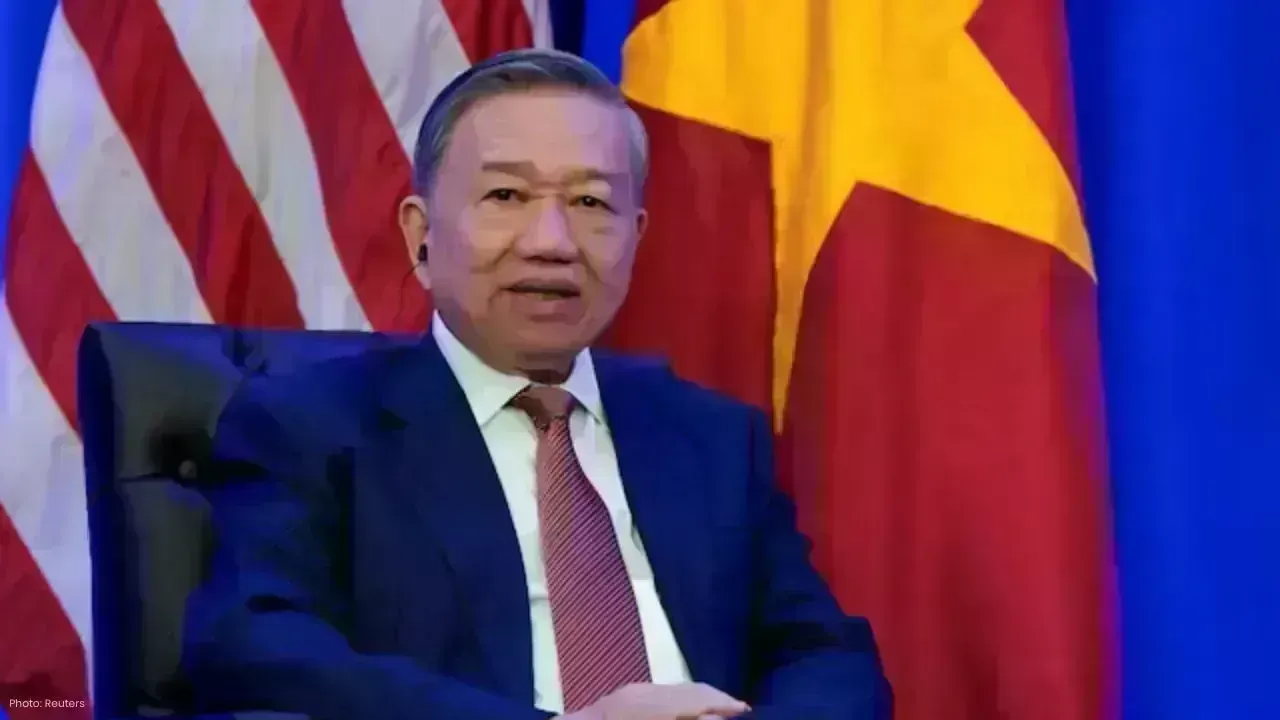
Hundreds of senior delegates from Vietnam’s ruling Communist Party convened on Monday under heavy security as the country formally opened its national party congress, one of the most significant political events in its five-year cycle. The high-profile gathering is expected to decide the nation’s top leadership and set the economic and political roadmap for Vietnam for the rest of the decade.
The congress, which runs for an entire week, is held once every five years and remains largely closed to the public. Discussions and decision-making take place behind closed doors, following a tightly controlled and opaque internal process. Despite the lack of public transparency, the outcomes of the congress traditionally carry enormous weight, shaping Vietnam’s governance, policy direction, and economic priorities.
Political observers are closely watching the event as it could further strengthen the position of General Secretary To Lam, who has emerged as the most influential figure within the party. Since assuming the role, To Lam has initiated sweeping bureaucratic and administrative reforms aimed at reducing inefficiencies, tightening discipline within state institutions, and reinforcing centralized control.
His leadership has also marked a more assertive approach to governance, with efforts focused on streamlining the party-state apparatus and enhancing accountability across ministries and local administrations. These reforms are seen as part of a broader push to modernize Vietnam’s political system while maintaining the Communist Party’s dominant role.
Internationally, To Lam has become Vietnam’s most recognizable political face. He has represented the country in major diplomatic forums, strengthened ties with key global partners, and promoted Vietnam as a reliable manufacturing base and an attractive destination for foreign investment in Southeast Asia. His growing global profile has coincided with Vietnam’s rising economic importance amid shifting global supply chains.
During the congress, delegates are expected to approve key leadership appointments, confirm the party’s top posts, and endorse long-term policy goals. These are likely to include economic growth targets, industrial development plans, and strategies to balance domestic reforms with international engagement.
As deliberations continue, analysts believe the decisions made at this congress will have lasting implications for Vietnam’s political stability, economic trajectory, and role on the global stage. The outcomes are expected to define not only the leadership structure but also the direction Vietnam will take in navigating both domestic challenges and international opportunities in the years ahead.








George Russell Wins Dutch GP Sprint, Boosts Mercedes Morale
George Russell wins the Dutch GP Sprint from pole as Mercedes teammate Kimi Antonelli extends his F1

Australia 50/3 After Bangladesh Bowled Out for 64 in Second Test
Australia reached 50/3 after Bangladesh were bowled out for 64 in the second Test, with Mitchell Sta

Jordan Burroughs Returns to Wrestling with 2028 Olympic Dream
Jordan Burroughs returns to wrestling with Real American Freestyle as the Olympic champion eyes a po

Lamborghini Catches Fire on Singapore's ECP, Causing Heavy Traffic
A Lamborghini caught fire on Singapore's ECP, causing heavy traffic and bus delays. No injuries were

Bangkok Airport Duty-Free Area Flooded by Pipe Burst
A burst water pipe flooded the duty-free shopping area at Bangkok's Suvarnabhumi Airport on July 16,

Nine Monks Killed in Thailand Pickup Truck Tragedy
An 11-year-old boy driving a pickup truck crashed into monks during a pilgrimage in northeastern Tha