You have not yet added any article to your bookmarks!
Join 10k+ people to get notified about new posts, news and tips.
Do not worry we don't spam!
Post by : Saif Rahman
The Communist Party of Vietnam has commenced its pivotal political gathering with unprecedented security protocols. Delegates attending the week-long congress in Hanoi face a prohibition on mobile phones and are issued unique tablets that lack internet connectivity. Such measures underscore the event's controlled environment, reflecting Vietnam's already strict governance.
Held every five years, this congress is a key political milestone in the nation, involving around 1,600 delegates representing approximately 5.6 million party members within a population nearing 100 million. Throughout this gathering, they will elect the party's senior leaders and outline policies steering Vietnam into the next decade.
Central to the proceedings is General Secretary To Lam, who aims to retain his influence and shape Vietnam's future. The meeting will also see the election of a new 200-member Central Committee and the endorsement of an official resolution delineating the party's priorities.
Security has been significantly heightened, with delegates supplied with Samsung tablets operable solely on an internal network. These devices facilitate access to official documents but restrict any internet access or external communication.
Furthermore, mobile networks were disabled within the congress venue and surrounding areas; reporters noted that signals were jammed, preventing normal calls. From day two, delegates were prohibited from possessing their phones altogether.
Mandates also dictate that all attendees must reside in designated accommodations throughout the congress week, which includes those from Hanoi. Such rules serve to keep participants focused and minimize outside interaction.
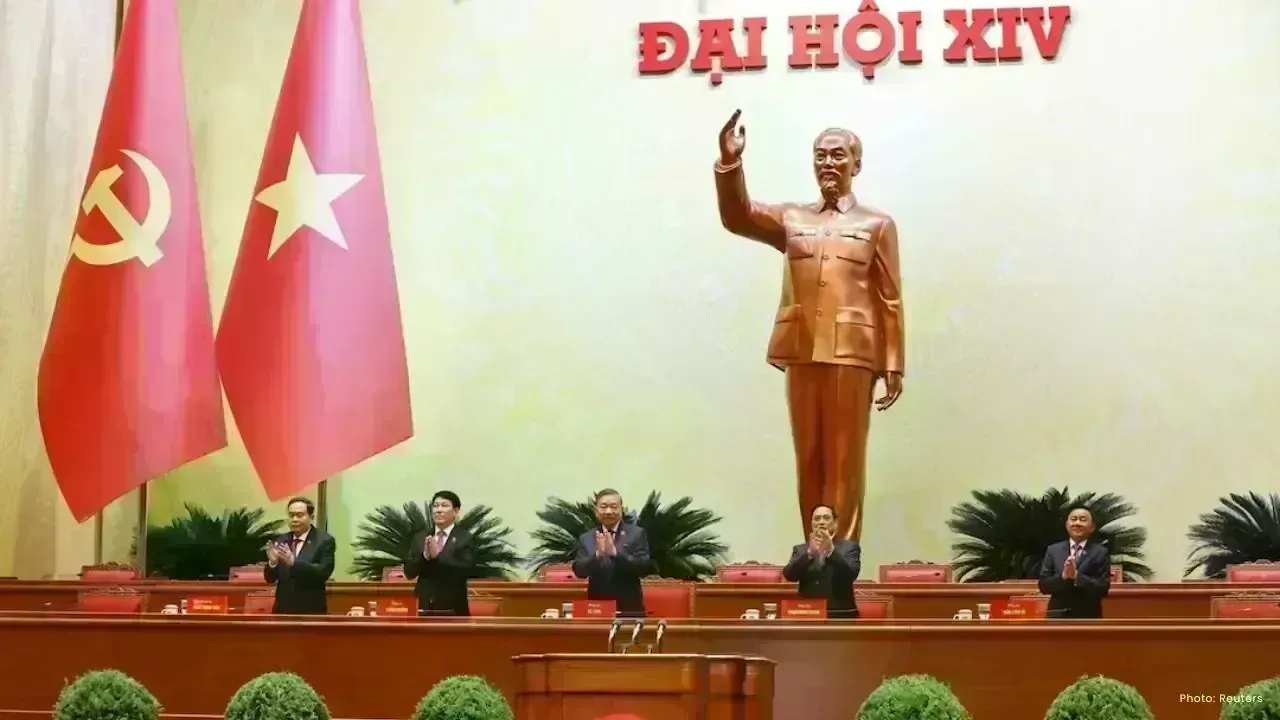
The inaugural sessions were held in an opulent hall adorned with red carpets, with party leaders positioned on stage beneath a large statue of Ho Chi Minh, the architect of modern Vietnam, while portraits of Karl Marx and Vladimir Lenin underscore the party's ideological foundations.
Journalists covering the congress face similar stringent measures, barred from bringing mobile phones. While they may use their personal computers, these are limited to the official congress network. Foreign media guidelines stress that reporting must not tarnish the image of Vietnam or its leaders.
As a one-party state, Vietnam's Communist Party exercises tight control over political power and information dissemination. The extent of control exhibited at this congress is particularly notable, signaling a firm resolve to mitigate leaks, rumors, or external influence during this sensitive phase.
Stability and unity remain crucial objectives for the Vietnamese government. By constraining communication and movement, party leaders aim to ensure that key decisions unfold privately, ultimately presenting a consolidated front to the public. Supporters argue this maintains order and clarity, while detractors contend it reveals a lack of transparency in Vietnam’s political arena.
As the congress progresses, the decisions made will influence Vietnam's leadership and policy landscape for years ahead. Although the public will eventually be informed of the official outcomes, the processes leading to these conclusions continue to be meticulously controlled, highlighting the party's stringent grip on power and information.





George Russell Wins Dutch GP Sprint, Boosts Mercedes Morale
George Russell wins the Dutch GP Sprint from pole as Mercedes teammate Kimi Antonelli extends his F1

Australia 50/3 After Bangladesh Bowled Out for 64 in Second Test
Australia reached 50/3 after Bangladesh were bowled out for 64 in the second Test, with Mitchell Sta

Jordan Burroughs Returns to Wrestling with 2028 Olympic Dream
Jordan Burroughs returns to wrestling with Real American Freestyle as the Olympic champion eyes a po

Lamborghini Catches Fire on Singapore's ECP, Causing Heavy Traffic
A Lamborghini caught fire on Singapore's ECP, causing heavy traffic and bus delays. No injuries were

Bangkok Airport Duty-Free Area Flooded by Pipe Burst
A burst water pipe flooded the duty-free shopping area at Bangkok's Suvarnabhumi Airport on July 16,

Nine Monks Killed in Thailand Pickup Truck Tragedy
An 11-year-old boy driving a pickup truck crashed into monks during a pilgrimage in northeastern Tha