
You have not yet added any article to your bookmarks!
Join 10k+ people to get notified about new posts, news and tips.
Do not worry we don't spam!
Post by : Shweta
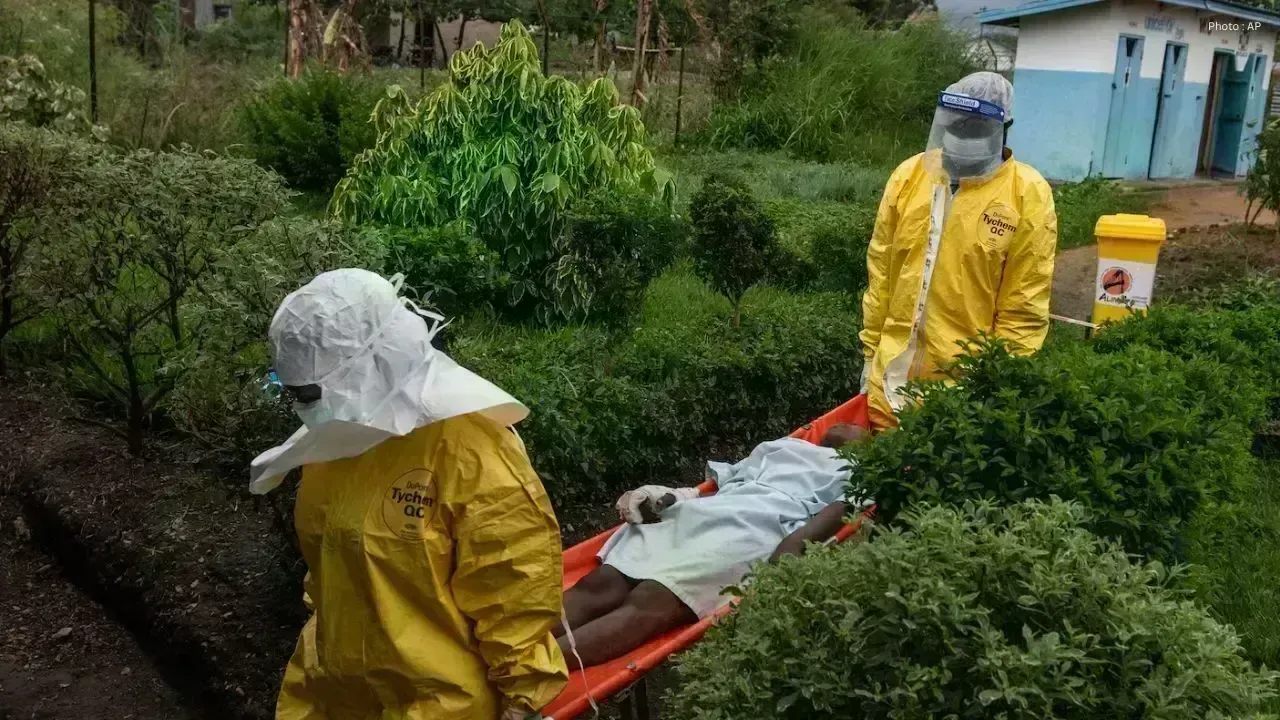
In a significant move, the U.S. government has widened its travel restrictions related to Ebola, now prohibiting lawful permanent residents, or green-card holders, from returning to the country if they have recently visited areas affected by Ebola in Africa. This policy change comes as health authorities address the escalating Ebola outbreak in Central and East Africa.
Under the new regulations, established by the Centers for Disease Control and Prevention (CDC) and the Department of Homeland Security (DHS), green-card holders from the Democratic Republic of the Congo, Uganda, or South Sudan within the last 21 days will be subject to the travel ban. Previously, these rules primarily focused on non-U.S. citizens and foreign travelers, granting exemptions to lawful residents.
Health officials in the U.S. emphasized that the decision was driven by significant public health concerns amid a surge in Ebola cases in affected regions. The CDC pointed out that the temporary restrictions are part of a broader strategy to shield the U.S. from the ongoing outbreak caused by the rare Bundibugyo strain of the virus.
The World Health Organization has labeled the outbreak as a major global health emergency, with hundreds of suspected infections and deaths reported in the impacted African nations. Experts express particular alarm as there is no widely available vaccine specifically designed for the Bundibugyo strain of Ebola.
In conjunction with the travel restrictions, the U.S. government is enhancing airport screening protocols and passenger monitoring. American citizens returning from the affected regions must now transit through designated airports, including Washington Dulles International Airport, where health officials will conduct temperature screenings, symptom assessments, and interviews regarding travel histories.
This policy shift has drawn criticism from immigration attorneys, public health advocates, and civil rights organizations. Detractors argue that the new restrictions could engender legal and humanitarian dilemmas since permanent residents typically have the right to return. There are also concerns that such measures may deter healthcare professionals, aid workers, and humanitarian volunteers from participating in critical efforts to manage the outbreak in Africa.
Some public health experts noted that historical responses to prior Ebola outbreaks, including the 2014 West Africa epidemic, favored monitoring, screening, and quarantine rather than broad travel bans. They warn that strict entry limitations might not effectively halt disease transmission and could potentially diminish international collaboration during health crises.
Regardless of the controversies, the CDC maintains that the immediate threat of widespread Ebola transmission in the U.S. remains low. Health officials reassured that the travel restrictions are temporary and will be periodically reassessed as conditions evolve. Additionally, the U.S. government confirmed that more medical personnel and emergency resources are being dispatched to assist in containing the outbreak in Africa.










PM Modi Pays Tribute to Mahatma Gandhi, Urges People to Support Khadi
PM Modi pays tribute to Mahatma Gandhi on Gandhi Jayanti and urges citizens to support Khadi and the

Amazon Seeks to Offload $8 Billion in Nvidia Chips to Investors
Amazon plans to move $8 billion in Nvidia chips to investors, using a new financing model to strengt

Samsung Raises Galaxy S26 Prices as Memory Chip Costs Rise
Samsung raises Galaxy S26 prices in South Korea as rising memory chip costs put pressure on smartpho

Lewis Hamilton Calls Singapore Grand Prix One of F1's Toughest Races
Lewis Hamilton discusses the demanding Singapore Grand Prix and brings Plus44 and Almave to Singapor

Denmark's Pandora Opens World's Largest Jewellery Factory in Vietnam
Pandora opens its largest jewellery factory in Vietnam, expanding global production, strengthening s

Gautam Gambhir Questions Batting-Friendly Pitches After India's Record ODI Chase
Gautam Gambhir questions batting-friendly ODI pitches after India’s record chase, calling for a bett

