You have not yet added any article to your bookmarks!
Join 10k+ people to get notified about new posts, news and tips.
Do not worry we don't spam!
Post by : Anis Farhan
In early October 2025, the United States government announced a sweeping 100% tariff on all rare earth mineral imports from China, sending ripples through global markets. Rare earth elements—17 critical minerals used in electronics, electric vehicles, and defense technologies—have become the new currency of power in the modern world. For decades, China has dominated this supply chain, accounting for nearly 70% of global production and refining.
Washington’s decision isn’t just a trade move—it’s a strategic maneuver reflecting rising tensions between the world’s two largest economies. The tariffs, which effectively double import costs overnight, are designed to accelerate America’s push for mineral independence and limit Beijing’s leverage in the global tech ecosystem.
Rare earth elements (REEs) like neodymium, dysprosium, and terbium may not sound familiar to most, but they power nearly every modern technology—from smartphones and wind turbines to fighter jets and electric car motors. Without them, the engines of innovation would stall.
China has long understood the strategic importance of these resources, investing heavily in mining, refining, and export infrastructure since the 1990s. Today, even when other nations mine rare earths, they often ship the raw material to China for processing, since China controls around 85% of global refining capacity.
The U.S., Europe, and Japan have been trying to diversify sourcing for years, but limited success and environmental challenges have slowed progress. Now, with Washington’s new tariffs, the world’s attention is turning sharply toward building alternative supply routes.
The Biden administration’s decision follows months of growing anxiety over China’s tightening grip on global technology supply chains. In 2024, Beijing briefly restricted exports of gallium and germanium—two elements vital to semiconductors and defense systems—triggering fears of material shortages.
American policymakers saw this as a wake-up call. The U.S. has since intensified efforts to reduce strategic vulnerabilities in its supply network. The 100% tariff, though severe, aims to make domestic production and allied imports (from Australia, Canada, and Vietnam) more competitive.
According to trade officials, the tariffs are part of a broader “economic security strategy” designed to protect industries critical to national defense and clean energy—both of which depend heavily on rare earths.
The immediate aftermath was turbulent. Prices of key rare earth elements surged as buyers scrambled to secure non-Chinese supply chains. Companies in Japan, South Korea, and Europe—major consumers of these minerals—expressed concern about escalating costs and disruptions.
On Wall Street, renewable energy and semiconductor stocks wobbled, while mining firms with rare earth exposure saw their shares skyrocket. Australian and Canadian miners, such as Lynas Rare Earths and Vital Metals, are now positioned as major beneficiaries of this shift.
Meanwhile, China has yet to announce countermeasures but has hinted at “reciprocal actions,” fueling speculation that further trade restrictions could follow. The standoff risks reigniting a new phase of economic decoupling between Washington and Beijing.
Technology:
The tech industry is one of the biggest consumers of rare earths, especially for magnets in smartphones, laptops, and cameras. Rising material costs could raise production expenses for giants like Apple, Tesla, and Intel, forcing them to diversify sourcing faster than planned.
Defense:
Rare earths are essential for precision-guided weapons, stealth aircraft, and satellite systems. The U.S. Department of Defense has been investing in domestic processing facilities to ensure supply security for military applications, a trend that will now accelerate.
Green Energy:
Wind turbines, electric motors, and hybrid batteries rely on neodymium-based magnets. The tariffs could temporarily inflate costs for renewable energy projects but might also encourage U.S. companies to explore recycling technologies and alternative materials.
To counterbalance China’s dominance, Washington is actively building alliances with resource-rich nations. The U.S. has signed mineral supply agreements with Australia, Canada, and several African countries. These partnerships are aimed at creating an integrated, transparent, and sustainable rare earth ecosystem outside China’s orbit.
Vietnam and Malaysia are also emerging as critical players, investing heavily in refining technology. The Indo-Pacific region could become the new hub for rare earth supply chains, aligning with the U.S.-led “Minerals Security Partnership” (MSP)—a coalition aimed at securing critical mineral access.
While diversification is essential, mining rare earths comes with environmental costs. The extraction and refining processes produce toxic waste that can contaminate water sources. For decades, China bore the brunt of this pollution, which allowed other nations to enjoy cheaper imports.
Now, as Western countries seek self-reliance, they must grapple with the ethical dilemma of sustainable mining. The U.S. and Australia are introducing stricter environmental standards, but cleaner mining technologies remain costly. Balancing environmental integrity with industrial demand will be a central challenge in the coming years.
Beijing’s response to the tariffs will determine the next phase of this economic contest. China could retaliate by imposing its own export restrictions on high-tech goods, or by lowering rare earth prices to maintain market dominance. Analysts believe China might also deepen cooperation with countries like Indonesia or Kazakhstan to bypass Western sanctions and retain its supply edge.
However, China’s leverage isn’t infinite. As other nations ramp up exploration and recycling programs, China’s share of global refining could gradually erode—especially if political tensions deter Western firms from long-term contracts with Chinese suppliers.
The rare earth market is on the cusp of transformation. The U.S. tariffs may mark the beginning of a multipolar supply chain, where no single nation dominates. This could foster innovation in materials science, as researchers work to find substitutes for rare earths in magnets and semiconductors.
At the same time, the transition will not be smooth. The cost of clean energy projects, consumer electronics, and defense equipment is likely to rise temporarily. Governments will need to balance economic nationalism with global cooperation to prevent a full-scale supply crisis.
The U.S. 100% tariff on Chinese rare earths is more than an economic measure—it’s a strategic gamble. Washington is betting that short-term disruptions will lead to long-term resilience. If successful, the move could usher in a new era of industrial independence, cleaner technologies, and fairer trade practices.
But if it backfires, it risks fragmenting global supply chains, slowing innovation, and escalating trade tensions. Either way, the decision has set in motion a global realignment that will shape the future of technology, energy, and geopolitics for decades to come.
This article is based on information available from U.S. trade and policy reports as of October 2025. It aims to provide a factual overview and analysis of the economic and geopolitical impacts of the new tariffs on rare earth imports. Readers are encouraged to follow official updates for future policy changes.







George Russell Wins Dutch GP Sprint, Boosts Mercedes Morale
George Russell wins the Dutch GP Sprint from pole as Mercedes teammate Kimi Antonelli extends his F1

Australia 50/3 After Bangladesh Bowled Out for 64 in Second Test
Australia reached 50/3 after Bangladesh were bowled out for 64 in the second Test, with Mitchell Sta

Jordan Burroughs Returns to Wrestling with 2028 Olympic Dream
Jordan Burroughs returns to wrestling with Real American Freestyle as the Olympic champion eyes a po

Lamborghini Catches Fire on Singapore's ECP, Causing Heavy Traffic
A Lamborghini caught fire on Singapore's ECP, causing heavy traffic and bus delays. No injuries were

Bangkok Airport Duty-Free Area Flooded by Pipe Burst
A burst water pipe flooded the duty-free shopping area at Bangkok's Suvarnabhumi Airport on July 16,
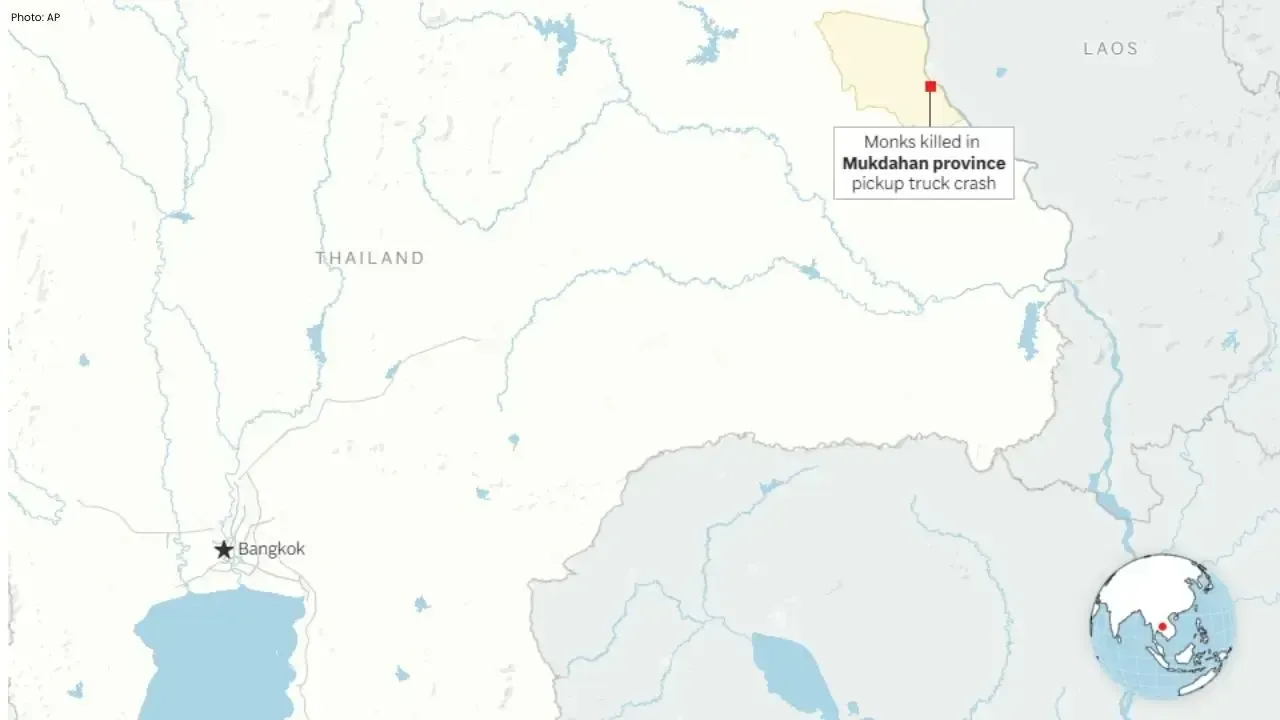
Nine Monks Killed in Thailand Pickup Truck Tragedy
An 11-year-old boy driving a pickup truck crashed into monks during a pilgrimage in northeastern Tha