
You have not yet added any article to your bookmarks!
Join 10k+ people to get notified about new posts, news and tips.
Do not worry we don't spam!
Post by : Anis Farhan
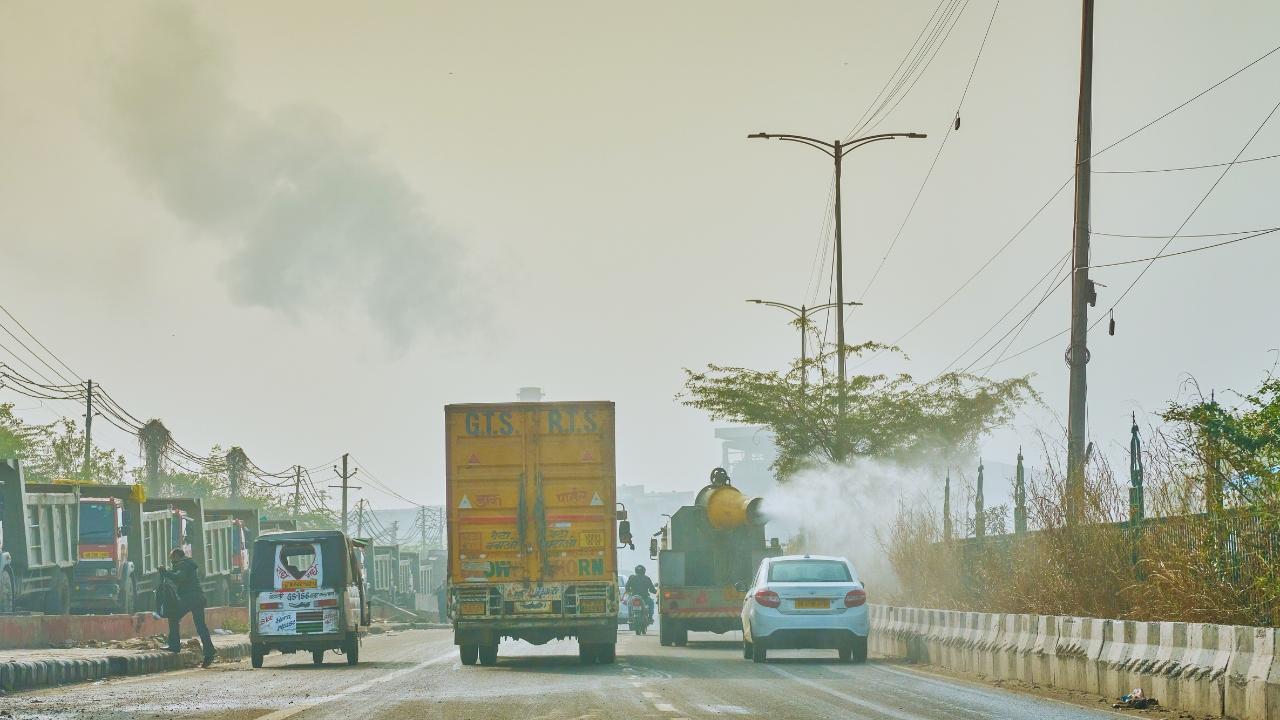
Across the globe, cities are grappling with increasingly dangerous levels of air pollution. From Delhi’s toxic winter haze to Beijing’s grey skyline, urban smog has become one of the biggest environmental and public health challenges of our time. According to the World Health Organization, over 99% of the world’s population breathes air that exceeds acceptable pollution limits. As pressure mounts on governments to act, a new symbol of clean urban futures is emerging: air purification towers — towering installations that promise to literally suck pollutants out of the sky. But how effective are they really? Are they a real solution or a technological distraction?
Air purification towers are large-scale structures designed to cleanse polluted city air. They operate on different technologies—some use ionization, others depend on water vapor, while newer versions leverage carbon filters or solar-powered electrostatic cleaning systems. These towers function somewhat like a giant vacuum cleaner, pulling in polluted air, filtering out harmful particulates such as PM2.5 and PM10, and releasing purified air back into the environment.
One of the earliest and most talked-about examples is the Smog Free Tower by Dutch designer Daan Roosegaarde. Standing at 7 meters tall, it was first unveiled in Rotterdam and has since been deployed in cities like Beijing and Tianjin. Another notable example is China’s 100-meter-high Xian Air Purification Tower, which reportedly filters 10 million cubic meters of air daily.
Most towers are built using sustainable materials and often rely on solar power or passive air flow systems. Here's a simplified breakdown of how they function:
Intake Vents: Polluted air enters through wide vents usually located near the base.
Filtration System: Particulate matter (PM2.5 and PM10), nitrogen dioxide (NO₂), carbon monoxide (CO), and volatile organic compounds (VOCs) are filtered using advanced filters or ionization chambers.
Clean Air Release: Purified air is then released through high vents, creating a pocket of clean atmosphere.
Advanced versions are now integrating real-time air quality sensors, AI algorithms for optimizing filtration patterns, and solar panels to reduce energy use.
Several cities have invested in these futuristic structures, either as part of experimental initiatives or green urban planning projects:
Xian, China: The country’s largest tower was built here and has reportedly reduced PM2.5 levels in the surrounding area by 15%.
Delhi, India: In 2021, India’s first smog tower was installed in Connaught Place with a claimed capacity to clean 1,000 cubic meters of air per second within a 1 km radius.
Warsaw, Poland: A mobile version of Roosegaarde’s Smog Free Tower toured the city to raise awareness and promote clean air.
South Korea and the Netherlands: Smaller-scale installations have been integrated into public parks and transportation hubs.
While the idea of "vacuuming" pollution out of the air is appealing, the actual effectiveness of air towers remains a topic of debate among scientists and urban planners.
Localized Clean Air Zones: They do succeed in improving air quality in their immediate vicinity.
Symbolic Impact: These towers serve as visible signs of government or corporate commitment to sustainability.
Public Awareness: Their presence in cities often sparks discussions around pollution and health risks.
Limited Reach: A single tower can only purify a small volume of air in a specific radius.
Cost and Maintenance: Building and maintaining these towers can be expensive, especially when compared to other pollution-reduction strategies like emission control or green urban spaces.
No Emission Source Reduction: They treat the symptom, not the cause. The root problems—vehicle emissions, industrial activity, and construction dust—remain unaddressed.
Environmental scientists warn that air towers should not be viewed as substitutes for real policy action. Dr. Ajay Nagpure, an urban air quality researcher, says:
“They can supplement air cleaning but won’t replace the need for systemic solutions like emission reductions, better urban planning, and public transport upgrades.”
Critics also point out the danger of governments using these towers as “greenwashing” — investing in visible but low-impact projects to signal action without addressing major sources of pollution. In a city like Delhi, where millions of vehicles ply the streets daily and construction is relentless, a few towers are unlikely to make a noticeable difference in overall air quality metrics.
Scalability remains one of the biggest hurdles. To have a noticeable effect across an entire city, hundreds — or even thousands — of such towers would need to be deployed. This raises questions about space, energy requirements, and long-term maintenance.
However, some designers are thinking creatively. Roosegaarde’s team has developed “Smog Free Rings”, tiny pieces of jewelry made from compressed smog particles captured by the towers — a clever way to fund and market their clean-air mission.
Other companies are working on integrating similar filtration tech into public infrastructure, such as:
Air-purifying bus stops
Pollution-absorbing billboards
Ventilated pedestrian tunnels
While towers alone cannot purify an entire city, they are sparking innovation in how urban air quality is approached. Hybrid systems combining vegetation (green walls), passive air filters, and AI-controlled airflow management are being tested globally.
Even more promising are building-integrated solutions—where skyscrapers act as vertical air filters, and public architecture is embedded with micro-filtration units. The idea is to make air cleaning a natural part of urban design rather than rely on isolated towers.
Governments may also explore public-private partnerships to fund these projects, especially as climate change and pollution become central concerns for urban voters.
Public reception to these towers has been largely positive, especially in cities where pollution is visibly damaging to health. In China, the Xian tower became a popular site for school visits and media campaigns. In Europe, the concept is seen more as an art meets science installation, highlighting environmental challenges in a creative way.
That said, the global south views them with more scrutiny, particularly in cities where health budgets are tight and the need is more urgent. People often ask: Wouldn't funds be better spent on improving public transport, regulating factory emissions, or planting trees?
Air purification towers are not a silver bullet, but they do have a role to play in the larger conversation around clean air. They symbolize hope and innovation, challenge engineers to rethink pollution control, and create awareness where ignorance once prevailed.
But to truly clean the air in the world’s smoggiest cities, deeper structural reforms are needed — cleaner fuel, stricter laws, better infrastructure, and greener urban design.
If deployed wisely and integrated into broader sustainability plans, these towers could complement a global push for breathable air. Until then, they remain an impressive but partial response to one of the planet’s most pressing urban issues.
This editorial article is for general informational purposes only. The views and interpretations expressed are based on available public information and expert commentary. Readers are encouraged to consult verified environmental sources for policy developments or technical updates.










PM Modi Pays Tribute to Mahatma Gandhi, Urges People to Support Khadi
PM Modi pays tribute to Mahatma Gandhi on Gandhi Jayanti and urges citizens to support Khadi and the

Amazon Seeks to Offload $8 Billion in Nvidia Chips to Investors
Amazon plans to move $8 billion in Nvidia chips to investors, using a new financing model to strengt

Samsung Raises Galaxy S26 Prices as Memory Chip Costs Rise
Samsung raises Galaxy S26 prices in South Korea as rising memory chip costs put pressure on smartpho

Lewis Hamilton Calls Singapore Grand Prix One of F1's Toughest Races
Lewis Hamilton discusses the demanding Singapore Grand Prix and brings Plus44 and Almave to Singapor

Denmark's Pandora Opens World's Largest Jewellery Factory in Vietnam
Pandora opens its largest jewellery factory in Vietnam, expanding global production, strengthening s

Gautam Gambhir Questions Batting-Friendly Pitches After India's Record ODI Chase
Gautam Gambhir questions batting-friendly ODI pitches after India’s record chase, calling for a bett

