You have not yet added any article to your bookmarks!
Join 10k+ people to get notified about new posts, news and tips.
Do not worry we don't spam!
Post by : Saif Rahman
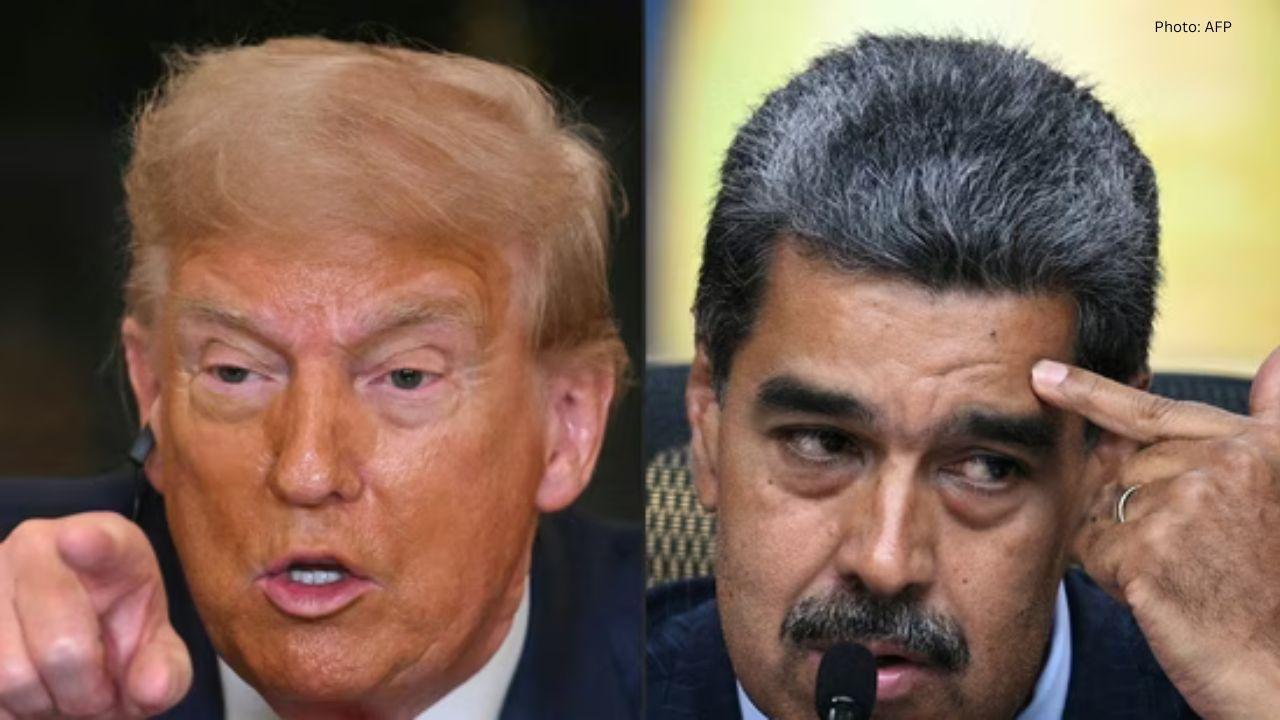
The recent U.S. military intervention in Venezuela has sent shockwaves across Latin America and sparked international apprehension. The explosions in Caracas, coupled with President Donald Trump’s assertion that President Nicolas Maduro and his spouse were detained, signal a significant escalation in the already fraught relations between the two nations. In response, the Venezuelan administration declared a state of emergency, condemning the strikes as an act of aggression from the United States.
In the past months, Washington and Caracas have been engaged in a fierce standoff. President Trump has urged Maduro to resign, suggesting it would be a “wise” decision. The U.S. has long disputed Maduro's legitimacy, accusing him of election fraud, oppression, and driving the country into an economic abyss. Maduro, who has held power since 2013, consistently refutes these allegations, asserting that the U.S. is seeking to oust him by force.
One critical factor highlighted by the Trump administration is drug trafficking. The U.S. has accused Venezuela of becoming a pivotal conduit for cocaine and other narcotics into North America. Trump has frequently blamed Maduro for allowing or even orchestrating the criminal networks involved in drug smuggling. Two Venezuelan groups, Tren de Aragua and Cartel de los Soles, have been designated as Foreign Terrorist Organizations by the U.S. The U.S. asserts that the Cartel de los Soles operates with the backing of high-ranking officials, including Maduro. Venezuelan officials vehemently deny these claims, arguing they are politically engineered.
Illegal migration also significantly influences U.S. actions. Millions of Venezuelans have left their homeland over the last decade due to economic turmoil, food and medicine shortages, and political oppression. Many have sought refuge in the United States, putting pressure on the nation’s border and social systems. Trump has directly accused Maduro’s governance of catalyzing this mass exodus, claiming that the leadership has created the conditions forcing people to abandon their homes.
Economic and oil-related ambitions play a considerable role in this conflict as well. Venezuela possesses the largest proven oil reserves globally. The Maduro government has long alleged that Washington aims to seize control over these assets. The U.S. has enacted stringent sanctions, pushed for a blockade of Venezuelan oil exports, and enhanced its military deployment in the Caribbean. Maduro supporters argue that this latest military initiative is part of a larger scheme to effect regime change and gain dominion over Venezuela’s energy resources.
In the last few weeks, the U.S. has significantly ramped up its military activities in the vicinity, deploying warships, an aircraft carrier, and fighter jets. Trump stated that these maneuvers were intended to combat drug trafficking. The U.S. has also conducted several strikes on vessels it alleges were carrying drugs from South America. Detractors, however, argue that such actions raise serious legal and humanitarian dilemmas.
Maduro is now facing narco-terrorism charges in the United States, while countries like Russia have criticized the U.S. military actions as violations of Venezuela’s sovereignty. Numerous Latin American countries express discomfort, recalling past U.S. interventions in the region.
The situation in Venezuela illustrates how intertwined issues such as drug trafficking, migration, ideology, and natural resources can converge to prompt significant international crises. As new developments continue to unfold, global observers are keenly focused on how this ongoing conflict will influence regional stability and international diplomacy.





PSG Coach Luis Enrique Urges Players to Step Outside Comfort Zone
PSG coach Luis Enrique says players must leave their comfort zone and keep improving as the club tar

China’s Tiangong Sets New 400m Record at Robot Olympics
China’s Tiangong robot sets a new 400m record at the Robot Olympics, beating a South African robot i

George Russell Wins Dutch GP Sprint, Boosts Mercedes Morale
George Russell wins the Dutch GP Sprint from pole as Mercedes teammate Kimi Antonelli extends his F1

Australia 50/3 After Bangladesh Bowled Out for 64 in Second Test
Australia reached 50/3 after Bangladesh were bowled out for 64 in the second Test, with Mitchell Sta

Jordan Burroughs Returns to Wrestling with 2028 Olympic Dream
Jordan Burroughs returns to wrestling with Real American Freestyle as the Olympic champion eyes a po

Lamborghini Catches Fire on Singapore's ECP, Causing Heavy Traffic
A Lamborghini caught fire on Singapore's ECP, causing heavy traffic and bus delays. No injuries were