
You have not yet added any article to your bookmarks!
Join 10k+ people to get notified about new posts, news and tips.
Do not worry we don't spam!
Post by : Badri Ariffin
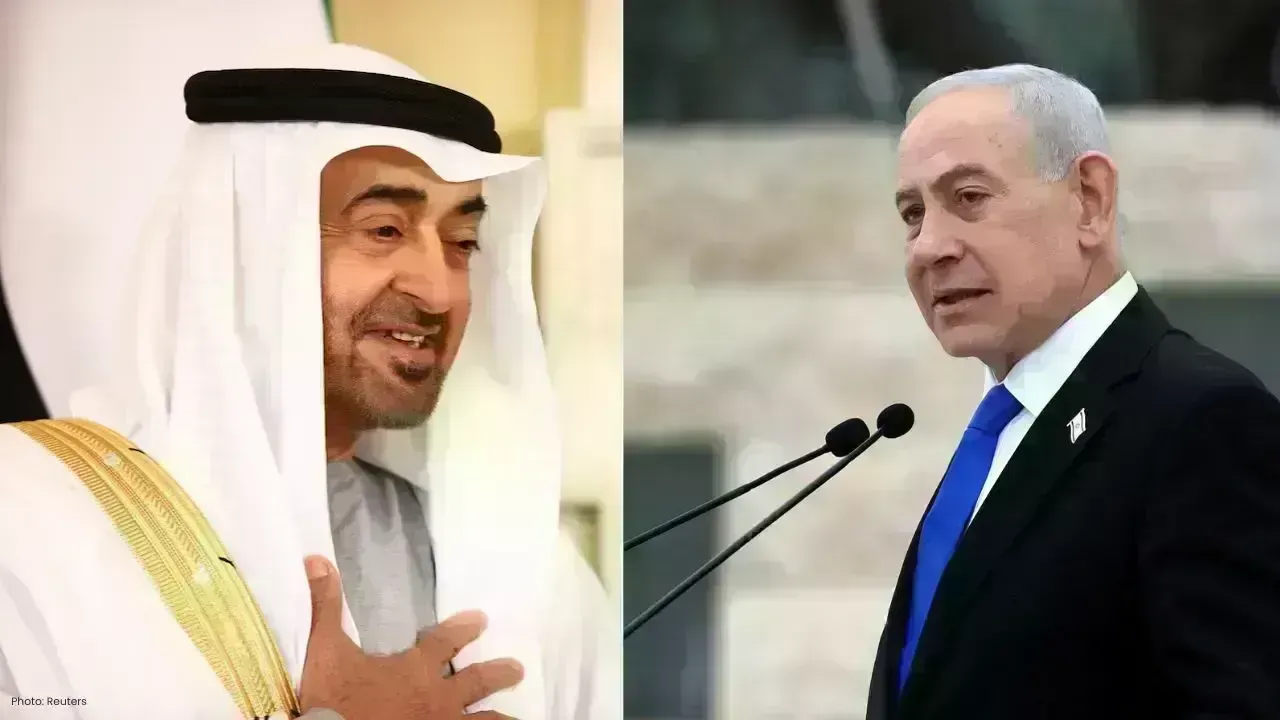
Israeli Prime Minister Benjamin Netanyahu alleged that he made a covert trip to the United Arab Emirates during the ongoing Israel-Iran conflict, where he purportedly met with UAE President Mohammed bin Zayed Al Nahyan. However, the UAE swiftly rejected this assertion, asserting there was no secret meeting or military collaboration.
In a statement released via X, Netanyahu’s office claimed he visited Al Ain on March 26, coinciding with heightened regional tensions. The Israeli announcement characterized the gathering as a “historic breakthrough” in relations between the UAE and Israel during this tumultuous time in West Asia.
According to the Israeli report, talks between Netanyahu and Sheikh Mohammed bin Zayed spanned several hours, focusing on strategic cooperation and security coordination amid the warfare with Iran.
Shortly after this announcement, the UAE Ministry of Foreign Affairs responded by denying the reports. They clarified that Netanyahu had not visited the UAE and no Israeli military delegation was received by the nation.
The UAE reiterated that its relations with Israel are conducted transparently under the Abraham Accords framework, which established normalized ties in 2020.
The ministry declared that any claims of undisclosed visits or agreements were “completely unfounded,” unless formally declared by UAE officials.
These conflicting narratives emerged amidst increasing indications of security collaboration between Israel and the UAE during the crisis with Iran.
Reuters reported that Mossad head Dedi Barnea visited the UAE on several occasions during the conflict to discuss military-related cooperation with Emirati officials.
Moreover, US Ambassador to Israel Mike Huckabee noted that Israel had deployed an Iron Dome air defense system to the UAE during this conflict, following a request from Emirati leaders. This deployment marked the first overseas placement of the Iron Dome.
The Iron Dome's deployment was reportedly prompted by Iranian retaliatory missile and drone assaults on multiple Gulf nations, including the UAE, after joint US-Israeli military operations targeting Iran.
While the UAE and Israel have bolstered their economic and security connections under the Abraham Accords, Abu Dhabi has sought to distance itself from certain Israeli military actions in the region, particularly amid the Gaza conflict and escalating Iran-Israel tensions.










PM Modi Pays Tribute to Mahatma Gandhi, Urges People to Support Khadi
PM Modi pays tribute to Mahatma Gandhi on Gandhi Jayanti and urges citizens to support Khadi and the

Amazon Seeks to Offload $8 Billion in Nvidia Chips to Investors
Amazon plans to move $8 billion in Nvidia chips to investors, using a new financing model to strengt

Samsung Raises Galaxy S26 Prices as Memory Chip Costs Rise
Samsung raises Galaxy S26 prices in South Korea as rising memory chip costs put pressure on smartpho

Lewis Hamilton Calls Singapore Grand Prix One of F1's Toughest Races
Lewis Hamilton discusses the demanding Singapore Grand Prix and brings Plus44 and Almave to Singapor

Denmark's Pandora Opens World's Largest Jewellery Factory in Vietnam
Pandora opens its largest jewellery factory in Vietnam, expanding global production, strengthening s

Gautam Gambhir Questions Batting-Friendly Pitches After India's Record ODI Chase
Gautam Gambhir questions batting-friendly ODI pitches after India’s record chase, calling for a bett

