You have not yet added any article to your bookmarks!
Join 10k+ people to get notified about new posts, news and tips.
Do not worry we don't spam!
Post by : Rameen Ariff
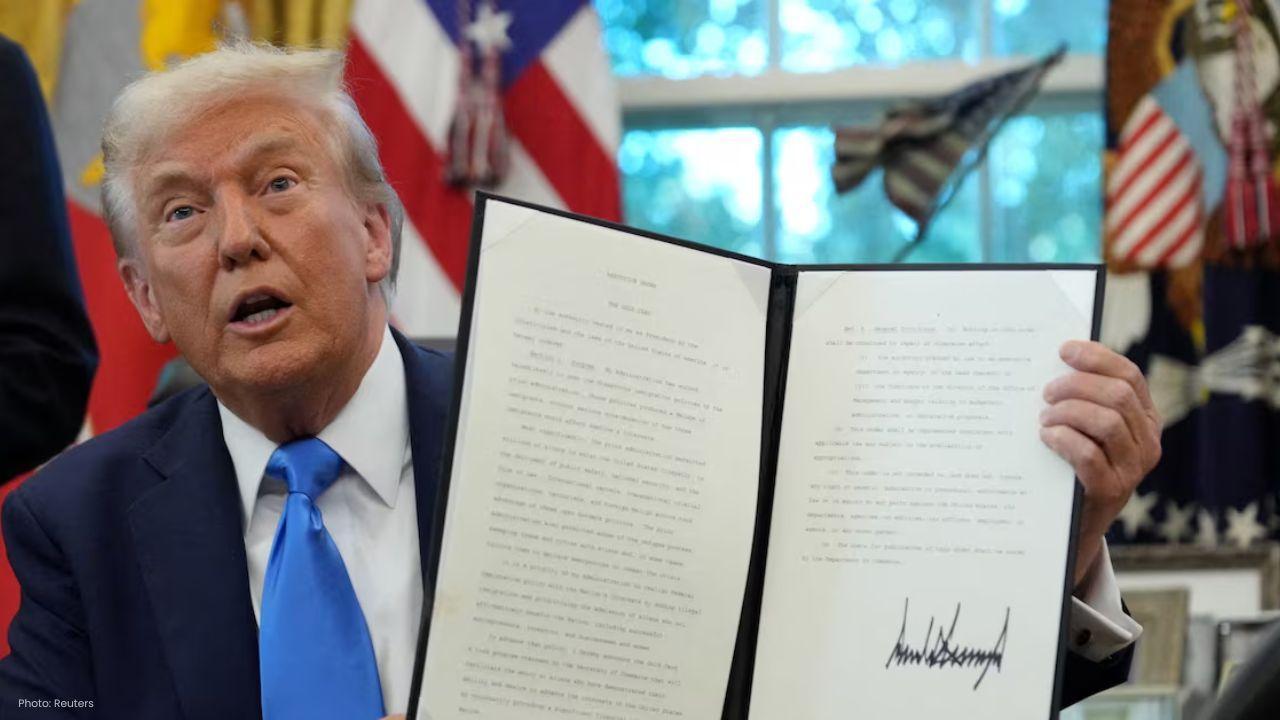
The Trump administration has launched a high-profile campaign targeting alleged misuse of the H-1B visa system, claiming that corporations have been replacing young American workers with cheaper foreign hires. India has emerged as the largest beneficiary of the program, with nearly 72% of H-1B approvals going to Indian nationals, according to the Department of Labour.
Titled “Recapturing the American Dream,” the campaign features a 51-second video contrasting 1950s American prosperity with modern employment data, highlighting the perceived impact of foreign labor on U.S. jobs. The post credits President Donald Trump and Labour Secretary Lori Chavez-DeRemer for taking action to “hold companies accountable for their abuse and recapture the American Dream for the American people.”
Central to the initiative is Project Firewall, launched in September 2025, which will conduct audits of companies sponsoring foreign workers under the H-1B visa program. The program includes random compliance checks, salary audits, and public disclosure of violations, with an aim to prevent wage suppression and replacement of qualified U.S. workers.
“The President’s commitment is clear: American jobs should go to American workers first,” a senior official said, noting that the Department of Labour will work alongside the Department of Homeland Security and USCIS to review visa petitions and conduct inspections.
The move reflects the administration’s renewed “America First” employment policy, echoing visa restrictions and minimum wage proposals from Trump’s first term. Analysts say the campaign appeals to middle-class and blue-collar voters concerned about outsourcing and foreign labor competition.
India, as the dominant recipient of H-1B visas, has become the focal point of the debate. While Indian tech professionals have historically filled critical gaps in the U.S. tech sector, experts warn that aggressive enforcement under Project Firewall could delay visa processing, disrupt ongoing projects, and strain U.S.–India tech collaborations.
Labour Secretary Lori Chavez-DeRemer emphasized that the crackdown is meant to ensure fairness rather than halt skilled immigration. Economists, however, are divided: some believe it will encourage local hiring and upskilling, while others fear it may stifle innovation and drive companies to relocate research abroad.
As Project Firewall begins its audits, the coming months will test the Trump administration’s ability to balance nationalist employment policies with the demands of a global, interconnected tech economy, keeping India at the center of one of the most significant H-1B debates in recent years.







Rabada Misses First Australia Test as South Africa Pick Two Spinners
Kagiso Rabada misses the opener as South Africa vs Australia begins, with Anrich Nortje returning an

Starc Compares Australia's Tough Year to McIlroy's Major Sweep
Mitchell Starc says Australia winning three away Test series and the World Cup would match Rory McIl

France’s Sesterce Plans $11 Billion AI Data Centre in Finland
Sesterce plans a $11 billion AI data centre in Finland, with major expansion, green energy plans and

Danaher to Launch AI-Powered Autonomous Research Lab in 2027
Danaher plans an AI research lab for 2027, combining robotics and automation to speed up drug discov

Musk Welcomes German Support for Tesla Driver Assistance Tech as EU Approval Push Continues
Elon Musk welcomes Germany's backing for Tesla FSD as the company seeks EU approval amid speed, safe
Microsoft and Nvidia CEOs to Unveil AI Laptop at San Francisco Event
Microsoft and Nvidia showcase a new AI laptop with RTX Spark chips as they push powerful local AI co