
You have not yet added any article to your bookmarks!
Join 10k+ people to get notified about new posts, news and tips.
Do not worry we don't spam!
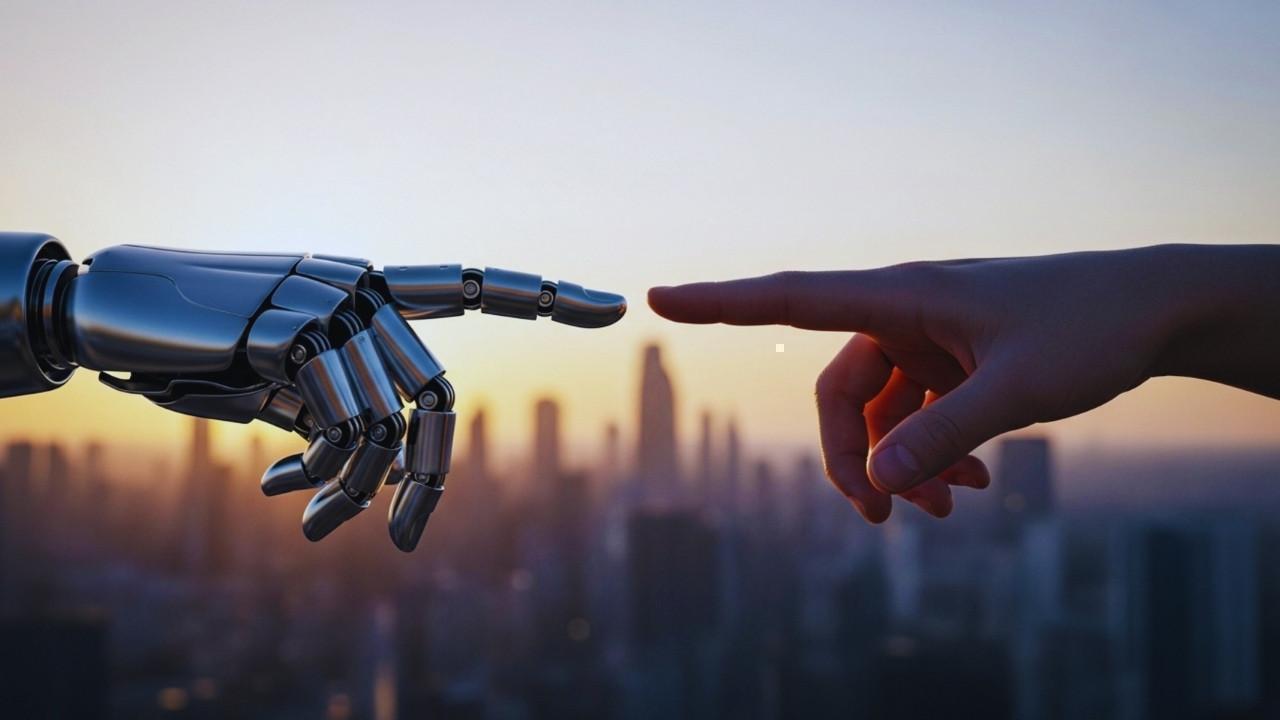
Post by : Anis Farhan
AI has evolved beyond performing repetitive, rule-based tasks. Today’s systems understand language, analyze emotions, and even generate creative output. But instead of taking over human jobs, AI is redefining them. The modern workforce now operates within what can be termed the “Human-AI Collaboration Curve” — a model where technology amplifies human potential instead of replacing it.
This curve reflects a gradual shift: from automation that replaced manual labor, to augmentation that enhances human decision-making. The future of work lies in mastering this collaboration rather than fearing it.
Automation focuses on efficiency. Machines handle repetitive, predictable tasks—data entry, logistics optimization, and simple analytics—faster and more accurately than humans. While it replaces some jobs, it also eliminates mundane work, allowing employees to focus on higher-value activities.
Augmentation, on the other hand, empowers human capabilities. It’s about AI as a teammate, not a replacement. Generative AI, predictive analytics, and natural language processing assist professionals in research, content creation, customer service, and innovation. Instead of doing the job for them, AI helps humans do it better.
The real opportunity lies in balancing both. As organizations adopt AI tools, the question shifts from “Will AI take my job?” to “How can AI make me better at my job?”
AI assists doctors in diagnosing diseases, analyzing imaging scans, and predicting patient outcomes. However, human empathy and judgment remain irreplaceable. Collaboration enhances accuracy and efficiency, leading to better healthcare outcomes.
AI-powered adaptive learning platforms personalize lessons for each student, while teachers use data insights to identify learning gaps. Human educators still provide emotional intelligence, creativity, and mentorship.
Algorithmic trading, fraud detection, and personalized banking are powered by AI. Yet human analysts interpret data, assess risks, and make ethical financial decisions. The hybrid model boosts both security and performance.
Smart factories use AI to predict equipment failures, optimize production, and ensure safety. Human workers manage complex problem-solving, system monitoring, and innovation in design.
Generative AI tools assist journalists, marketers, and writers by producing drafts or analyzing trends. Human creativity, emotion, and context, however, still define the final narrative and tone.
Each of these sectors demonstrates that AI’s greatest value isn’t replacement—it’s partnership.
In a world where humans and AI work side by side, success depends on mastering new skill sets that complement technology.
Understanding how AI works—its strengths, limitations, and biases—is essential. Employees who can navigate AI tools will have an advantage across industries.
AI can process data, but it cannot contextualize meaning the way humans can. The ability to analyze, question, and synthesize AI outputs ensures smarter decision-making.
These are inherently human strengths that machines cannot replicate. Creative problem-solving and emotional insight are crucial in roles requiring empathy, leadership, or communication.
As AI becomes more embedded in society, understanding ethics, fairness, and privacy will be critical. The workforce must ensure technology serves human values.
The narrative of “AI vs. Humans” is outdated. The real story is “AI with Humans.”
Modern AI tools excel at data processing, prediction, and pattern recognition. Humans, meanwhile, bring intuition, ethics, and adaptability. Together, they create a feedback loop that drives innovation.
For example:
A journalist can use AI to analyze public sentiment and identify emerging topics, then apply human judgment to write impactful stories.
A customer service team can rely on AI chatbots to handle common queries while human agents resolve complex emotional issues.
A designer can use generative AI to brainstorm visual concepts faster but still apply creative expertise to refine the final product.
This collaborative model increases productivity while maintaining the distinctly human touch that defines authentic work.
AI integration demands a new kind of leadership. The traditional top-down model is giving way to adaptive, tech-savvy leaders who understand both human potential and machine capability.
AI Literacy: Leaders must grasp how AI systems function and how to integrate them responsibly.
Empathy: Managing hybrid teams (humans + machines) requires understanding human motivation and fears.
Innovation Mindset: Encouraging experimentation with AI tools fosters creativity and competitiveness.
Transparency: Ethical AI adoption builds trust internally and externally.
The most effective leaders of 2025 and beyond will not compete with AI—they will orchestrate collaboration between human and machine intelligence.
As organizations adopt AI-powered workflows, job descriptions are being redefined. Routine tasks are automated, freeing up time for human creativity, strategy, and relationship-building.
AI-Assisted Marketers: Use predictive analytics to design targeted campaigns while maintaining authentic brand voice.
AI Data Collaborators: Interpret algorithmic predictions for strategic decisions.
AI Trainers: Improve models by teaching them contextual understanding.
AI Ethics Officers: Monitor responsible AI use to prevent bias and misuse.
Hybrid intelligence isn’t about replacement—it’s about symbiosis.
AI collaboration introduces complex ethical questions:
Who is responsible for AI decisions?
How can bias in algorithms be reduced?
What happens when AI outperforms humans in sensitive roles?
Responsible collaboration requires transparency, accountability, and continuous monitoring. Establishing AI governance frameworks ensures systems remain fair, inclusive, and aligned with human values.
AI ethics is not just a compliance issue—it’s a trust issue. And trust will be the defining factor in whether humans truly embrace AI as a partner.
Every technological revolution displaces some jobs but creates others. AI is no exception. The World Economic Forum predicts millions of roles will be redefined rather than erased.
AI Specialists & Prompt Engineers
Data Analysts & AI Trainers
Cybersecurity Experts
Human-Machine Experience Designers
Digital Ethics Professionals
The common thread? These roles require collaboration—humans guiding AI toward meaningful outcomes.
To thrive on the Human-AI Collaboration Curve, organizations and individuals must adopt proactive strategies:
Reskill Continuously: Adapt to changing demands by learning AI-related skills.
Encourage Cross-Functional Learning: Combine technical and creative expertise.
Prioritize Ethical AI Policies: Build frameworks that ensure fairness, privacy, and transparency.
Promote Collaboration Culture: Integrate AI into daily workflows as a tool for empowerment, not replacement.
Measure Human Impact: Use AI to enhance job satisfaction, productivity, and creativity—not just efficiency.
The intersection of humans and machines is not a collision—it’s a collaboration. The Human-AI Collaboration Curve represents a future where technology amplifies human potential, allowing people to focus on creativity, empathy, and complex problem-solving.
As industries adapt, the most valuable professionals will be those who can leverage AI as a partner—combining technological precision with human insight. The workplaces of tomorrow will not be dominated by robots but enriched by intelligent collaboration, creating an ecosystem where innovation and humanity thrive together.
This article is for informational purposes only and does not constitute professional, career, or investment advice. Readers should assess their own professional goals and consult experts before adopting AI tools or automation strategies.










PM Modi Pays Tribute to Mahatma Gandhi, Urges People to Support Khadi
PM Modi pays tribute to Mahatma Gandhi on Gandhi Jayanti and urges citizens to support Khadi and the

Amazon Seeks to Offload $8 Billion in Nvidia Chips to Investors
Amazon plans to move $8 billion in Nvidia chips to investors, using a new financing model to strengt

Samsung Raises Galaxy S26 Prices as Memory Chip Costs Rise
Samsung raises Galaxy S26 prices in South Korea as rising memory chip costs put pressure on smartpho

Lewis Hamilton Calls Singapore Grand Prix One of F1's Toughest Races
Lewis Hamilton discusses the demanding Singapore Grand Prix and brings Plus44 and Almave to Singapor

Denmark's Pandora Opens World's Largest Jewellery Factory in Vietnam
Pandora opens its largest jewellery factory in Vietnam, expanding global production, strengthening s

Gautam Gambhir Questions Batting-Friendly Pitches After India's Record ODI Chase
Gautam Gambhir questions batting-friendly ODI pitches after India’s record chase, calling for a bett

