You have not yet added any article to your bookmarks!
Join 10k+ people to get notified about new posts, news and tips.
Do not worry we don't spam!
Post by : Saif Rahman
After a sudden withdrawal of Kurdish-led forces, Syrian government troops have broadened their control across northern and eastern regions, marking a significant shift in power dynamics. The Syrian Democratic Forces (SDF) retreated from pivotal areas in Raqqa and Deir al-Zor after intense fighting and a ceasefire arrangement, solidifying President Ahmed al-Sharaa’s dominance.
As part of the deal, the SDF, previously a key ally of the U.S. in the region, is set to integrate their fighters into the Syrian military as individuals instead of units. Additionally, the agreement entails ceding control over prisons, vital border crossings, and oil as well as gas infrastructure that had been managed by the SDF for an extended period.
The withdrawal instigated tensions, as both factions exchanged accusations regarding ceasefire breaches. Syrian forces reported escapes of several Islamic State prisoners from a Shaddadi facility, with the government claiming the SDF intentionally released them, while the SDF attributed the loss of control to a government attack. Despite denying any assault on the facility, the Syrian army expressed intentions to recapture the escaped inmates.
This development follows extensive negotiations mediated by the U.S. between Damascus and the SDF. Although Turkish President Tayyip Erdogan welcomed the terms, Kurdish leaders have voiced their concerns over several provisions, notably the individual integration requirement. Reports indicated that a recent dialogue between SDF commander Mazloum Abdi and President Sharaa had encountered difficulties, with Abdi seeking additional time to confer with his commanders.
Reuters reporters have seen Syrian troops occupying Raqqa, captured from ISIS in 2017, and controlling oil and gas sites in Deir al-Zor, both of which hold substantial economic and strategic value. This shift in control marks a notable transformation in Syria’s territorial landscape since Islamist insurgents ousted President Bashar al-Assad in 2024.
Despite the recent transitions, the SDF continues to maintain authority over most of Hasakah province in the northeast, including the predominantly Kurdish city of Qamishli. The SDF media office reported that they had successfully defended Shaddadi prison from ongoing assaults by government forces, suffering significant casualties. The U.S.-led coalition against ISIS reportedly did not provide intervention despite requests for help from the SDF.
This evolving scenario highlights the precarious security landscape in Syria and the challenges of reconciling various armed entities under centralized governance. As government forces enforce their control, international observers remain cautious of renewed tensions should the SDF and Damascus fail to completely adhere to integration and ceasefire stipulations. The focus on essential infrastructure, including prisons and oil fields, emphasizes the critical strategic and political stakes involved in this ongoing conflict.






George Russell Wins Dutch GP Sprint, Boosts Mercedes Morale
George Russell wins the Dutch GP Sprint from pole as Mercedes teammate Kimi Antonelli extends his F1

Australia 50/3 After Bangladesh Bowled Out for 64 in Second Test
Australia reached 50/3 after Bangladesh were bowled out for 64 in the second Test, with Mitchell Sta

Jordan Burroughs Returns to Wrestling with 2028 Olympic Dream
Jordan Burroughs returns to wrestling with Real American Freestyle as the Olympic champion eyes a po

Lamborghini Catches Fire on Singapore's ECP, Causing Heavy Traffic
A Lamborghini caught fire on Singapore's ECP, causing heavy traffic and bus delays. No injuries were

Bangkok Airport Duty-Free Area Flooded by Pipe Burst
A burst water pipe flooded the duty-free shopping area at Bangkok's Suvarnabhumi Airport on July 16,
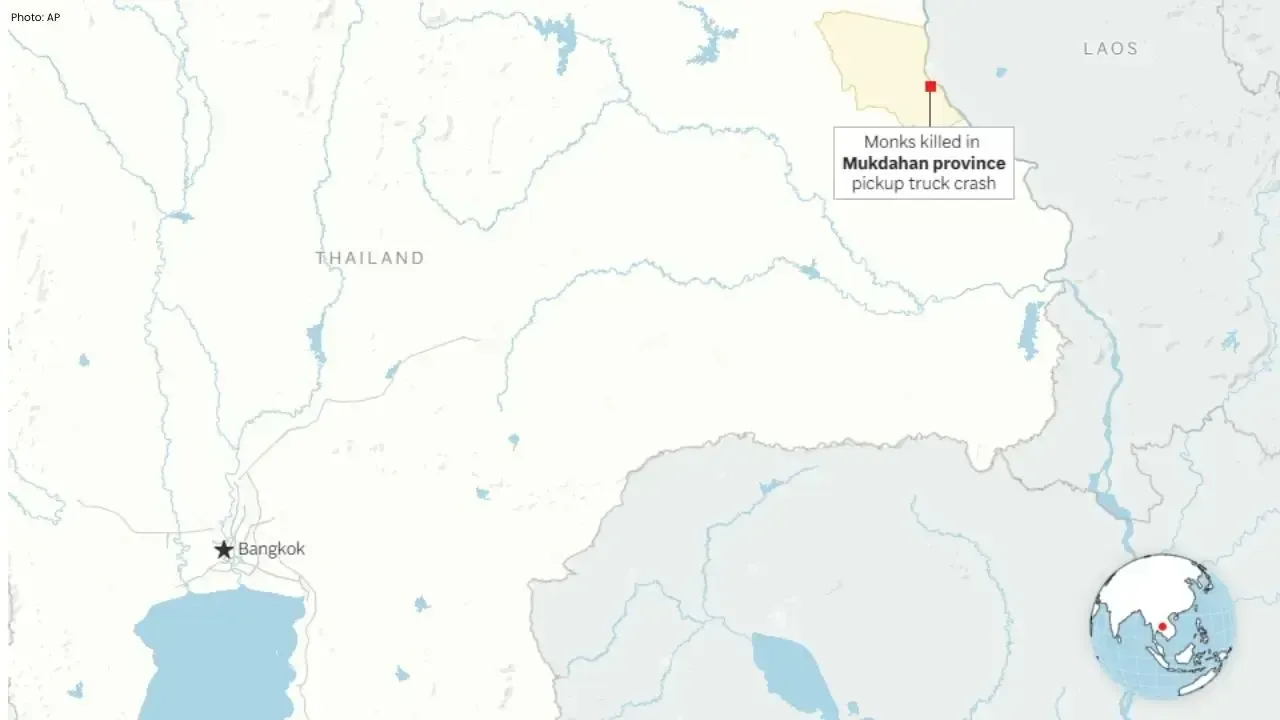
Nine Monks Killed in Thailand Pickup Truck Tragedy
An 11-year-old boy driving a pickup truck crashed into monks during a pilgrimage in northeastern Tha