You have not yet added any article to your bookmarks!
Join 10k+ people to get notified about new posts, news and tips.
Do not worry we don't spam!
Post by : Anis Farhan
In a scientific milestone that could change the course of human reproduction, researchers have successfully created human egg cells from skin tissue. This discovery is being described as one of the most groundbreaking advancements in fertility science since the development of in-vitro fertilization (IVF). For individuals and couples facing infertility, this new method could open possibilities that were once unimaginable.
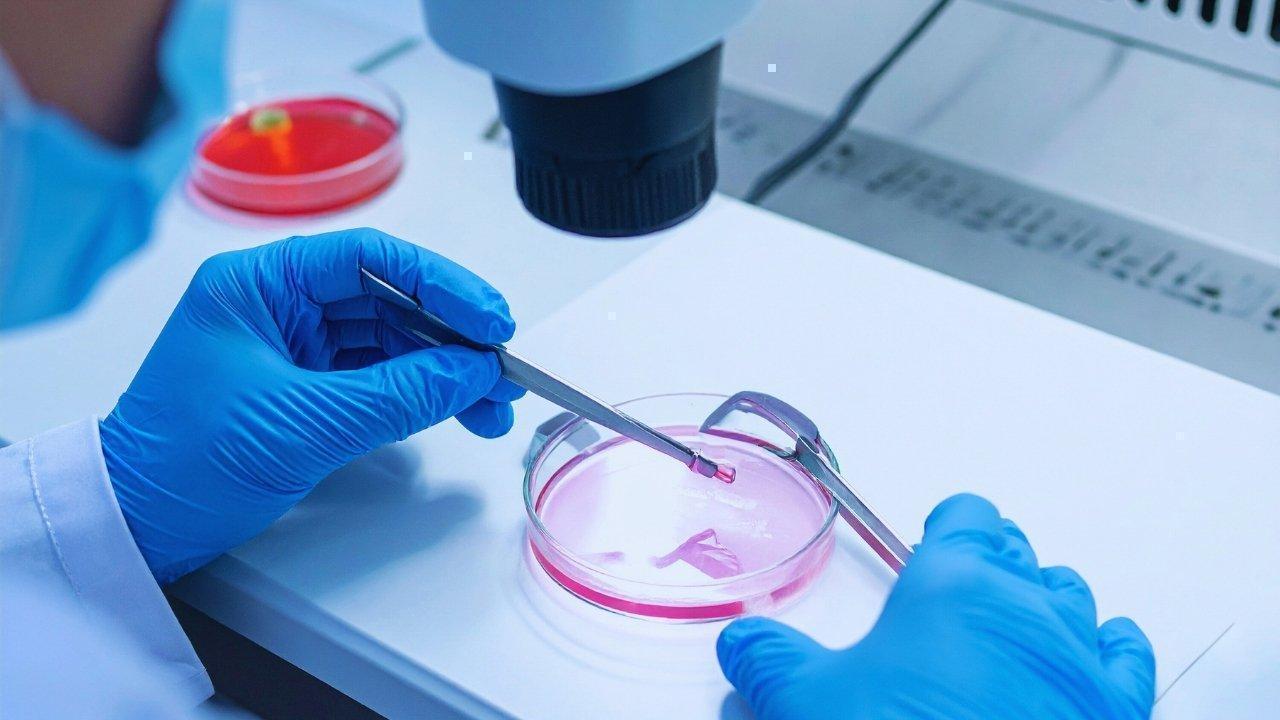
By reprogramming adult skin cells, scientists have managed to turn them into pluripotent cells — capable of transforming into any type of human cell. These reprogrammed cells were then guided in the lab to become oocytes or immature egg cells. If perfected, this technique could help patients produce eggs that carry their own DNA, eliminating the need for donor eggs and reducing risks linked to genetic mismatch.
The core of this innovation lies in the use of induced pluripotent stem cells (iPSCs). These are adult cells, such as those found in the skin, that scientists can genetically reprogram to revert to a stem cell state. Once reverted, these iPSCs can develop into virtually any kind of cell in the human body — including reproductive cells.
In laboratory conditions, researchers used a specific combination of chemical signals to mimic the ovarian environment. Over time, these reprogrammed cells began developing characteristics similar to natural egg cells. Genetic analysis confirmed that the lab-grown eggs carried the same DNA as the original donor cells. This validation is crucial in ensuring that such eggs are biologically authentic and potentially viable for fertilization in future research.
Infertility has been one of the most emotionally and medically challenging conditions faced by millions worldwide. Traditional solutions like IVF, surrogacy, and egg donation have provided pathways to parenthood but often come with high emotional and financial costs. This new discovery could eliminate many of those barriers.
Women who have lost ovarian function due to early menopause, cancer treatments, or genetic disorders could benefit immensely. Moreover, same-sex couples could one day use their own genetic material to conceive children, breaking traditional reproductive limitations. The potential to restore fertility using an individual’s own cells could mark a monumental step toward personalized medicine in reproductive care.
Globally, one in six couples experiences infertility — a statistic that continues to rise due to modern lifestyle factors and delayed parenthood. The creation of egg cells from skin cells offers a new ray of hope. For the first time, science is moving toward a solution that may allow infertile individuals to have biological children using their own cells.
This advancement could also change fertility preservation. Instead of freezing eggs at a young age, individuals might simply store a small skin sample that can later be used to generate eggs whenever they are ready for parenthood. This could dramatically reshape how society views reproductive timelines, aging, and fertility planning.
While this discovery is thrilling, it also raises profound ethical and societal questions. Creating human reproductive cells in a lab blurs the line between natural conception and scientific manipulation. Bioethicists have raised concerns about potential misuse of the technology — including unauthorized cloning or genetic modification.
At present, most countries have strict regulations prohibiting the creation of human embryos for research or reproductive purposes using lab-generated gametes. Scientists stress that while the goal is to advance fertility treatment, careful oversight and transparent ethical guidelines will be essential to ensure responsible progress.
The benefits of this discovery extend far beyond infertility. Lab-grown egg cells can be used as a powerful research tool for studying genetic and developmental disorders. They could help scientists understand how certain diseases originate at the embryonic level, leading to better diagnostic and preventive strategies.
Moreover, researchers can use these artificial eggs to analyze how environmental factors, stress, diet, and aging impact reproductive health. For decades, studying human egg development has been difficult due to the scarcity of viable samples. This breakthrough provides scientists with an ethical and consistent model to study reproductive biology more closely.
If the technology matures, the social implications will be immense. The possibility of creating eggs from skin cells could redefine concepts of family, gender, and parenthood. For example, same-sex couples could both contribute DNA to create embryos, while single individuals could have children without a traditional partner.
Such developments may challenge traditional moral beliefs but also empower people to take control of their reproductive future. From a broader perspective, it could also make fertility treatment more inclusive and affordable, bridging gaps that currently exist in reproductive healthcare accessibility worldwide.
Despite the optimism, several challenges remain before lab-grown eggs can be used in humans. The artificial eggs must undergo the same complex stages of maturation and chromosomal division as natural eggs. Any error in this process could result in genetic abnormalities or developmental issues.
Animal studies, including successful births from lab-grown eggs in mice, have shown encouraging results, but translating that success to humans is significantly more complicated. Extensive research and safety trials are required to ensure that the eggs are healthy, stable, and capable of supporting normal embryo development. Experts estimate that human applications may still be a decade away.
The international scientific community has reacted with a mix of enthusiasm and caution. Fertility specialists are calling this achievement “a monumental step toward ending infertility,” while others emphasize the importance of ethical responsibility.
Dr. Yuko Imagawa, one of the lead researchers in the project, stated that the aim is not to replace natural reproduction but to expand medical options for those who cannot conceive. According to her, this breakthrough symbolizes “a gift of renewed hope for people who thought parenthood was beyond reach.”
Religious and cultural groups have also joined the debate, questioning the moral boundaries of creating life in a lab. As with any powerful technology, finding a balance between innovation and ethics will determine how society embraces this discovery.
This innovation marks the beginning of a new era in reproductive health. If scientists can overcome the current technical and ethical challenges, the dream of restoring fertility through a person’s own skin cells could become reality. It promises to make infertility a treatable condition rather than a lifelong struggle.
Beyond medicine, this discovery reaffirms humanity’s growing ability to understand and influence life itself. It signals a future where reproductive barriers might no longer define human potential — a future where parenthood is accessible to all, regardless of biological limitations.
This article discusses ongoing scientific research in the field of reproductive medicine. The creation of egg cells from skin tissue remains in early experimental stages and has not yet been approved for human clinical application. Readers should consult verified medical professionals for guidance on fertility treatments.










George Russell Wins Dutch GP Sprint, Boosts Mercedes Morale
George Russell wins the Dutch GP Sprint from pole as Mercedes teammate Kimi Antonelli extends his F1

Australia 50/3 After Bangladesh Bowled Out for 64 in Second Test
Australia reached 50/3 after Bangladesh were bowled out for 64 in the second Test, with Mitchell Sta

Jordan Burroughs Returns to Wrestling with 2028 Olympic Dream
Jordan Burroughs returns to wrestling with Real American Freestyle as the Olympic champion eyes a po

Lamborghini Catches Fire on Singapore's ECP, Causing Heavy Traffic
A Lamborghini caught fire on Singapore's ECP, causing heavy traffic and bus delays. No injuries were

Bangkok Airport Duty-Free Area Flooded by Pipe Burst
A burst water pipe flooded the duty-free shopping area at Bangkok's Suvarnabhumi Airport on July 16,

Nine Monks Killed in Thailand Pickup Truck Tragedy
An 11-year-old boy driving a pickup truck crashed into monks during a pilgrimage in northeastern Tha