You have not yet added any article to your bookmarks!
Join 10k+ people to get notified about new posts, news and tips.
Do not worry we don't spam!
Post by : Rameen Ariff
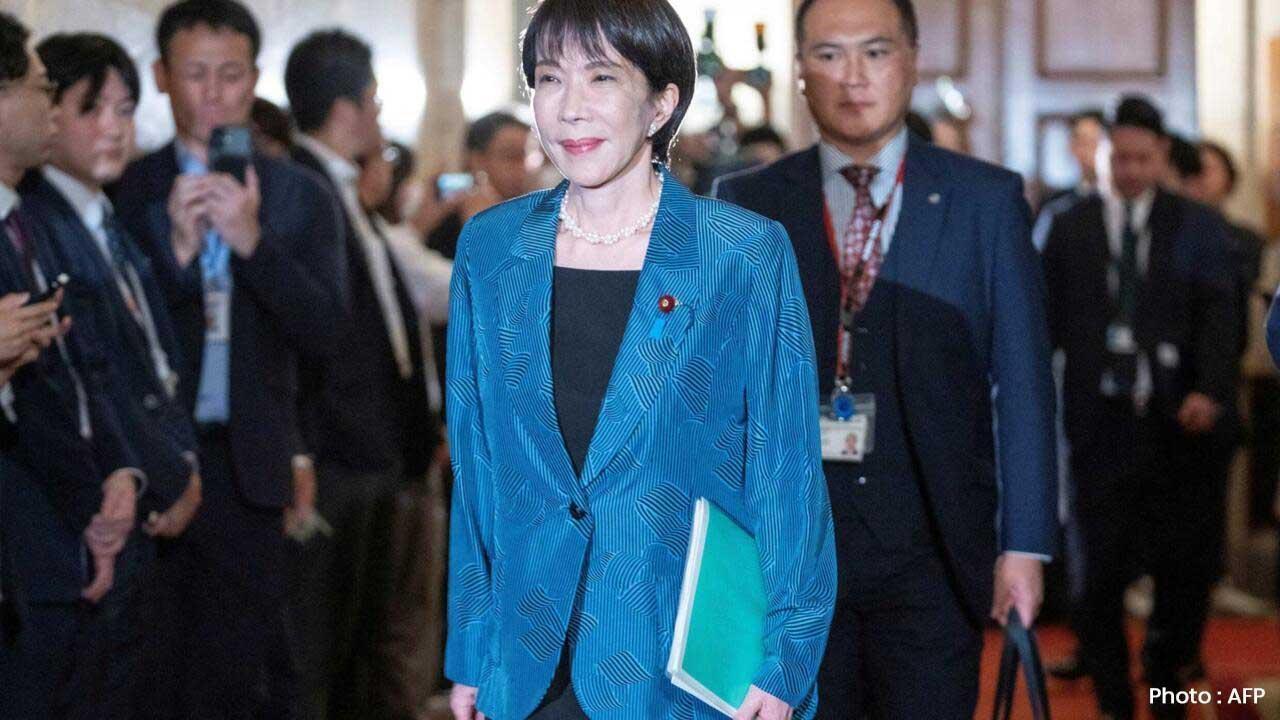
In a historic moment for Japanese politics, Sanae Takaichi has officially become Japan’s first woman prime minister, marking a major milestone in the country’s political history. The veteran politician, known for her strong conservative views and admiration for Margaret Thatcher, secured the position after an unexpected majority win in parliament’s first round of voting.
The appointment of Sanae Takaichi as Japan’s first woman prime minister signals a turning point for the nation, long criticized for its gender imbalance in leadership. Her rise to power also comes at a challenging time, as Japan grapples with a sluggish economy, an aging population, and delicate diplomatic relations with both China and the United States.
Parliament’s decision to appoint Sanae Takaichi as Japan’s first woman prime minister followed her surprising victory within the Liberal Democratic Party (LDP), which has dominated Japan’s political landscape for decades. After the LDP’s coalition partner Komeito withdrew support, Takaichi swiftly forged a new alliance with the right-leaning Japan Innovation Party (JIP).
Her leadership promises to bring “a stronger economy and a more responsible government for future generations,” she said during her first address. The new coalition, however, faces the challenge of running a minority government, with tough negotiations expected in parliament.
The appointment of Sanae Takaichi as Japan’s first woman prime minister has ignited conversations nationwide about gender equality. Japan ranks 118th in the World Economic Forum’s Global Gender Gap Report 2025, with women occupying just 15% of lower house seats.
Takaichi has pledged to create a cabinet with “Nordic-level” gender representation — a significant step up from her predecessor’s two female ministers. While many citizens see her rise as a sign of progress, others are cautious. “She’s a strong-minded leader, but not everyone agrees with her conservative ideas,” said Toru Takahashi, a 76-year-old pensioner from Nara, her hometown.
As Japan’s first woman prime minister, Takaichi inherits pressing economic and diplomatic issues. She must manage rising living costs, finalize trade deals with Washington, and navigate tensions with China and Russia. U.S. President Donald Trump is expected to visit Japan next week, and discussions on defense spending and energy imports are on the agenda.
Domestically, Takaichi is expected to push for economic reforms inspired by her mentor, Shinzo Abe, though she has moderated her stance on “Abenomics.” Her appointment has already boosted Japanese stock markets, signaling renewed investor confidence.
Many Japanese women see Sanae Takaichi’s appointment as prime minister as a beacon of hope for change. She has openly discussed women’s health issues, including her experience with menopause, and advocates for greater workplace support for women.
“I hope she makes Japan a more liveable place for women,” said 39-year-old Keiko Yoshida from Nara. Young student Nina Terao added, “We want more policies for working mothers and better childcare support.”
However, Takaichi’s traditional stance on marriage laws and imperial succession has drawn criticism from progressives. She opposes changes to Japan’s 19th-century law requiring married couples to share the same surname and supports maintaining male-only succession in the imperial family.
World leaders have congratulated Sanae Takaichi, recognizing her as a symbol of progress in a region where female leadership remains rare. Analysts say her tenure will test her ability to balance conservative domestic values with a modern, globally connected Japan.
With the nation facing political division and economic uncertainty, Sanae Takaichi’s leadership could redefine Japan’s future — not only as its first woman prime minister but as a transformative figure determined to make her mark on the world stage.









ASML and Zeiss Target Next-Generation Chip Technology in 10 Years
ASML and Carl Zeiss are developing Hyper NA technology to print smaller chip circuits, with the next

Rabada Misses First Australia Test as South Africa Pick Two Spinners
Kagiso Rabada misses the opener as South Africa vs Australia begins, with Anrich Nortje returning an

Starc Compares Australia's Tough Year to McIlroy's Major Sweep
Mitchell Starc says Australia winning three away Test series and the World Cup would match Rory McIl

France’s Sesterce Plans $11 Billion AI Data Centre in Finland
Sesterce plans a $11 billion AI data centre in Finland, with major expansion, green energy plans and

Danaher to Launch AI-Powered Autonomous Research Lab in 2027
Danaher plans an AI research lab for 2027, combining robotics and automation to speed up drug discov

Musk Welcomes German Support for Tesla Driver Assistance Tech as EU Approval Push Continues
Elon Musk welcomes Germany's backing for Tesla FSD as the company seeks EU approval amid speed, safe