
You have not yet added any article to your bookmarks!
Join 10k+ people to get notified about new posts, news and tips.
Do not worry we don't spam!
Post by : Shakul
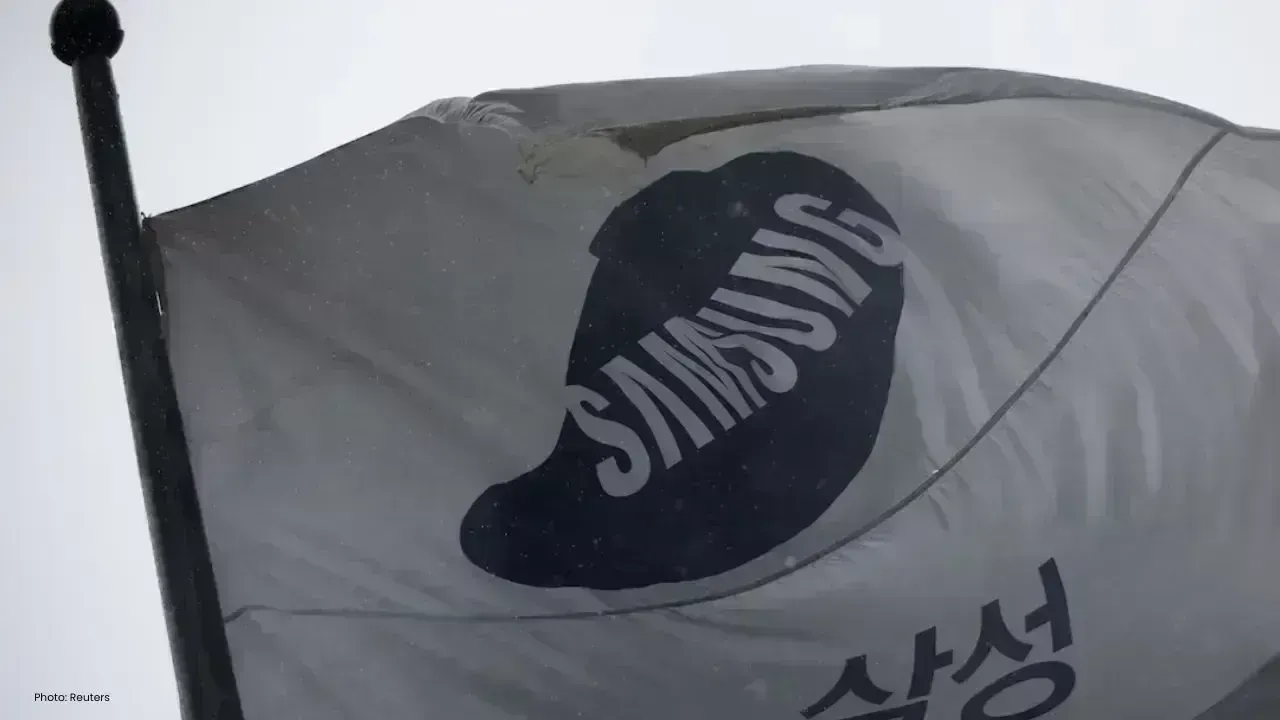
South Korea is considering an emergency government intervention as Samsung Electronics faces the possibility of one of the largest labour strikes in the country’s recent history. The planned strike comes after bonus payment negotiations between Samsung management and its labour union collapsed without an agreement.
Around 48,000 Samsung workers are expected to begin an 18-day strike starting Thursday. The situation has raised serious concerns inside the South Korean government because Samsung plays a critical role in the country’s economy and the global semiconductor supply chain.
Samsung Electronics is the world’s biggest memory chip manufacturer and contributes nearly one-fourth of South Korea’s total exports. Any major disruption in production could create fresh shortages in global chip supplies, especially at a time when demand for AI-related semiconductors continues to rise rapidly worldwide.
The South Korean government has hinted that it may issue a rare emergency arbitration order if negotiations fail completely. Such an order has only been used four times in the country’s modern history and is considered an extraordinary measure during major labour disputes that threaten the national economy.
If implemented, the emergency arbitration order would immediately suspend the strike for 30 days and force both the company and the union to continue negotiations under government mediation. Workers or companies refusing to comply with the ruling could face legal penalties including fines and prison sentences.
President Lee Jae Myung, whose administration is generally considered labour-friendly, warned that unions must also act responsibly for the broader public interest. He stated that the government has a duty to step in whenever labour actions begin affecting the larger economy and social stability.
Economic experts believe the strike could significantly hurt South Korea’s growth outlook for 2026. According to estimates from central bank officials, a prolonged disruption at Samsung could reduce the country’s economic growth forecast by as much as 0.5 percentage points this year.
Samsung itself may suffer daily losses reaching nearly 1 trillion won if production facilities are heavily impacted. Markets are also watching the political implications closely as South Korea prepares for important local elections on June 3, where labour support may influence voting trends in key industrial regions.
The strike also highlights growing tensions between workers and large technology corporations across Asia as employees increasingly demand better compensation amid rising profits generated by the global AI and semiconductor boom.










PM Modi Pays Tribute to Mahatma Gandhi, Urges People to Support Khadi
PM Modi pays tribute to Mahatma Gandhi on Gandhi Jayanti and urges citizens to support Khadi and the

Amazon Seeks to Offload $8 Billion in Nvidia Chips to Investors
Amazon plans to move $8 billion in Nvidia chips to investors, using a new financing model to strengt

Samsung Raises Galaxy S26 Prices as Memory Chip Costs Rise
Samsung raises Galaxy S26 prices in South Korea as rising memory chip costs put pressure on smartpho

Lewis Hamilton Calls Singapore Grand Prix One of F1's Toughest Races
Lewis Hamilton discusses the demanding Singapore Grand Prix and brings Plus44 and Almave to Singapor

Denmark's Pandora Opens World's Largest Jewellery Factory in Vietnam
Pandora opens its largest jewellery factory in Vietnam, expanding global production, strengthening s

Gautam Gambhir Questions Batting-Friendly Pitches After India's Record ODI Chase
Gautam Gambhir questions batting-friendly ODI pitches after India’s record chase, calling for a bett

