You have not yet added any article to your bookmarks!
Join 10k+ people to get notified about new posts, news and tips.
Do not worry we don't spam!
Post by : Anis Farhan
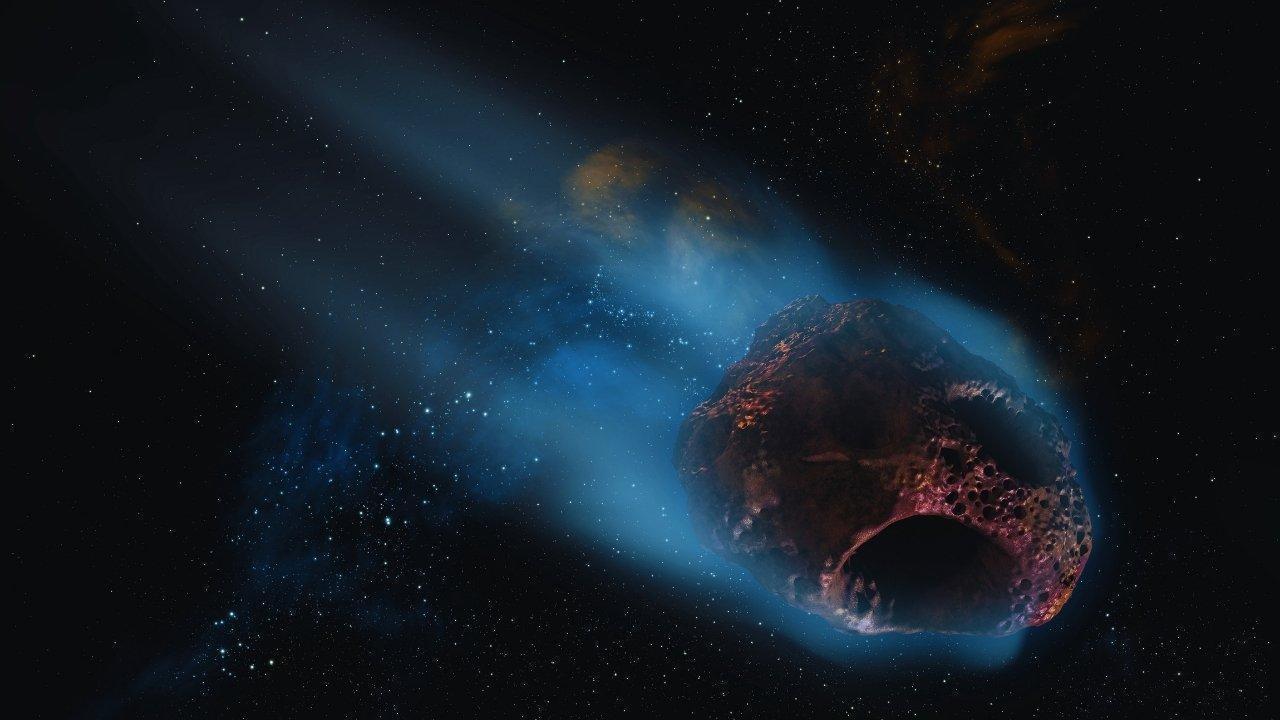
The solar system has long held mysteries about the origin and distribution of water. While planets like Earth are known to have water, understanding how it arrived and persisted in the early solar system has remained a significant scientific challenge. In a breakthrough that could reshape our understanding, the pristine samples returned from asteroid Ryugu by Japan’s Hayabusa2 mission have provided unprecedented evidence of ancient water activity in a celestial body.
These findings suggest that water was not merely present in the outer solar system; it was actively flowing and chemically altering the asteroid’s minerals. The discovery challenges previous assumptions about the early solar system’s water distribution and indicates that asteroids like Ryugu could have played a pivotal role in delivering water—and possibly prebiotic ingredients for life—to Earth.
Ryugu is a carbonaceous near-Earth asteroid, considered primitive because its composition has remained largely unaltered since the solar system’s formation. Scientists targeted Ryugu for sample collection because it represents one of the oldest materials available for study, offering a glimpse into the solar system’s formative processes.
In 2020, the Hayabusa2 spacecraft successfully returned samples from Ryugu’s surface. Unlike meteorites that land on Earth after traveling through the atmosphere, these samples arrived uncontaminated, preserving the asteroid’s original chemical and mineralogical characteristics. This clean material enabled researchers to perform detailed analyses, including isotopic studies, mineral mapping, and detection of trace chemical compounds, all revealing signs of water activity that were previously unknown.
One of the most striking revelations from Ryugu is the isotopic evidence pointing to liquid water movement within the asteroid’s interior. Scientists observed unusual abundances of hafnium-176, suggesting that water interacted with lutetium-176 in the asteroid’s early history, redistributing these isotopes. This indicates that water not only existed but actively flowed and chemically altered the asteroid’s composition shortly after its formation.
The presence of flowing water within Ryugu’s parent body signifies that such bodies were not inert rocks drifting through space. Instead, they experienced complex aqueous processes, which could include the alteration of minerals, formation of new compounds, and even the creation of organic molecules. These processes shed light on the conditions that may have been widespread in the early solar system, providing critical insights into the building blocks of planets and the origins of life.
Further analysis revealed the presence of minerals like sodium carbonate and halite in the Ryugu samples. These salts indicate that the asteroid’s water was not only abundant but chemically reactive. The alkaline nature of this water facilitated mineral alteration, shaping the structure and composition of the asteroid over millions of years.
The discovery of these salts is particularly significant because aqueous alteration is essential in forming complex organic molecules. Such molecules are the precursors to life, suggesting that asteroids like Ryugu may have served as natural laboratories where prebiotic chemistry occurred. In turn, these processes could have contributed to seeding early Earth with the ingredients necessary for the development of life.
The evidence from Ryugu suggests that water may have been more widespread and persistent in small celestial bodies than previously believed. Earlier models often depicted water as transient, only appearing temporarily in select regions or bodies. The discovery of active water flow in Ryugu challenges this notion, indicating that aqueous processes may have been common across numerous asteroids in the early solar system.
This understanding has profound implications for planetary science. If many asteroids possessed flowing water, they could have acted as carriers, transporting water and organic compounds across the solar system. This mechanism may explain how Earth and other planets received their water, reshaping our understanding of planetary formation and habitability.
Ryugu is not the only asteroid providing clues about the early solar system’s water. NASA’s OSIRIS-REx mission collected samples from asteroid Bennu, a carbon-rich asteroid similar to Ryugu. While Bennu’s samples did not show direct evidence of flowing water, they contained hydrated minerals and organic compounds, suggesting chemical interaction with water in its past.
Comparing Ryugu and Bennu allows scientists to appreciate the diversity of water-related processes across asteroids. While each asteroid’s history is unique, the findings collectively reinforce the idea that small bodies were chemically active and may have played a significant role in delivering water and life-essential molecules to planets like Earth.
The presence of flowing water in Ryugu’s parent body brings new insight into the origins of Earth’s oceans. For decades, scientists have debated whether Earth’s water originated from volcanic outgassing, icy comets, or asteroids. The chemical signatures in Ryugu suggest that asteroids could have delivered not just water but also organic molecules, forming the foundation for life on our planet.
This discovery bridges a critical gap in our understanding. If asteroids contained active water and complex organics, then the early solar system was a far more dynamic and interconnected environment than previously thought. These small bodies were not mere debris; they were active participants in shaping planetary conditions favorable to life.
The chemical reactions observed in Ryugu’s samples highlight the potential for prebiotic chemistry beyond Earth. Alkaline water interacting with minerals creates conditions that can facilitate the synthesis of amino acids, nucleobases, and other building blocks of life. While Ryugu itself may not have hosted life, it represents a natural experiment in the formation of life-essential compounds.
These insights extend the search for life beyond Earth. If aqueous alteration and prebiotic chemistry occurred in small asteroids, it raises the possibility that similar processes may be happening on other celestial bodies in our solar system or in exoplanetary systems. This enhances the scientific case for studying asteroids, comets, and other small bodies as laboratories for understanding the origin of life.
The Ryugu mission exemplifies the synergy between cutting-edge technology and scientific inquiry. The Hayabusa2 spacecraft’s ability to land on the asteroid, collect samples, and return them to Earth with minimal contamination represents a major technical achievement.
Once on Earth, advanced analytical techniques such as mass spectrometry, electron microscopy, and isotopic analysis enabled scientists to detect minute chemical and mineral changes, uncovering the evidence of ancient water activity. This combination of precise space engineering and sophisticated laboratory analysis highlights the collaborative nature of modern planetary science.
Despite these breakthroughs, many questions remain. Scientists are still exploring the precise mechanisms by which water moved within Ryugu, the duration of aqueous processes, and the role of water in forming complex organic molecules. Continued study of Ryugu’s samples, combined with future asteroid missions, will refine our understanding of early solar system chemistry.
Additionally, scientists aim to model how these aqueous processes influenced the delivery of water and organics to early Earth. This research will help clarify the conditions necessary for habitability on other planets and moons, providing valuable context for the search for extraterrestrial life.
The Ryugu asteroid samples have reshaped our understanding of water in the early solar system. Evidence of flowing water, mineral alteration, and organic precursors demonstrates that small celestial bodies were chemically active, potentially delivering water and life-essential molecules to Earth.
This discovery underscores the importance of asteroids in planetary formation, highlights the dynamic nature of the early solar system, and offers clues about the origins of water and life on Earth. As researchers continue to analyze Ryugu and other asteroid samples, our understanding of the solar system’s formative processes will deepen, revealing the intricate interplay of water, chemistry, and planetary development that shaped our world.
This article is based on publicly available scientific research and reports regarding Ryugu asteroid samples. While the content reflects current understanding, ongoing studies may refine these conclusions and provide additional insights.









George Russell Wins Dutch GP Sprint, Boosts Mercedes Morale
George Russell wins the Dutch GP Sprint from pole as Mercedes teammate Kimi Antonelli extends his F1

Australia 50/3 After Bangladesh Bowled Out for 64 in Second Test
Australia reached 50/3 after Bangladesh were bowled out for 64 in the second Test, with Mitchell Sta

Jordan Burroughs Returns to Wrestling with 2028 Olympic Dream
Jordan Burroughs returns to wrestling with Real American Freestyle as the Olympic champion eyes a po

Lamborghini Catches Fire on Singapore's ECP, Causing Heavy Traffic
A Lamborghini caught fire on Singapore's ECP, causing heavy traffic and bus delays. No injuries were

Bangkok Airport Duty-Free Area Flooded by Pipe Burst
A burst water pipe flooded the duty-free shopping area at Bangkok's Suvarnabhumi Airport on July 16,

Nine Monks Killed in Thailand Pickup Truck Tragedy
An 11-year-old boy driving a pickup truck crashed into monks during a pilgrimage in northeastern Tha