
You have not yet added any article to your bookmarks!
Join 10k+ people to get notified about new posts, news and tips.
Do not worry we don't spam!
Post by : Anis Farhan
Across major global cities and Indian metros alike, mobility has quietly become one of the most urgent policy concerns. Traffic jams have reached breaking points, fuel costs are unpredictable, and air quality in urban centres continues to decline. Governments are under pressure to act, not just with promises but with firm regulations and projects that reshape how people commute every day.
Travel is no longer a personal habit alone. It has become a public issue with economic, health, and environmental consequences. Ministries, transport authorities, and urban planners are increasingly treating roads and railways as systems needing discipline and reform rather than unmanaged conveniences. The argument is no longer about comfort. It is about sustainability.
Private vehicles once symbolised progress and success. Owning a car or motorbike felt like independence from unreliable buses and overcrowded trains. But as vehicle numbers exploded and road space stayed the same, that freedom turned into frustration. Cities are choking under congestion. Productivity is damaged by wasted hours on roads. Pollution levels now threaten long-term public health.
Policymakers have begun realising that road expansion alone cannot solve traffic. More flyovers and wider roads simply invite more vehicles. The solution no longer lies in infrastructure alone but in behaviour change, and behaviour does not change without rules. This is why governments are introducing policies that make car ownership more expensive and public transport more attractive.
Rising fuel prices are not just a result of global markets. They are also being used strategically by administrations to discourage excessive private vehicle use. In many cities, parking charges have been raised sharply, roadside parking has been restricted, and penalties for violations have become stricter.
These decisions are not meant to punish citizens. They are meant to control volume. When owning and using a personal vehicle becomes expensive and inconvenient, people naturally start reconsidering daily travel habits. A high parking fee in a commercial district forces a commuter to weigh cost against convenience. Over time, that calculation changes behaviour.
In the past, public transport was treated as a solution for those who could not afford private vehicles. That image is now being rewritten. Modern metros, electric buses, and integrated travel cards are being introduced to make public transport appealing even to those who previously avoided it.
Cities are spending large portions of their budgets improving connectivity between metros, buses, and suburban railway systems. Mobile apps provide real-time vehicle tracking. Digital ticketing reduces long queues. Cleanliness drives and surveillance cameras improve safety. Air-conditioned buses and modern terminals change the daily experience.
Public transport is no longer marketed as a compromise. It is being positioned as the smarter choice.
One of the biggest obstacles in persuading citizens to abandon personal vehicles has always been comfort. Cars offer privacy, freedom, and perceived safety. Public transport has historically offered noise, crowds, and inconvenience.
That gap is narrowing.
Modern transit systems now emphasise comfort alongside efficiency. New rakes are quieter and air-conditioned. Bus services include reserved seating, real-time updates, and cleanliness monitoring. Stations are becoming fully accessible with lifts, escalators, and signage.
Public travel is no longer about surviving the commute. It is about managing it comfortably.
Electric vehicles were expected to end the car-versus-bus discussion by offering a clean alternative to petrol and diesel. But while EVs reduce tailpipe emissions, they do not reduce congestion. Roads remain blocked. Parking remains scarce. Travel time remains the same.
Policy focus has shifted accordingly. Instead of encouraging all vehicle replacement with electric cars, governments are now prioritising electric public transport fleets. Electric buses and metro systems deliver both cleaner air and reduced traffic volume.
The debate is no longer about what powers the vehicle. It is about how many vehicles the city can handle.
Despite improvements, many people struggle to give up personal vehicles. Habit, status, and convenience remain powerful forces. For families, a personal car feels like security. For professionals, it feels like flexibility. For many households, it is a financial investment that cannot be abandoned easily.
Policy changes, therefore, often meet resistance. Higher parking charges are criticised. Fuel price hikes trigger anger. Public transport projects cause temporary disruptions during construction, further frustrating residents.
The transition is not smooth.
But cities have little choice.
One major shift in recent years is the redesign of cities around transit corridors. New commercial zones, residential developments, and office spaces are increasingly being planned near metro lines and bus routes. The idea is simple: build life around transport, not transport around life.
This reduces travel distances, lowers dependency on cars, and increases public transport usage naturally. Cities that plan wisely make buses and trains the default option rather than forcing people to abandon their cars unwillingly.
No policy succeeds if people do not feel safe. Governments are investing heavily in surveillance, lighting, women-only compartments, and emergency helplines. The perception of safety on buses and trains matters as much as actual statistics.
If people trust the system, they will use it.
If they don’t, no incentive will work.
Safety is the foundation of mobility reform.
Personal vehicles are now expensive beyond fuel. Insurance, maintenance, parking, tolls, and depreciation make car ownership a growing financial burden. For many families, monthly costs of owning a car match or exceed housing expenses.
Public transport offers predictability. Monthly passes, prepaid cards, and fixed routes provide stability in what otherwise feels like a volatile cost environment.
Rational spending is slowly overtaking emotional attachment.
Environmental pressure has intensified government action. Climate commitments and international targets force urban policymakers to address emissions seriously. Transport is one of the largest contributors to urban pollution.
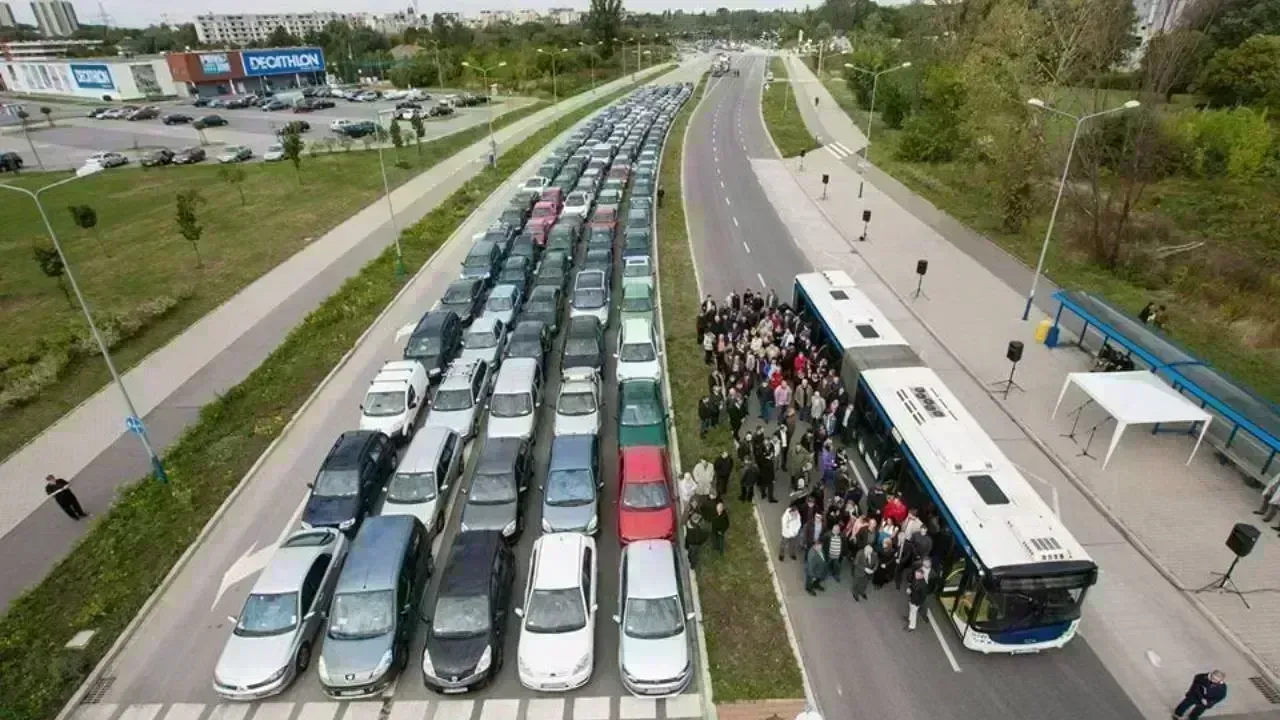
Public transport offers immediate impact. A full bus replacing 40 cars dramatically cuts emissions instantly. No technology offers faster results than simply reducing the number of vehicles.
Cities do not have time to wait for future solutions. They need change now.
More usage restrictions in central areas.
Congestion pricing zones.
Further fuel adjustments.
Expanded metro networks.
Dedicated bus lanes.
Higher parking charges.
Integrated ticketing.
Electric public fleets.
Urban mobility is being reshaped year by year.
The age of free road usage is ending.
Governments are moving from banning to persuading. Policies today work by nudging behaviour instead of forcing it. When public transport is faster, cleaner, cheaper, and safer, citizens naturally change preferences.
Mobility reform succeeds not when people feel controlled, but when they feel convinced.
Cities are not attacking personal vehicles.
They are defending livability.
Urban spaces must serve people, not just traffic. The choice is no longer between car and bus. It is between chaos and coordination.
Public transport is not perfect.
But it is necessary.
The future belongs not to individual engines, but to shared movement.
DISCLAIMER
This article is for general informational purposes only and does not constitute policy, legal, or transportation advice. Policies may vary by region and city, and readers are advised to refer to official government notifications for accurate and updated information.










PM Modi Pays Tribute to Mahatma Gandhi, Urges People to Support Khadi
PM Modi pays tribute to Mahatma Gandhi on Gandhi Jayanti and urges citizens to support Khadi and the

Amazon Seeks to Offload $8 Billion in Nvidia Chips to Investors
Amazon plans to move $8 billion in Nvidia chips to investors, using a new financing model to strengt

Samsung Raises Galaxy S26 Prices as Memory Chip Costs Rise
Samsung raises Galaxy S26 prices in South Korea as rising memory chip costs put pressure on smartpho

Lewis Hamilton Calls Singapore Grand Prix One of F1's Toughest Races
Lewis Hamilton discusses the demanding Singapore Grand Prix and brings Plus44 and Almave to Singapor

Denmark's Pandora Opens World's Largest Jewellery Factory in Vietnam
Pandora opens its largest jewellery factory in Vietnam, expanding global production, strengthening s

Gautam Gambhir Questions Batting-Friendly Pitches After India's Record ODI Chase
Gautam Gambhir questions batting-friendly ODI pitches after India’s record chase, calling for a bett

